
A defensive pistol course is not the same thing as a beginner pistol class. It is not the place to learn how to hold a handgun for the first time, how to load and unload safely, or how to understand the most basic rules of firearm safety.
Those skills must come first.
A good defensive pistol course is designed for students who already know how to handle a handgun safely and who have already learned, or are actively learning, the fundamentals of shooting. The student should understand stance, grip, sight alignment, sight picture, trigger control, follow through, and recovery before adding speed, movement, concealment, pressure, and defensive decision-making.
That distinction matters because defensive pistol training adds stress to the equation. Students may be drawing from concealment, moving, responding to commands, making decisions, or working through realistic self-defense problems. If the basics are not already in place, the training can become unsafe, confusing, and ineffective.
For armed citizens, the purpose of a defensive pistol course is not to look tactical. The purpose is to learn how to survive a sudden violent encounter lawfully, intelligently, and effectively.
A Defensive Pistol Course Is Not for Raw Beginners
Every responsible shooter needs basic pistol training. New gun owners should learn safe handling, muzzle discipline, trigger-finger discipline, loading, unloading, range commands, and basic marksmanship before moving into defensive work.
However, once a student begins defensive training, the demands change. The student is no longer only standing still and firing at a fixed target under calm conditions. Instead, the student begins learning how to apply shooting skills in a more realistic self-defense context.
That may include drawing from a holster, clearing a cover garment, moving off the line of attack, making fast decisions, recognizing danger, and understanding when force may or may not be legally justified.
Because of that, a defensive pistol course should not be treated as a shortcut around the basics. It should build on them.
A student who cannot keep the muzzle in a safe direction, control the trigger, follow instructions, or place accurate shots on target is not ready for advanced defensive drills. That student needs more foundational work first.
The Student Must
Already Understand the Fundamentals
The shooting fundamentals are not optional. They are the foundation that allows more advanced training to work.
For defensive pistol training, the core fundamentals should be understood in this order:
- Stance
- Grip
- Sight alignment
- Sight picture
- Trigger control
- Follow through
- Recovery
These skills do not disappear when training becomes defensive. In fact, they become more important because stress exposes weakness. A poor grip becomes worse under pressure. Bad trigger control becomes more obvious when the student speeds up. Weak recovery slows follow-up shots and reduces accuracy.
Therefore, a good defensive pistol course should reinforce the fundamentals while teaching the student how to apply them in a defensive context.
The goal is not to abandon marksmanship. The goal is to make marksmanship usable when the student is under stress, short on time, and forced to make fast decisions.
The Instructor Must
Be Able to Demonstrate the Skills
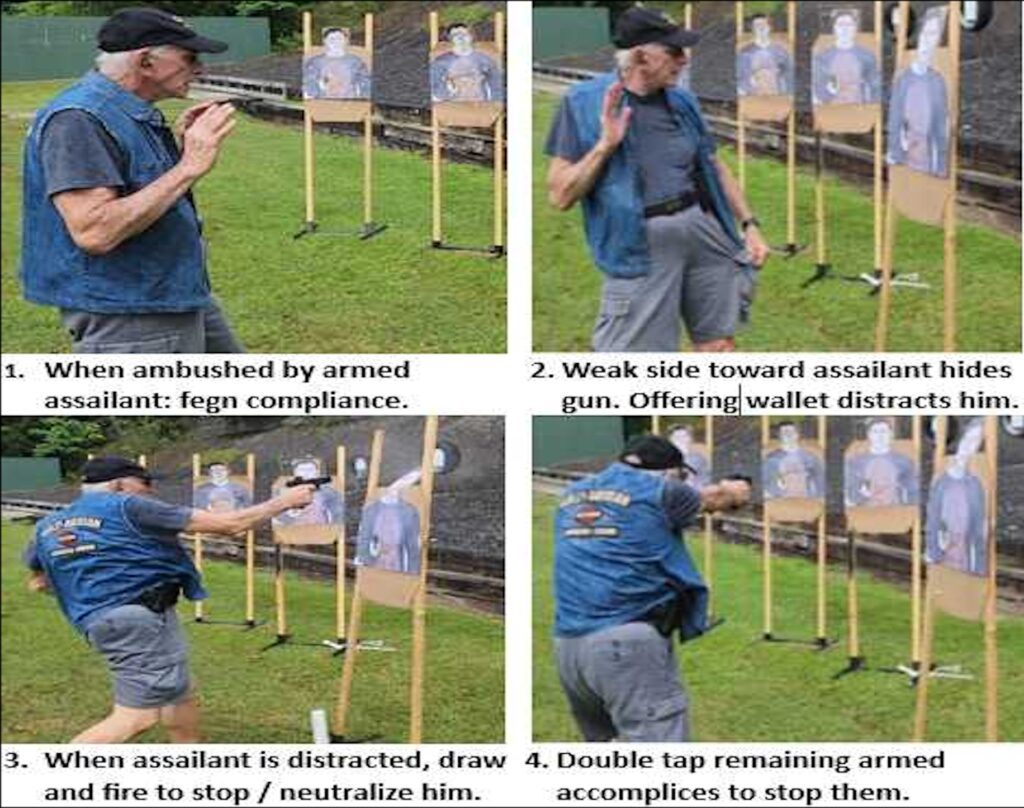
One of the most important things civilians should look for in a defensive pistol course is the instructor’s actual ability.
An instructor teaching defensive pistol skills should be more than a person who can explain theory. The instructor should be able to demonstrate the skills being taught at a high level.
That is especially true when the class includes fast draw from concealment, movement, close-range defensive shooting, or scenario-based drills. Students need to see what correct performance looks like. They also need an instructor who can recognize problems quickly and correct them clearly.
For example, an instructor teaching fast draw from concealment should be able to demonstrate a smooth, safe, efficient draw with accurate shots on target. A serious self-defense instructor should be capable of demonstrating that skill at a high standard, such as accurate hits from concealment in roughly the 1 to 1.2 second range under controlled range conditions.
That does not mean every student will reach that speed immediately. It also does not mean speed is more important than safety or judgment. However, it does mean the instructor should be able to prove the skill, not merely describe it.
Students should be careful about learning advanced defensive skills from someone who cannot personally perform them.
Drawing From Concealment
Must Be Taught Correctly
For civilians, drawing from concealment is one of the most important differences between ordinary pistol training and defensive pistol training.
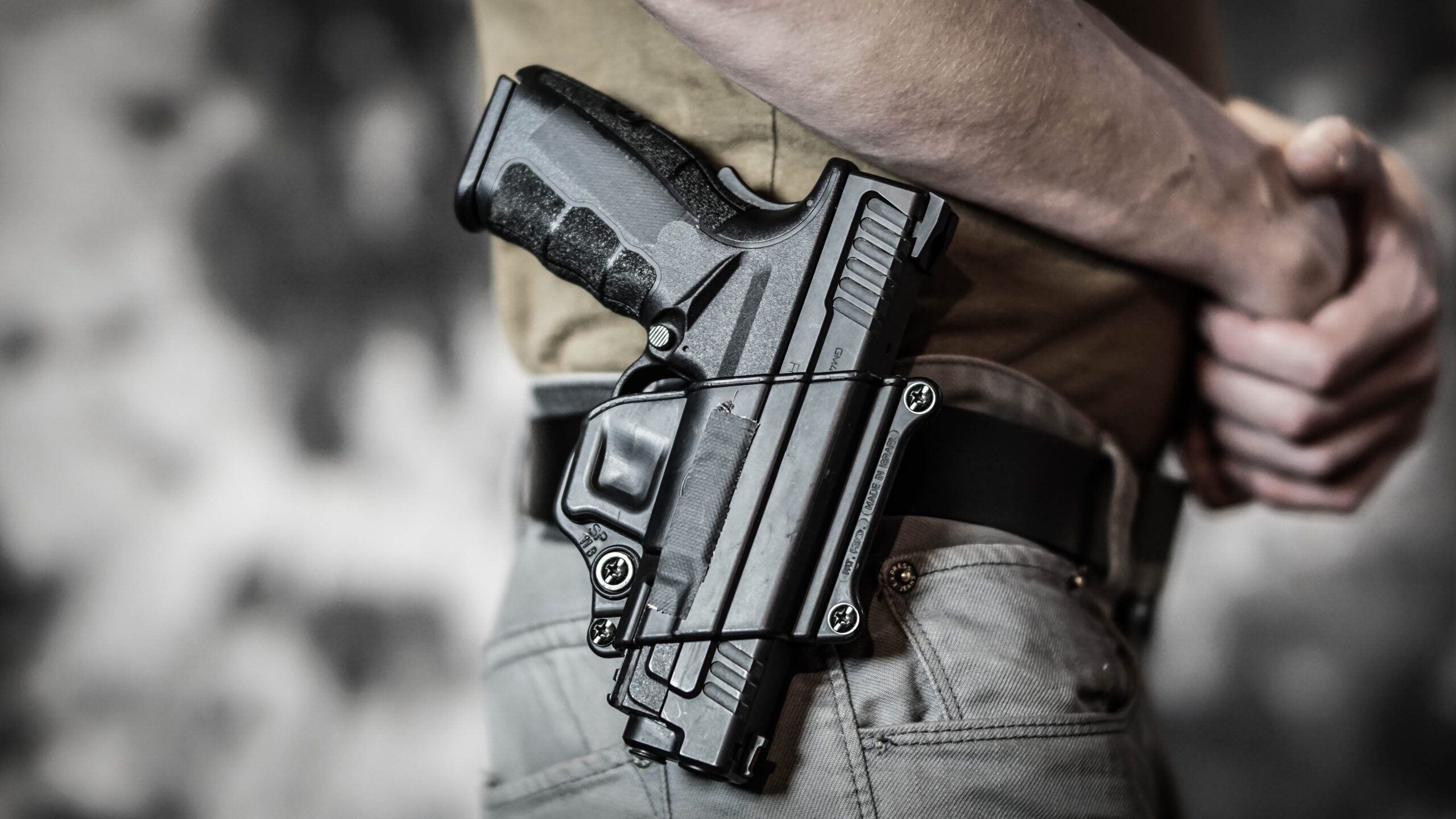
A concealed carrier does not normally begin a real encounter with the gun already in hand. The pistol is hidden under clothing. As a result, the student must learn how to clear the garment, establish a proper firing grip, draw safely, orient the gun toward the threat, and deliver accurate shots if deadly force is legally justified.
This must be taught carefully. A poor draw stroke can waste time, create safety problems, or lead to missed shots. In addition, a fast but sloppy draw is not good defensive skill. It is just speed without control.
A good defensive pistol course should teach the draw as a complete process. That includes access, grip, presentation, first-shot accuracy, follow-through, recovery, and safe reholstering.
However, the course should also make something clear: drawing the gun is not always the right answer.
Sometimes the better response is to move, leave, create distance, use verbal commands, comply temporarily, or avoid the confrontation entirely. Therefore, the draw must be connected to judgment.
Self-Defense Law Must Be Memorable
A defensive pistol course should not treat self-defense law as a dry lecture that students forget by the time they leave the classroom.
Armed citizens must understand when force may be justified, when deadly force may be justified, when the threat has ended, and why the decision to use a firearm carries serious consequences.
It is not enough for a student to shoot well. The student must also understand when not to shoot.
That is why self-defense law must be taught in a way that students can remember under stress. The instructor should use clear examples, realistic situations, and simple decision-making principles. The goal is not to turn students into lawyers. The goal is to help them avoid terrible decisions during a life-changing event.
A person may survive the physical fight and still destroy his life legally if he does not understand the rules that govern the use of force.
For that reason, a good defensive pistol course must connect shooting skill with legal judgment.
Scenario-Based Training
Should Teach Decision-Making
Scenario-based training is one of the major differences between a basic pistol class and a serious defensive pistol course.
However, a scenario is not just a shooting drill with a different target. A real scenario should require the student to think.
The student may need to recognize a threat, manage distance, communicate, move, decide whether the gun is needed, and determine whether force is legally justified. In some cases, the correct answer may be to avoid the confrontation. In other cases, the student may need to act quickly because the danger is immediate.
This kind of training matters because real violence is not a square-range exercise. The attacker may use surprise, deception, intimidation, or distraction. The defender may be behind in the reactionary curve before realizing what is happening.
As a result, defensive pistol training must teach more than shooting mechanics. It must teach the student how to process a problem under pressure.
Tactical Distraction Techniques
Can Create an Opening
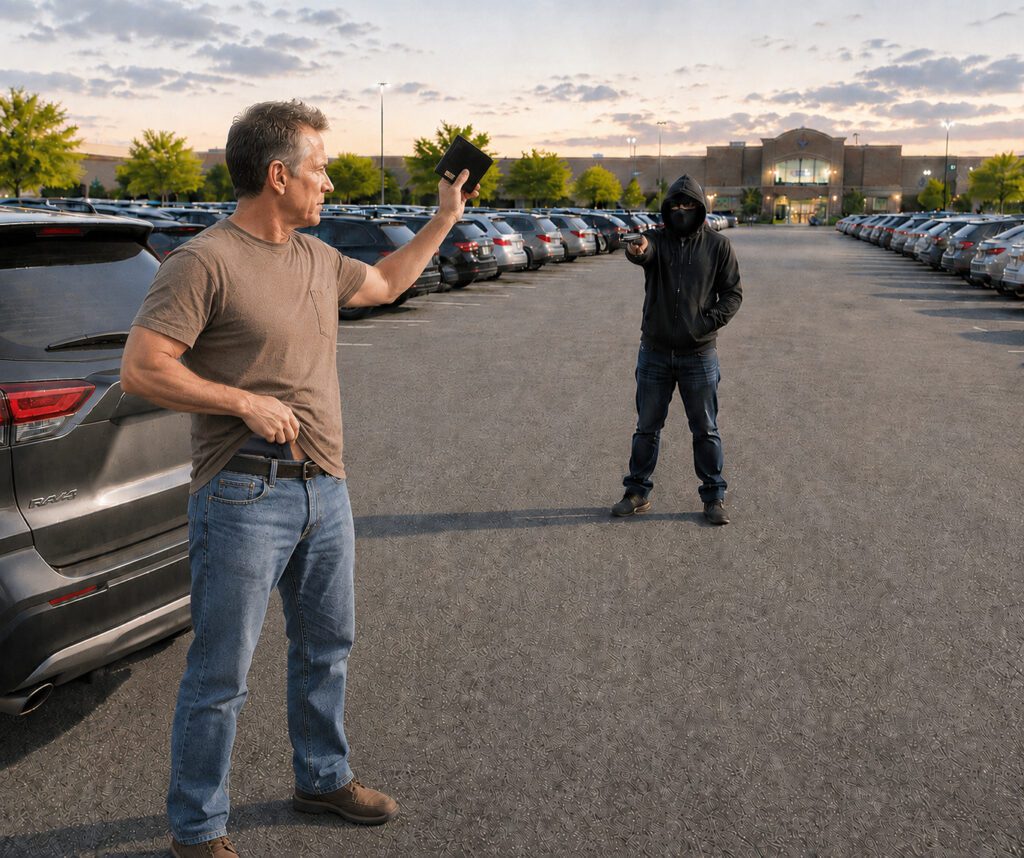
In many real attacks, the defender does not begin with the advantage. The attacker often chooses the time, place, distance, and method of attack. That means the armed citizen may start behind mentally, physically, and tactically.
Because of that, a good defensive pistol course should teach students how to create an opening when the attacker already has control of the situation.
This is where tactical distraction techniques become important.
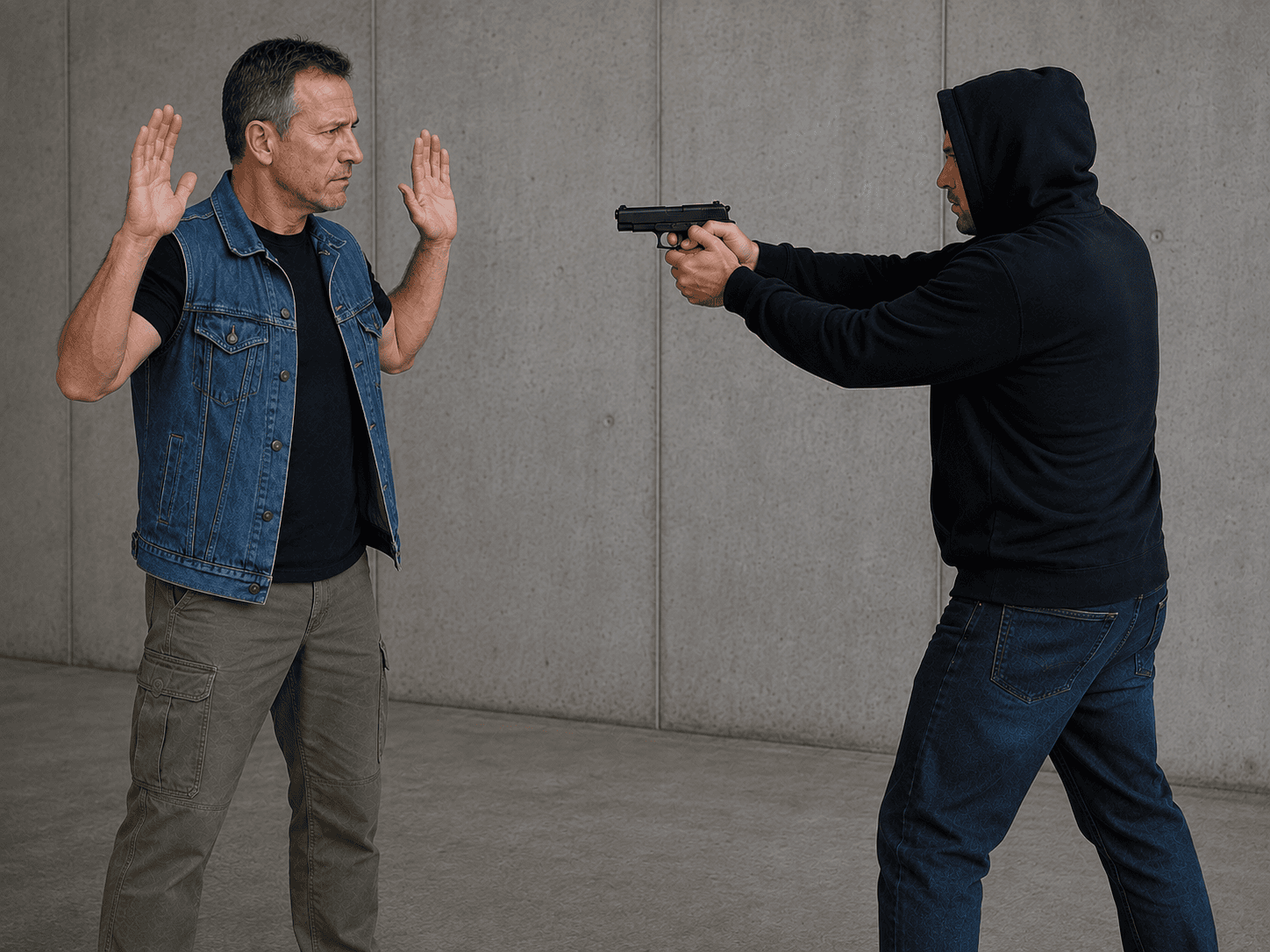
For example, a student may need to understand how verbal behavior, movement, apparent compliance, or other distraction methods can interrupt the attacker’s plan long enough to create an opportunity to move, escape, draw, or counter the attack if deadly force is legally justified.
The purpose is not to teach recklessness. The purpose is to teach the student that hard shooting skills may never come into play unless the defender first creates the chance to use them.
Advanced examples of this concept are discussed in the article Outsmarting An Armed Robber, which explains how distraction and timing can help disrupt an attacker’s control of the encounter.
The OODA Loop Explains Why Tactics Matter
The OODA loop is a useful way to understand defensive timing. OODA stands for Observe, Orient, Decide, Act.
First, a person observes what is happening. Then the brain orients to the situation and interprets what it means. Next, the person decides what to do. Finally, the person acts.
In a criminal attack, the attacker may already be ahead in that process. He knows what he plans to do before the victim understands what is happening. That gives the attacker an advantage.
Good scenario-based self-defense training helps students understand how to disrupt that advantage. If the defender can create hesitation, confusion, distraction, or a break in the attacker’s focus, the attacker may be forced to reset mentally.
That moment can matter.
It may create the time needed to move, escape, draw, or take lawful defensive action. Therefore, tactics are not separate from defensive pistol training. They are part of what allows the student to use the physical skills at the right moment.
A Good Course Teaches How to Create Your Turn
In many defensive encounters, the attacker starts with control. He may have the weapon out first. He may be close. He may be giving commands. He may be using fear, surprise, or intimidation to keep the victim frozen.
In that situation, trying to outdraw the attacker at the wrong moment can be extremely dangerous.
That is why advanced defensive pistol training should teach the student how to recognize timing. Sometimes the defender must wait. Sometimes the defender must move. Sometimes the defender must appear compliant long enough to create an opening. Sometimes the defender must use a distraction to break the attacker’s focus.
The point is not to create a guaranteed formula. Real violence is too unpredictable for that. Instead, the point is to teach the student how to think tactically when the attacker begins with the advantage.
A good defensive pistol course should help the student understand that survival may depend on creating the right moment, not merely having a fast draw.
Pre-Attack Indicators Should Be Covered
A defensive pistol course should also help students recognize danger before the attack fully develops.
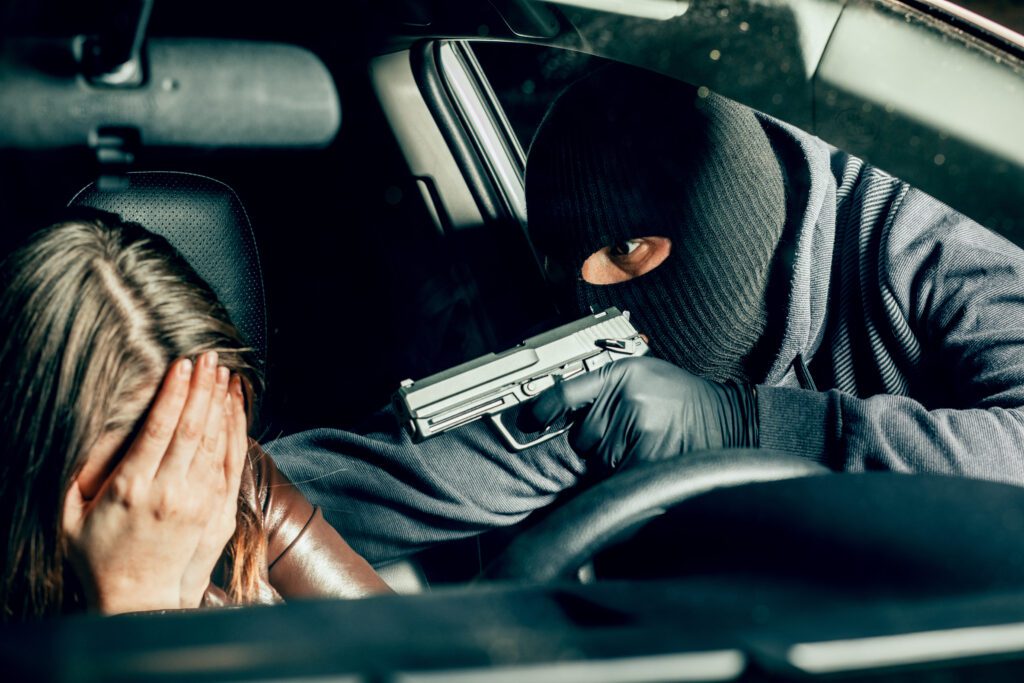
Many violent encounters are not completely random. Criminals may test awareness, close distance, use distraction, watch the victim, hide their hands, coordinate with others, or position themselves for an advantage.
When students learn to recognize these pre-attack indicators, they may be able to act earlier. That earlier action may mean leaving, changing direction, creating distance, getting to a safer position, or preparing mentally before the situation turns violent.
This is important because the best self-defense outcome is not always a successful draw or accurate shot. Often, the best outcome is avoiding the fight entirely.
Therefore, a good defensive pistol course should include threat recognition and prevention, not just shooting.
The Course Should Match Civilian Reality
Civilian defensive pistol training is not military training.
A private citizen is usually alone. He is dressed in ordinary clothing. He is carrying concealed. He does not have a team, radio, body armor, backup, or a mission to move toward danger.
Because of that, the training should match the civilian problem.
A good defensive pistol course should focus on personal protection, concealed carry, avoidance, lawful decision-making, movement, timing, and survival. It should not require the civilian student to pretend he is operating as part of a tactical unit.
That does not mean the training should be easy. In fact, real civilian self-defense training can be extremely serious. However, it should be serious in the right way.
The question is not whether the training looks dramatic. The question is whether it prepares the armed citizen for the kind of encounter he may actually face.
What a Good Defensive Pistol Course Should Include
A good defensive pistol course should include the following elements:
- Confirmation of safe gun handling
- Reinforcement of stance, grip, sight alignment, sight picture, trigger control, follow through, and recovery
- Drawing from concealment
- First-shot accuracy
- Safe reholstering
- Movement and positioning
- Pre-attack indicators
- Self-defense law taught in a memorable way
- Scenario-based decision-making
- Verbal commands and communication
- Tactical distraction concepts
- OODA loop disruption
- Judgment about when not to draw or shoot
- Most pistol courses leave a lot out
Not every course can cover every subject in equal depth. However, if a class claims to be a defensive pistol course and only teaches ordinary marksmanship drills, it may not be enough.
The student should leave with a better understanding of how defensive pistol skills fit into real civilian self-defense.
Final Thoughts
A defensive pistol course should not be a beginner pistol class with a more exciting name. It should be serious civilian self-defense training for students who already know how to handle a handgun safely and are ready to apply their skills under pressure.
The course should reinforce the fundamentals, including stance, grip, sight alignment, sight picture, trigger control, follow through, and recovery. It should also teach the draw from concealment, self-defense law, scenario-based tactics, threat recognition, movement, and judgment.
Most importantly, the course should prepare the student for reality.
Real criminal attacks are often sudden, close, and unfair. The attacker may begin with the advantage. Because of that, the armed citizen must learn more than how to shoot. He must learn how to recognize danger, create time, make lawful decisions, and act when action becomes necessary.
That is what civilians should look for in a real defensive pistol course Vs. combat, competitive, bullseye and other types of training.