

What Actually Matters
in a Real Gunfight
Most self defense courses promise confidence, safety, and “real world skills.” Yet when you look closely at what they actually teach, you’ll notice something missing — something big. Graduation from most courses causes you to believe the dangerous myth about self-defense readiness. Students learn techniques, but what most self-defense courses leave out is superior tactics. Most courses have the students practice movements, but they don’t practice decision making. They rehearse drills, but they never experience stress.
In other words, most self defense courses teach hard skills, but they never connect those skills to the tactics that actually work in a real gunfight.
This gap is dangerous. It gives people a false sense of readiness. And when the moment of truth arrives, that gap becomes the difference between freezing and acting, between hesitation and survival.
Below is what most self defense courses leave out — and why scenario based, stress inoculated training is the only way to prepare for real violence.
Most Courses Teach Techniques — But Not the Context Behind Them
Many self defense programs focus on mechanics: how to strike, how to block, how to escape a grab, or how to draw a firearm. These skills matter, but they’re only half the equation. Without context, they fall apart under pressure.
Real violence is not a sequence of clean, isolated movements. It’s messy, fast, and unpredictable. Scenario based training fills this gap by teaching you how to apply your skills in dynamic environments where the attacker moves, the terrain changes, and your decisions matter more than your technique.
Most Courses Ignore Pre Attack Indicators — The First Clue You’re in Danger
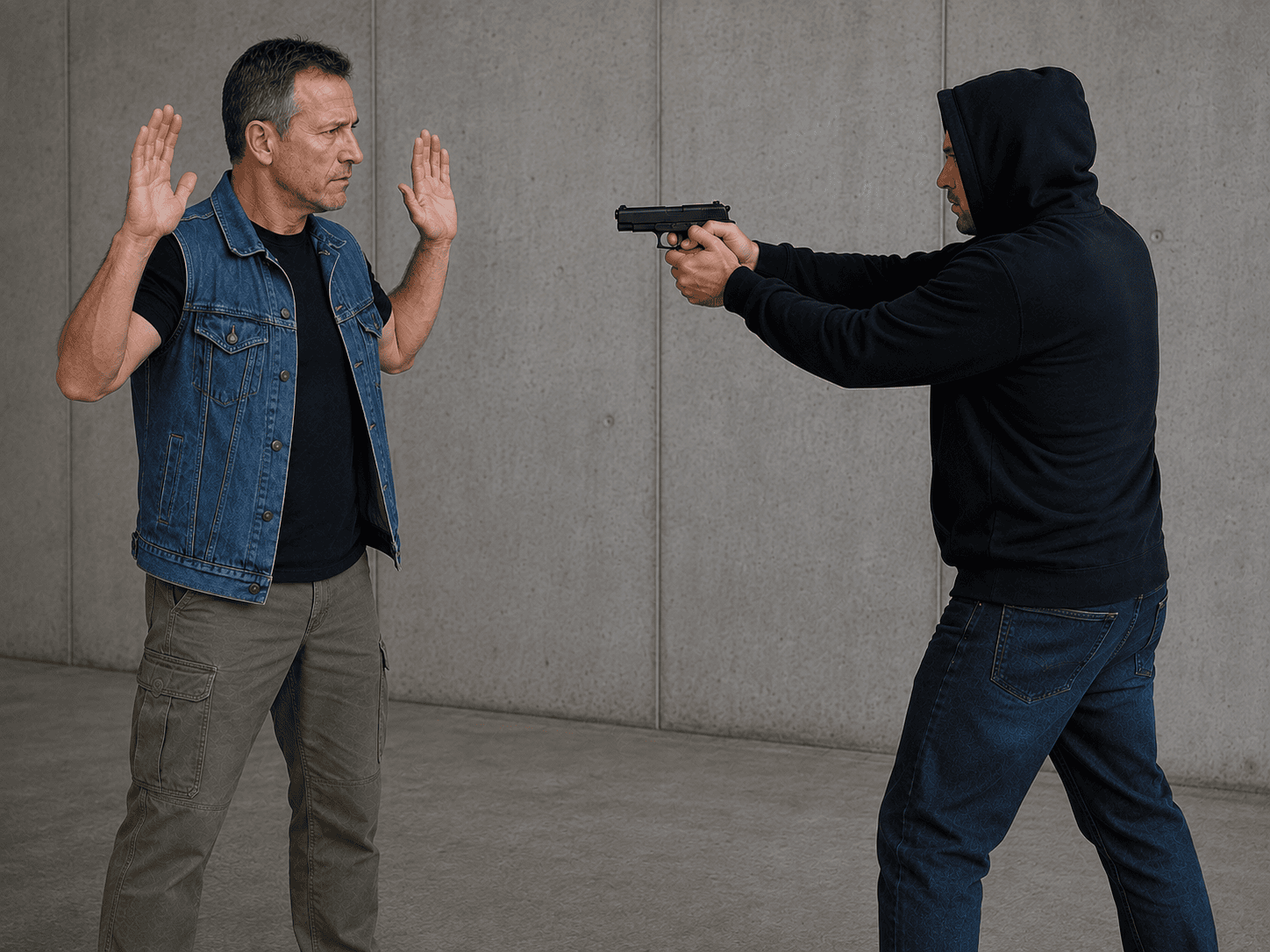
Violence rarely starts with a punch or a gunshot. It starts with behavior. Attackers telegraph their intentions through subtle cues like target glances, unnatural hand placement, rapidly closing distance, or verbal probing. Most courses never teach students how to recognize these signals.
Scenario based training teaches you to spot these indicators early so you can move, escape, or prepare your draw before the threat explodes. Early recognition gives you time — and time is the most valuable asset in self- defense.
Most Courses Don’t Teach Stress Management — The Skill That Determines Survival
When danger appears, adrenaline floods your system. Your heart rate spikes. Your hands shake. Your vision narrows. Your hearing distorts. Your fine motor skills degrade. Most courses never expose students to these reactions. They teach techniques in calm, controlled environments — the exact opposite of real violence. Stress inoculation changes everything. By introducing controlled pressure, you learn how to breathe through adrenaline, stay functional when scared, and make decisions under stress. This is the difference between freezing and acting.
Most Courses Don’t Teach Decision Making — The Core of Real Self-Defense
Shooting, striking, or escaping is the last step in a long chain of decisions. If you get the earlier decisions wrong, the consequences can be catastrophic. Most courses never teach students how to evaluate threats, determine whether force is justified, avoid escalating the situation, or identify escape routes.
Scenario based training forces you to make decisions in real time, under pressure, with consequences for choosing wrong. That’s how judgment is built — and judgment is what keeps you alive and out of prison.
Most Courses Don’t Teach Movement — The Tactic That Keeps You Alive
Static training creates static defenders. Real violence punishes that. Movement is life. Standing still gets you hurt. Most courses never teach stepping off the line of attack, creating distance, using cover, repositioning to protect someone else, drawing while moving, or shooting while moving. Scenario based training integrates movement into many drills, because real attackers don’t stand still — and neither should you.
Most Courses Don’t Teach Close Quarters Gunfighting — Where Most Attacks Happen
Most defensive shootings occur within arm’s reach. At that distance, extending your firearm is dangerous. The attacker can grab it, redirect it, or take it. Yet most courses only teach full extension shooting. Scenario based training teaches retention shooting, weapon protection, creating space, striking to break contact, and transitioning from retention to full extension. These are the skills that keep your gun in your hands and the threat off your body.
Most Courses Don’t Teach
How to Protect Loved Ones
Protecting yourself is one thing. Protecting someone else is another. Most courses never teach how to shield a loved one, move them out of danger, communicate under stress, draw while holding onto someone, or position yourself between them and the threat. Scenario based training forces you to manage another person’s fear, movement, and safety because real encounters rarely happen when you’re alone.
Most Courses Don’t Teach
What Happens After the Fight
Surviving the encounter is only half the battle. What happens after you pull the trigger matters just as much. Most courses never cover calling 911 under stress, interacting with responding officers, articulating your decisions, preserving evidence, or avoiding self incrimination. Scenario based training includes the aftermath because your actions after the fight determine your legal future.
Most Courses Don’t Connect Hard Skills
to Real World Tactics
Hard skills — shooting, striking, blocking, escaping — are essential. But without tactics, they’re incomplete. Real world violence demands that you combine your skills with awareness, movement, timing, distance management, and decision making. Scenario based training connects these elements so your hard skills become usable in a real fight. This is where most courses fail — and where real world training shines.
The Bottom Line
Most self defense courses teach techniques.
Real self defense training teaches tactics.
Many courses teach movements.
Real training teaches decisions.
Most courses teach skills in isolation.
Real training teaches skills under stress.
If you want to be prepared for a real gunfight — not just a controlled drill — you need scenario based training that connects hard skills to the superior tactics that actually work when your life is on the line.
The CCW Training Academy offers a full roster of classes from beginner pistol, through Tactical Pistol I and Tactical Pistol II and Tactical Pistol III, to even more advances
Learn more about our self-defense pistol courses — where real world training meets real world experience.
About the Author:
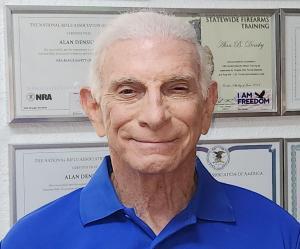
Alan B. Densky is the Founder & Lead Instructor at CCW Training Academy in Summerfield, FL. A former deputy sheriff, professional hypnotherapist, and scenario-based tactical instructor, Alan includes teaching firearms safety and self-defense laws in every course. He enjoys helping active adults 45+ build real-world defensive confidence through practical, competent firearms training.
Learn more about Alan B. Densky |
Read Student Reviews |
Get Trained, Get Real Confidence