

If you are considering self-defense with a handgun, owning a handgun is not the same thing as being ready for self-defense. Carrying a gun may make you armed, but it does not automatically make you prepared. It does not make you calm, fast, legal, or tactically sound under stress. A handgun is only one part of solving the crime problem.
A real self-defense confrontation can be brutal. It may be loud, fast, confusing, ugly, and legally complicated. You may have only a second or two to decide what to do. Afterward, other people may judge that decision for months or years.
That is the difference between being armed and being trained. Being armed means you possess a defensive tool. Being trained means you understand the problem that tool may create or solve. The gun may help you survive, but it can also magnify every bad decision.
The Real Question Is Not Whether You Own a Gun
The real question is not, “Do you own a gun?” A better question is, “Are you ready for the kind of problem that requires self-defense with a handgun?” Most responsible gun owners do not want trouble. They hope they never have to draw their firearm.
That is good, but hope is not a plan. You need more than good intentions. You need awareness, judgment, movement, restraint, and a great deal of skill. The gun cannot provide those things by itself.
Could you recognize danger before it reaches you? Would you avoid a confrontation, even if your pride gets bruised? Are you able to tell the difference between an insult and a deadly threat? Those questions matter more than the gun itself.
A trained person does not think only about shooting. He thinks about tactics like distance, timing, exits, family members, witnesses, lighting, background, and the law. He also thinks about what happens after the threat stops. That is why real self-defense training must reach far beyond the firing line.
 Self-Defense Is Not One Thing
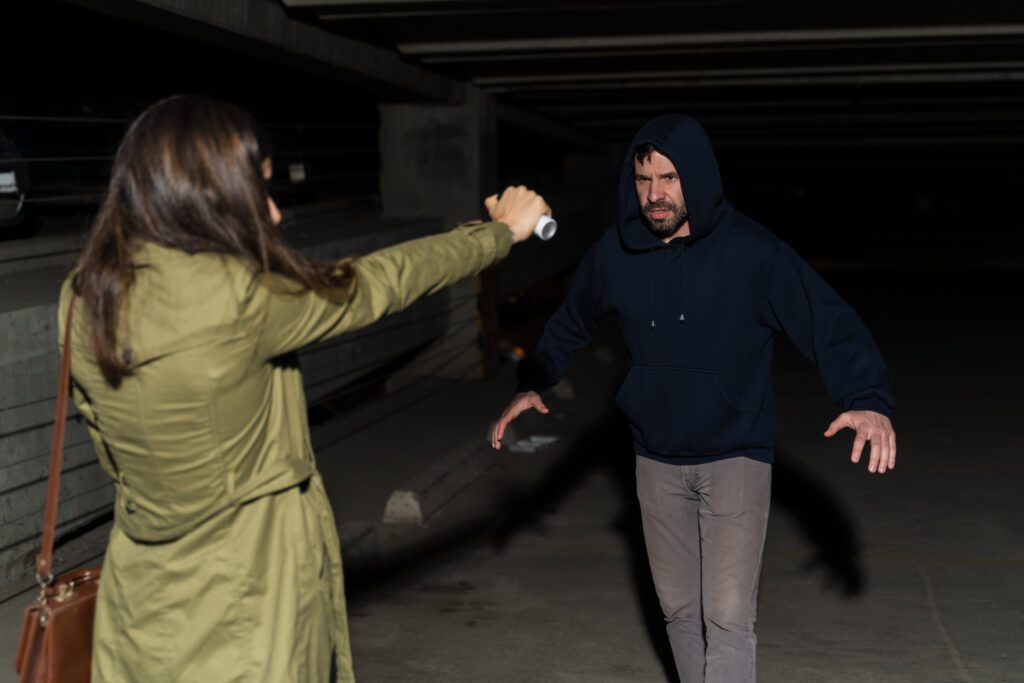 Self-Defense Is Not One Thing
Many people talk about self-defense as if it means pulling a gun. That is a dangerous mistake. Self-defense has levels, and the lowest levels often matter most. Awareness, avoidance, distance, verbal commands, and escape may solve the problem early.
Higher levels may include physical resistance, non-lethal tools, or deadly force. A handgun is a deadly-force tool. That means it belongs at the top of the ladder. It is not the answer to every confrontation or every fear.
An insult is not a deadly-force problem. An angry look is not a deadly-force problem. A shove may or may not become one, depending on the facts. Context matters because violence does not always fit a simple category.
The other side is just as important. A violent attack can become deadly very quickly. A person does not need a gun to kill you. Multiple attackers, a knife, a club, concrete, or a violent fall can change everything.
That is why defensive training must include judgment. The question is not only, “Can I shoot?” The deeper question is, “Can I correctly decide when shooting is lawful and necessary?” Many armed people have never trained for that decision.
The Gun Does Not Make the Decision
A handgun cannot decide whether a threat is real. It cannot decide whether you are innocent. The gun cannot decide whether danger is imminent. It also cannot decide whether your force is proportional.
Those decisions belong to you. They may later be judged by people who were not there. A jury may hear witness testimony, see video, and judge your choices. That review may happen long after the fear is gone.
That is why training must go beyond marksmanship. Good shooting matters, but it is not enough. Safe gun handling matters, but it is not enough. Legal knowledge, movement, awareness, and restraint must work together.
A person who can shoot well may still make a terrible self-defense decision. Someone who knows the law may still freeze under pressure. A person who carries every day may still be unprepared for close-range violence. The handgun is a tool, but you are the decision-maker.
The Core Questions Every
Armed Citizen Must Understand
In Florida, there are four basic questions every armed citizen should understand. They are innocence, imminence, proportionality, and reasonableness. These are not magic words, and this article is not legal advice. Every real case depends on specific facts.
Some other states and legal-training frameworks discuss five elements. Those frameworks may include avoidance as a separate issue. In plain English, avoidance asks, “Could I have avoided this event?” That question matters even when retreat is not legally required.
Florida Statute 776.012 says there is no duty to retreat before using or threatening force when a person meets the statute’s conditions. The person must not be engaged in criminal activity. He must also be in a place where he has a right to be. You can read the statute here: Florida Statute 776.012.
Avoidance may not always be a legal duty in Florida, but it is often a survival duty. Could you have crossed the street, left the store, driven away, or stopped arguing? Would a reasonable person say you tried to avoid trouble? Those questions may matter later, even when the law says you had no duty to retreat.
Am I Innocent?
In plain English, innocence means you did not start the problem. You did not provoke the confrontation. You were not the person who escalated the argument. And you did not turn a silly dispute into a violent encounter.
This matters because Florida law addresses aggressors directly. Florida Statute 776.041 limits self-defense justification for someone who initially provokes force, unless specific exceptions apply. The statute also discusses withdrawal and continued force after withdrawal. You can read it here: Florida Statute 776.041.
Being armed should make you slower to argue, not faster. It should make you more disciplined, not more aggressive. The gun raises your responsibility. It does not excuse bad judgment.
You may say, “I was defending myself.” A witness may say, “He started it.” A video may show only the last thirty seconds. That is why avoidance and discipline matter before the gun appears.
Is the Threat Imminent?
Imminent means the danger is happening now, or it is about to happen. It does not mean someone threatened you last week. It does not mean someone might return in a few minutes or some other day. A vague fear is not the same as immediate danger.
Florida Statute 776.012 allows non-deadly defensive force when a person reasonably believes force is necessary against imminent unlawful force. The same statute allows deadly force when a person reasonably believes it is necessary to prevent imminent death, great bodily harm, or an imminent forcible felony. Those words are serious. You can review the statute here: Florida Statute 776.012.
If the person is walking away, the emergency may be ending and that person may no longer present a threat. When the person is closing distance with a knife, the facts are different. If several attackers are knocking you down, the danger may be immediate. Time, distance, weapons, numbers, and movement all matter.
A trained person learns to read those facts quickly. A scared person may only feel fear. Fear alone is not enough. The facts must support the decision.
Is My Response Proportional?
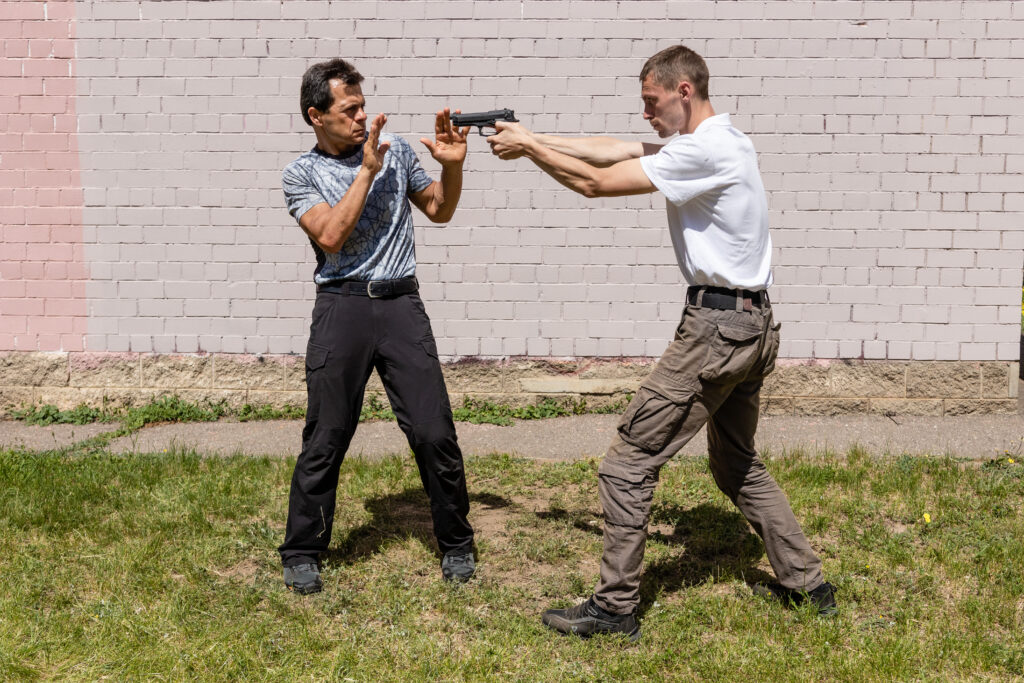
Proportionality means your force must match the threat. A slap is not the same as a knife attack. An insult is not the same as a robbery and doesn’t justify self-defense with a handgun. One shove is not the same as a group attack.
This does not mean self-defense is simple. A small person attacked by a much larger person may face serious danger. An older person knocked to the ground may face serious danger. Concrete can become deadly when someone’s head strikes it.
Several unarmed attackers may create a deadly-force problem. A single unarmed person may also create one under the right facts. Size, strength, age, disability, location, and disparity of numbers may matter. Training helps you think before stress takes over.
Proportional force is not about fighting fair. It is about using only the level of force reasonably necessary. If the threat changes, your response may need to change. When the threat stops, your force must stop too.
Were My Actions Reasonable?
Self-defense has two sides. The first side is what you honestly believed. You may truly believe you were in danger. That is the subjective part.
The second side is whether that belief was reasonable. That is the objective part. A jury may look at the facts and quietly ask, “If that was me, would I have done the same thing?” That question is powerful.
Later, you may ask yourself another version. “If I had it to do over again, would I do the same thing?” That question may follow you long after the legal case ends. It may follow you even if you are never charged.
This is why self-defense is not only about winning the fight. It is about surviving the event, the investigation, the courtroom, and your own conscience. A good decision must be both subjectively honest and objectively reasonable. Anything less may haunt you.
Could I Have Avoided This?
Avoidance deserves its own place because it is where many problems begin. You may have no duty to retreat under certain Florida facts. That does not mean every confrontation is worth entering. Sometimes the smartest move is leaving before your legal rights are tested.
Avoidance asks simple but uncomfortable questions. Could I have walked away? Or, could I have apologized, even if I was right? Could I have stayed in the car, driven away, or gone inside? Did I let pride keep me in danger?
Avoidance is not weakness. It is not cowardice. It is often the cleanest win. Nobody gets shot, nobody gets arrested, and nobody needs to explain anything to a jury.
A trained armed citizen should be harder to provoke. Carrying a gun should make you more polite, not less. It should make you more patient, not more emotional. The best self-defense event is often the one you never enter.
Florida Law Is Not a Magic Shield
Many Florida gun owners have heard the phrase “Stand Your Ground.” Some treat it like a magic phrase. That is a mistake. Florida law may remove a duty to retreat in certain justified circumstances, but it does not justify every use of force.
The law does not excuse provocation. It does not erase proportionality. It does not make every fear reasonable. Florida law does not protect someone who creates the danger and then claims self-defense.
Florida’s home-defense statute also includes important rules and presumptions. Florida Statute 776.013 addresses dwellings, residences, and occupied vehicles. It also lists exceptions that may matter. You can read it here: Florida Statute 776.013.
That law matters, but your behavior also matters. Your words matter. Your movement matters. Chasing someone may matter. A gun display may matter. What you say afterward may matter.
For more on Florida concealed carry law and training gaps, see: Florida Concealed Carry Gun Laws Training Gaps.
The Brutal Reality of a Violent Confrontation
A real attack may not begin clearly. Someone may distract you while another person moves closer. A person may ask a harmless question to freeze your attention. Another person may circle behind you.
This is how normalcy bias gets people hurt. Your brain wants things to be normal and the same as usual. It may reject danger because danger feels too extreme. You may waste seconds explaining the situation away.
You may think, “He is probably just asking for help.” Perhaps you tell yourself, “They are probably joking.” Maybe you hesitate because you do not want to overreact. Those seconds may be the only warning you get.
Good training does not make you mistrustful. It helps you notice what matters and It teaches you to move sooner. It gives you permission to act before the trap closes.
For more on recognizing danger early, see: Pre Attack Indicators.
Being Swarmed by a Crew

Many armed citizens imagine one attacker. Real violence may involve several people. One person may distract you while another blocks your exit. Someone else may grab, strike, or move behind you.
You may not know who has the weapon. The leader may not be obvious. The first person speaking may not be the main threat. The person behind you may be the real problem.
A crew attack changes everything. Can you draw if someone is grabbing your arm? Can you keep the gun if someone is chest-to-chest with you? Could you move without falling? Should you draw from the drop? In other words, should you draw when someone has a gun pointed at you?
This is where ordinary range practice falls short. Standing still at seven yards does not answer these questions. Slow fire on paper does not answer them. Defensive training begins when the problem becomes realistic.
For more on defensive pistol readiness, see: Defensive Pistol Training Readiness Guide.
“But He Was Unarmed”

Many people assume deadly force requires an armed attacker. That is not always true. It is also not simple. An unarmed person can cause death or great bodily harm.
Facts still matter. Disparity of size, strength, age, disability, disparity of numbers, location, and prior conduct may all matter. Being knocked down may matter too. A fall onto concrete can become catastrophic.
One unarmed person yelling insults is one thing. Several adults stomping a person on pavement is another. A shove in a store aisle is one thing. A shove down stairs is another.
The gun does not sort these facts for you. Training helps you think before fear takes control. It also helps you avoid treating every physical confrontation like a deadly-force emergency. That distinction may decide your future.
Local Reality Matters
Violence is not only a big-city problem. Florida Health CHARTS reported a 2024 statewide violent-crime rate of 145.7 per 100,000 population. Violent crime includes murder, rape, robbery, and aggravated assault. Those numbers show that serious violence exists in Florida communities.
Statistics do not mean everyone is in constant danger. They do mean denial is not a plan. Serious crime can occur where people shop, work, drive, and live. A responsible person should prepare without becoming overly anxious.
Local case histories make the point more clearly than statistics. In Mount Dora, police reported an armed robbery in a store parking lot in November 2024. The victim was approached near her vehicle by a masked suspect with a semi-automatic firearm. Police said he took her purse, demanded her phone, threatened to shoot her, and fled. Source: Inside Lake.
That case matters because parking lots create risk. People are distracted near vehicles. Their hands may be full. Lighting, distance, and movement may favor the attacker.
In Leesburg, Florida, a jury found Alex Lopez guilty in December 2025 for the 2024 shooting death of Raied Shihadeh. The case involved a fatal robbery at the Fast Stop Superette on Picciola Road. He was convicted of first-degree murder and armed robbery, then sentenced to life without parole. Source: ClickOrlando.
That case matters because robberies are not theories. They happen in ordinary places. They happen to people who are working, shopping, or simply living their lives. Preparedness begins by accepting reality without exaggerating it.
For parking-lot-specific issues, see: Parking Lot Self Defense.
Bad Self-Defense Decisions Also Have Consequences
Local cases also show the other side. Sometimes the person with the gun is not the lawful defender. Sometimes fear, anger, and a gun create a tragedy. That is why judgment matters as much as skill.
In Ocala, Florida, Susan Lorincz was sentenced to 25 years in prison in the death of Ajike “AJ” Owens. The Fifth Judicial Circuit State Attorney’s Office said jurors found Lorincz guilty of manslaughter by use of a firearm. Source: Fifth Judicial Circuit State Attorney’s Office.
That case should make every armed citizen think. A person may feel afraid, yet the fear may be judged unreasonable. A person may claim self-defense, while the facts fail to support it. You do not want to learn that distinction after a shooting.
For more on what happens after shots are fired, see: What Happens After You Pull The Trigger.
Defensive Gun Use Is Real, But Statistics Are Debated
Defensive gun use is real, but the exact number is heavily debated. The National Academies noted that estimates have varied widely. Some estimates are far lower, while others claim millions of defensive gun uses yearly. The report explains that measurement problems make the issue difficult. Source: National Academies.
That debate matters, but it does not answer your personal readiness question. If you are attacked, national estimates will not save you. Your decisions may. Your training may.
RAND reported that about 61 percent of U.S. firearm owners had some formal safety and use training. RAND also noted that training content varies widely. Some training is basic safety. Other training may include more serious defensive skills and tactics. Source: RAND.
That is the key lesson. “Training” is not one thing. A permit class is not the same as defensive pistol training. Slow shooting at the range on a paper target is not the same as fighting for your life.
Johns Hopkins researchers reported a 32 percent increase in violent gun assaults in 11 states after those states removed concealed-carry licensing rules that required training or proficiency. That does not prove every armed citizen is untrained. It does reinforce the public-safety importance of meaningful training. Source: Johns Hopkins Bloomberg School of Public Health.
What It Takes to Win
 Winning does not mean looking tough. It does not mean shooting fast in a video. Winning means surviving. It also means protecting innocent life.
Sometimes winning means leaving. It may mean apologizing, even when you are right. Often it means crossing the street, driving away, or staying quiet. Many times, winning means not being there.
When violence cannot be avoided, winning changes. You may need to move, command, draw, or fire. Then you must stop when the threat stops. Your purpose is stopping an immediate threat, not punishing anyone.
Winning also includes the aftermath. You may call 911, face police, speak with lawyers, and deal with witnesses. You may be handcuffed while officers sort out the facts. The emotional weight may last long after the legal case ends.
When the odds are against you, survival is the objective. Survival is the win. Walking away unscathed is the best win. A trained defender understands that before the fight begins.
Range Skill Is Necessary, But It Is Not Enough
You should know how to shoot accurately. Safe gun handling is mandatory. You should be able to load, unload, and clear malfunctions. Trigger discipline and muzzle discipline must be automatic.
Those skills matter, but they are not enough. Defensive pistol training adds movement, concealment, judgment, and pressure. It asks whether you can access the gun when surprised. It also asks whether you can avoid using it.
Drawing from concealment is different from shooting from a bench. Close-range defense is different from slow fire at paper. Protecting your gun from a grab is different from loading magazines at the range. These are different problems.
This is where many armed citizens discover the gap. They are safe, armed, and accurate. Yet they have never trained for the moment everything goes wrong. If they haven’t learned superior tactics, if they don’t know how fast they can get lead on target as well as how much time it takes an attacker to turn his head well . . . That gap can be dangerous.
For structured pistol training, see: Tactical Pistol Training I and Tactical Pistol Training II.
Home Defense Is a Different Problem
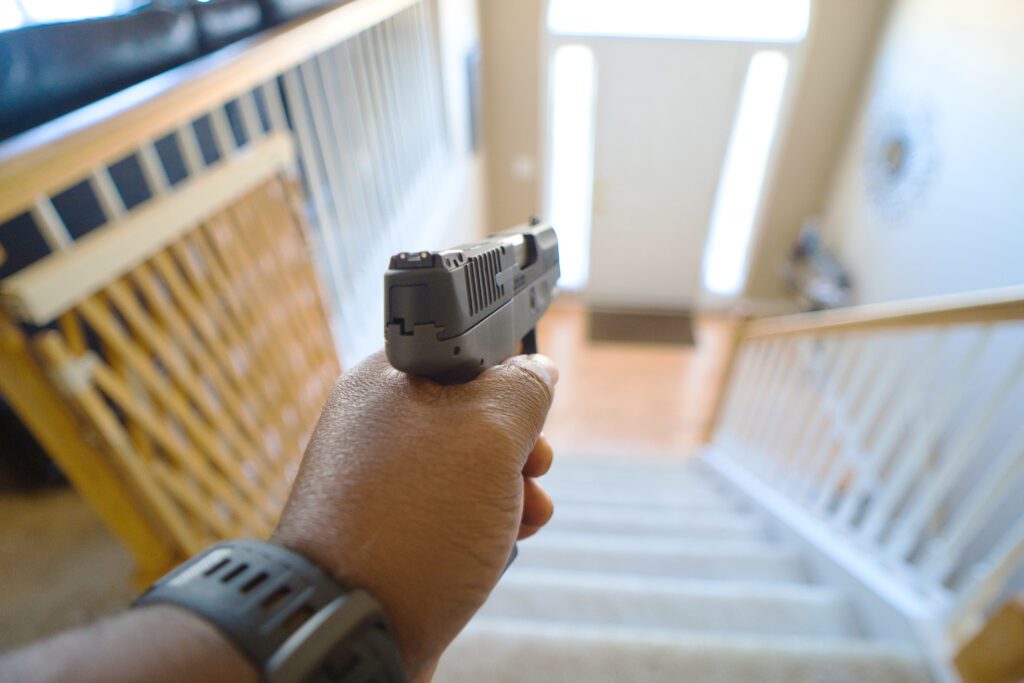
Home defense is not the same as concealed carry. The environment changes. You may be half asleep. The house may be dark.
Family members may be in other rooms. A hallway may become a fatal funnel. Doorways, mirrors, pets, furniture, and walls may create problems. You may not know what caused the noise.
It could be a family member, invited guest, drunk neighbor, burglar, or violent intruder. Your handgun may be part of the plan. It is not the whole plan. The plan must account for confusion.
A home-defense plan includes communication, movement, lighting, safe rooms, and 911. It also includes knowing what not to do. The goal is not to hunt through the house. The goal is to protect innocent life.
For home-defense planning, see: Home Defense Readiness Guide.
For hands-on home-defense weapons training, see: Home Defense Weapons Training.
The Dangerous Comfort of “I’ll Figure It Out”
Many armed citizens believe they will rise to the occasion. Some might, but many will not. Under stress, people usually fall back on what they practiced. If you never practiced the right thing, your body may fail.
When you only practice standing still, movement may disappear. If you never practiced drawing, clothing may trap your gun. Without verbal practice, words may fail. When proportionality was never studied, fear may make the decision.
Multiple attackers create another problem. If you never considered them, you may focus on the wrong person. Without close-retention training, the gun may be taken. That possibility is hard to admit.
No one wants to believe he is unprepared. Still, denial is not preparation. A handgun can give a false sense of security. Training replaces fantasy with tested skill and the brutal truth of reality.
For more on common training gaps, see: What Self Defense Courses Leave Out.
The Armed Citizen’s Biggest Mistake
The biggest mistake is not fear. Fear is normal. The biggest mistake is pretending possession of a gun alone will solve your problems. It won’t.
A gun does not give judgment. It does not create discipline. The gun does not teach restraint. It does not explain the law.
Your handgun will not move your feet. It cannot protect itself from being grabbed. The gun will not decide whether to shoot. It cannot help you live with the aftermath.
You must do those things. Training builds the person behind the gun. That is the part many people ignore. It is also the part that matters most.
For more on mistakes armed citizens make, see: Armed Citizen Mistakes.
Are You Trained or Just Armed?
If you carry a handgun, you carry a deadly-force tool. That responsibility begins before you leave the house. It begins before the argument, the parking lot, or the knock at the door. It begins before the first warning sign.
Responsible carry requires humility. You must admit the gun is not enough. You must ask whether you are truly ready. That question should not be answered casually.
Ask whether you are innocent, whether danger is imminent, and whether your force would be proportional. Ask whether your belief would seem reasonable to someone else. Then ask the avoidance question. Could I have stayed out of this?
If deadly force becomes necessary, you must act decisively. Then you must stop when the threat stops. Afterward, you may need to explain your decision. Later still, you may ask whether you would do the same thing again.
These questions are not meant to scare responsible people. They are meant to wake them up. Being armed is easy compared to being ready. Readiness takes honesty, humility, and training.
Summary
Self-defense with a handgun is not just a shooting problem. It is a legal, tactical, moral, emotional, and practical problem. The gun may be necessary, but it is never the whole answer. The person holding it must make every decision.
In Florida, armed citizens should understand innocence, imminence, proportionality, and reasonableness. They should also ask the avoidance question, even when there is no legal duty to retreat. Could I have avoided this event? That question may matter to a jury, and it may matter to your conscience.
A real confrontation may involve surprise, fear, confusion, movement, multiple attackers, and terrible consequences. Range skill matters, but it does not prove readiness. You must also train judgment, awareness, movement, restraint, and aftermath planning. That is what separates being armed from being trained.
If you are not sure how ready you really are, start there. Learn the law, build safe gun-handling skills, and train realistically. Study how violence happens before it reaches you. Then keep training before violence tests your assumptions for you.
For a practical starting point, see: Self Defense Readiness.
For beginner-friendly gun classes and shooting classes, see: Gun Classes Near Me: What Beginners Should Look For.
And for defensive pistol training readiness, see: Defensive Pistol Training Readiness Guide.
To book training with CCW Training Academy, visit: Book An Appointment.
Quick Answer: Are You Trained or Just Armed?
Self-defense with a handgun is not the same as simply owning or carrying a gun. A responsible armed citizen must understand avoidance, innocence, imminence, proportionality, and reasonableness. The person must also be able to recognize danger, move, draw safely, control the firearm, stop when the threat stops, and deal with the legal and emotional aftermath.
In Florida, the core readiness questions are: Did I provoke the event? Is the threat happening now? Is my level of force proportional? Would my belief and actions seem reasonable to other people? Even when Florida law does not require retreat under certain facts, the practical avoidance question still matters: Could I have avoided this event?
The main lesson is simple: being armed means you possess a defensive tool. Being trained means you understand when that tool is lawful, necessary, and tactically useful. Defensive pistol training should include judgment, safe gun handling, movement, draw from concealment, close-range defense, threat recognition, and aftermath planning.
What does “trained or just armed” mean?
“Just armed” means a person owns or carries a handgun but has not realistically prepared for a violent encounter. “Trained” means the person has developed safety, judgment, movement, legal awareness, and defensive skills beyond basic target shooting.
What should Florida armed
citizens understand before carrying?
Florida armed citizens should understand innocence, imminence, proportionality, reasonableness, and avoidance. They should know that a gun does not solve every confrontation. The decision to use force must fit the facts.
Why is range practice not enough for self-defense?
Range practice builds important shooting and safety skills. Real self-defense may also require movement, verbal commands, drawing from concealment, close-range retention, decision-making, and the ability to stop when the threat stops.
Why does avoidance matter
if Florida has Stand Your Ground laws?
Avoidance matters because survival is the goal. Leaving early can prevent the shooting, the arrest, the lawsuit, and the lifelong burden. Even when retreat is not legally required, avoiding a preventable confrontation may be the best outcome.
Explore Our Self-Defense Pistol Training Courses in Florida
About the Author
 Alan B. Densky is the founder and lead instructor of CCW Training Academy in North Central Florida. He is a former deputy sheriff and an NRA Certified Instructor for Pistol, Nationwide CCW, and Home Firearms Safety. He is also a Certified Range Safety Officer.
Alan’s training focuses on responsible civilian self-defense. He teaches concealed carry judgment, home-defense readiness, and practical defensive pistol skills. Last but not least, Alan offers Florida concealed weapons permit training. His teaching style is calm, patient, structured, and practical. Students are never rushed or embarrassed, but they are steadily developed.
One of the elements that differentiates his training is the use of scenario-based decision-making. Students learn that self-defense is not only about shooting. It is about recognizing danger, avoiding preventable confrontations, understanding proportional force, and knowing when to shoot and when not to shoot.
Read Alan’s full bio here: About Alan B. Densky.