
What Do You Really Want:
A Certificate Making You Legal,
or Real Skills Making You Safe?
Florida constitutional carry changed the concealed carry conversation.
At first, Florida passed permitless concealed carry. That law allowed qualified people to carry a concealed firearm without first getting a Florida Concealed Weapon or Firearm License.
But it did not allow ordinary open carry.
Floridians still had to keep the firearm concealed unless another legal exception applied.
Later, Florida’s open-carry situation changed after a 2025 appellate court ruling and state guidance told law enforcement not to enforce the old open-carry ban.
Now many people hear the phrase “Florida constitutional carry” and believe they understand what it means.
They may think, “I can carry without a permit, and now I may be able to carry openly too.”
That basic idea may be true for many qualified people.
However, those changes in the Florida Constitutional Carry law created some dangerous misunderstandings. Some people now believe training is no longer necessary. Others believe the old permit class gave them all the training they needed.
Both beliefs can leave a gun owner with a false sense of confidence. A state approved CCW Certificate for a concealed weapons license does not prove competence when it comes to self-defense.
The permit class that many people took is not the same thing as real firearms training.
Meeting a bare administrative minimum is not the same thing as being prepared to carry a gun in public, defend your home, or make a life-changing decision under stress.
So ask yourself a simple question.
What do you really want?
A certificate that helps make you legal?
Or real skills that help make you safe and give you a fighting chance in a real confrontation?
That is the question every Florida gun owner should ask before trusting a bare-minimum concealed carry class.
Were You Shortchanged
by Your Permit Class?
For years, many Floridians took a concealed carry class because they needed documentation to apply for a license. The state required proof of firearm competency, so applicants had to submit an acceptable training certificate or similar document.
That sounds serious.
In theory, firearm competency should mean the student can safely handle a firearm. It should include loading, unloading, safe muzzle direction, trigger discipline, basic law, and controlled shooting.
In practice, some classes were built around the lowest possible interpretation of the requirement. Perhaps you’ve heard the phrase, “Diploma Mill”?
Some students were required to fire only one round. Accuracy did not matter. Meaningful gun handling did not matter. There was no serious test of judgment, safety, or skill.
I have even heard of an instructor removing the powder from a .22 cartridge. He then put the bullet back into the case and had students fire that powerless round into a bullet trap. That was presented as the live-fire portion of the class.
In my personal opinion, that kind of shortcut is unethical. It may create a certificate. But it does not create a trained gun owner.
A student may leave with paperwork. That does not mean the student leaves with competence, judgment, confidence, or the ability to perform when it matters.
Were You Trained,
or Were You Just Processed?
Most students do not know what they do not know.
A new gun owner may assume that a concealed carry class teaches what a concealed carrier needs to know. That assumption is understandable.
If an instructor collects the money, gives the lecture, supervises one token shot, and hands over a certificate, the student may believe, “I am trained now.”
But trained for what?
Was the class only designed to satisfy paperwork?
Did it teach you how to safely own and handle a gun?
Were you taught what responsible concealed carry actually requires?
Did anyone explain when deadly force may be legally justified?
Were you shown how easily a gun can be pointed at the wrong person under stress?
Could you shoot accurately enough to be accountable for every round fired?
Those are very different questions.
A student who fired one easy round in a controlled setting has not learned how to manage recoil. That student may not know how to clear a malfunction. They may not understand how to safely unload the firearm.
She may not know what to do if a confrontation is angry but not deadly.
The student may have received a certificate.
That does not mean the student received meaningful training.

Permitless Carry Changed the Law,
Not the Responsibility
Florida Constitutional Carry changed the legal requirement for many people. It did not change the responsibility that comes with carrying a firearm.
The gun still works the same way.
Consequences from a bad decision are still just as serious.
Safe handling still matters.
Florida gun law still matters.
Knowing when not to draw the gun still matters.
Hitting what you aim at still matters.
In fact, the Florida Constitutional Carry law may make responsible training more important, not less important.
Before permitless carry, many people at least had to sit through some type of class before applying for a license. That class may have been weak, but it was still contact with an instructor.
Now, some people may buy a gun, put it in a holster, and start carrying without ever receiving serious instruction. I know people who carry their gun, but they haven’t had any instruction at all!
That should concern every responsible firearms instructor. It should also concern every responsible gun owner. Rights and responsibility are not enemies. They belong together.
The law may allow you to do something. Wisdom asks whether you are prepared to do it safely, correctly, and responsibly.
How Well Do You Really
Know Florida Gun Law?
Many gun owners think they understand self-defense law better than they actually do.
That is dangerous.
Fear is not always the same thing as legal justification.
Anger is not legal justification.
Being insulted, threatened, crowded, followed, or disrespected does not automatically give you the right to pull a gun.
What if someone slaps your face?
Can you draw your gun then?
Suppose someone punches you.
Does that automatically justify pointing a firearm at him?
Whatever answer came into your mind, are you sure you are right?
Are you sure enough to bet your freedom on it?
That is the problem. Many armed citizens answer these questions based on emotion, pride, fear, internet comments, or what they think the law should say.
The prosecutor will not care what you thought the law should be.
A real courtroom question is whether Florida law justified your actions under the exact facts of that confrontation.
Fear, Anger, and Legal Justification
Are Not the Same Thing
It is easy to confuse emotion with legal necessity.
You may feel afraid, but fear alone does not automatically justify deadly force. Someone may make you angry, but anger is not a legal defense.
A person may threaten you, insult you, or invade your personal space. That does not always mean the gun can lawfully come out.
Now ask yourself harder questions.
Can you pull a gun on someone who is hijacking your car?
What if the person is stealing your property but not threatening your life?
May you use a firearm to stop someone from taking your beloved dog?
What if another person’s dog is attacking your dog?
Would shooting that dog be legally justified?
Can you display your gun just to scare someone away?
When does defensive display become aggravated assault?
At what point does self-defense become a crime?
Do you know the answer, or are you guessing?
These are not trick questions. They are the kinds of questions armed citizens should think about before trouble starts.
Once the confrontation begins, you may have only seconds to decide.
That is a terrible time to discover that your understanding of the law came from assumptions, internet comments, or a weak permit class.
A gun is not a general-purpose problem solver.
It is not for winning arguments.
Your firearm is not for protecting ego.
It is not for punishing disrespect.
Feeling afraid does not automatically mean you are legally justified.
The legal question is not simply, “Was I scared?”
A better question is, “Would a reasonable person believe deadly force was necessary to prevent death or great bodily harm under those exact circumstances?”
That is a much higher standard than many people realize.
A Wrong Decision
Can Cost You Everything
If you get the Florida Constitutional Carry law wrong, the consequences can be devastating.
You may survive the confrontation and still lose your freedom. You may avoid injury and still face arrest, prosecution, prison, civil lawsuits, financial ruin, and lifelong regret.
A weak class may teach you how to fill a seat. But it may not teach you when the gun should stay holstered.
Poor training may give you confidence without judgment. That is a dangerous combination.
A person who knows they is not trained may seek help. Someone who understands her limits may avoid unnecessary risks.
False confidence creates the opposite problem. The student leaves thinking, “I took the class. I have my certificate. I am ready.”
Ready for what?
Ready to handle a gun safely around family?
Prepared to make a lawful use-of-force decision in seconds?
Able to control the firearm under stress?
Certain about when deadly force is legally justified?
Confident enough to know when not to touch the gun at all?
Those are the questions that matter.
Before you carry a firearm, ask yourself honestly:
- Do I know when I can use it?
- Am I clear on when I must not use it?
- Do I understand the difference between a threat to property and a threat to life?
- Would I know when the gun should stay holstered?
- Could pointing the gun itself become a crime?
- Do I really know Florida law well enough to bet my freedom on it?
If the honest answer is no, you need more than a certificate.
A Couple of Rounds
Does Not Prove Competence
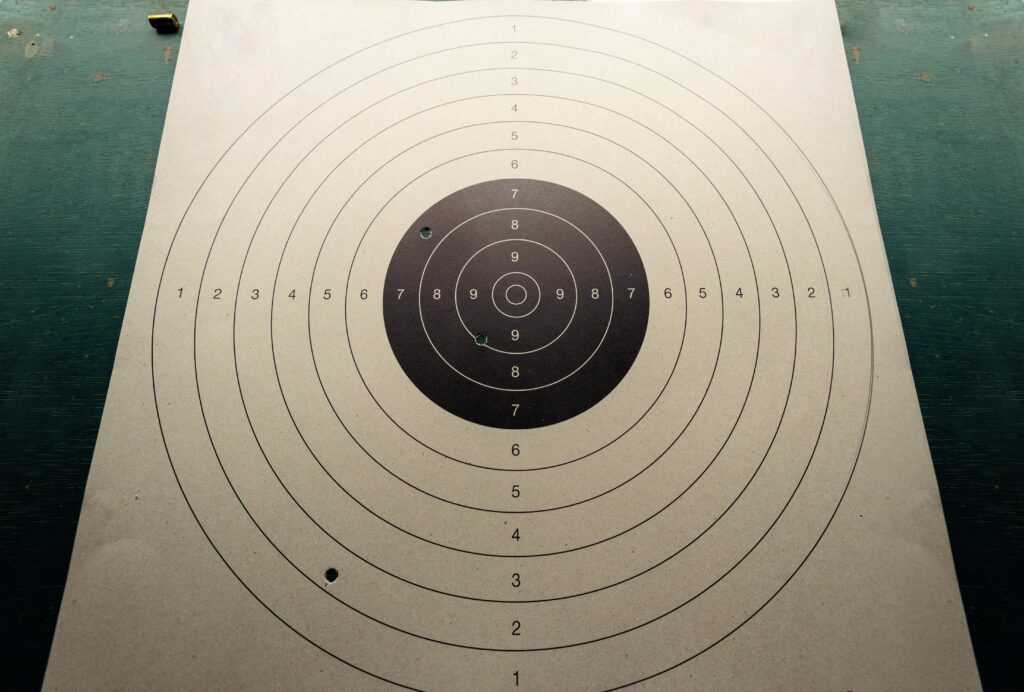
Firing a couple of rounds at a static paper target does not prove that a person can shoot.
It proves that the gun went off. Maybe it proves the student was willing to pull a trigger. None of that proves safe, controlled, repeatable gun handling.
A person can fire one round while holding the gun incorrectly. Another person can fire one round while flinching badly.
Someone else can fire one round and miss the entire target. A different student can fire one round and still have no idea how to safely unload the gun.
Real life does not give you a certificate-style shooting test.
If you ever need a firearm defensively, the situation will not be calm. You may be startled. Family members may be nearby. Innocent people may be behind the threat.
The confrontation may happen in your home, in a parking lot, or at the worst possible moment.
At that point, the question is not whether you once fired a token round into a bullet trap.
The question is whether you can think, move, decide, and act without making the situation worse.
That takes more than a certificate.
Gun Ownership Is Not Gun Readiness
Owning a gun does not make someone prepared.
Buying a holster does not make someone prepared.
Having a license does not make someone prepared.
Carrying under permitless carry does not make someone prepared.
Preparedness comes from instruction, practice, correction, and judgment.
A responsible gun owner should be able to load and unload safely. He should be able to verify the condition of the firearm. She should understand muzzle direction, trigger discipline, and safe storage.
The shooter should also understand that avoiding a confrontation is almost always better than winning one.
This is especially important for people who bought a firearm for home defense or concealed carry but are not comfortable with it yet.
Discomfort is not weakness.
Uncertainty is not failure.
Both can be warning lights that tell you it is time to get proper instruction.
A person who admits, “I need training,” is already making a better decision than someone who hides behind a certificate and pretends to be ready.
The Ethical Duty of a Firearms Instructor
Firearms instructors have an ethical responsibility that goes beyond handing out certificates.
Students trust instructors. They assume the instructor knows what matters. Many believe the course content has value.
If the instructor says they are finished, they may believe they have learned what they need to know.
That trust should not be abused.
An instructor should not build a class around the weakest possible standard and allow students to walk away believing they are ready to carry a gun responsibly.
This does not mean every beginner class must become advanced tactical training. New shooters do not need to be overwhelmed with complicated defensive drills on day one.
A beginner should not be pushed beyond his or her safe ability level.
But the instructor should be honest.
A basic class is the beginning.
It is not mastery.
No class is a guarantee.
It is not defensive pistol training unless it actually teaches defensive pistol skills.
A certificate is not proof that the student is prepared for every possible confrontation.
Honesty protects students from false confidence. It also respects the seriousness of firearms ownership.
Training should make people more careful, not more careless.

What Real Beginner Training
Should Accomplish
A serious beginner class should not promise to turn a new shooter into an expert in a few hours. That would be unrealistic.
However, it should give the student a strong foundation.
The student should leave safer than when they arrived. That student should understand the core safety rules. A proper class should explain how the firearm operates.
It should also teach how to load and unload safely.
Good training should include enough live fire for the instructor to observe and correct basic problems.
- Grip matters.
- Trigger control matters.
- Sight alignment matters.
- Follow-through matters.
- Muzzle direction matters every second the gun is in the student’s hands.
A real class should also explain the difference between owning a gun, carrying a gun, displaying a gun, and using a gun.
Those are not the same decision. Each one carries different risks.
Most importantly, the student should leave with respect for the seriousness of carrying a firearm.
A gun is not a magic wand. It does not solve every problem. It does not replace awareness, avoidance, movement, verbal skills, or judgment.
Real training builds confidence, but it should also build caution.
Beyond the Permit Class Mindset
The old permit-class model encouraged many people to think in terms of one box to check.
- Take class.
- Get certificate.
- Apply for permit.
- Done.
That mindset was never ideal. Under permitless carry, it is even less useful.
The better question is not, “What is the least I need?”
A smarter question is, “What training do I need to become a safer, more responsible armed citizen?”
For a brand-new gun owner, the right answer may be a beginner pistol class.
Someone who owns a gun but lacks confidence may benefit more from private instruction.
A person planning to carry concealed should learn safe handling, lawful decision-making, defensive fundamentals, and how to avoid unnecessary confrontations.
Home-defense concerns may require a different focus. Safe storage, family planning, identifying threats, and avoiding tragic mistakes inside the home all matter.
Different students need different training.
Almost nobody is truly served by a class that treats live fire as a meaningless formality.
The Question Every Gun Owner Should Ask
Before you choose a class, ask yourself what you really want.
Do you want the fastest certificate?
Or do you want to become safer?
Is the cheapest box-checking class really enough?
Would you rather have instruction that helps you handle the firearm with more confidence?
Do you want someone to tell you that you are done?
Or would you rather train with someone honest enough to tell you where your skills need work?
Those questions matter because firearms are unforgiving.
A careless moment can injure an innocent person. A poor legal decision can destroy your freedom. A missed shot can have consequences that last forever.
The lowest possible training standard may be enough for paperwork.
It is not enough for responsibility.
Florida permitless carry did not eliminate the need for training. It eliminated a legal obstacle for many qualified people.
That is not the same thing.
Learn the Answers Before You Need Them
If you are ready to learn the correct answers, do it before a confrontation forces you to guess.
At CCW Training Academy, our classes are not built around the weakest possible standard. They are built around helping responsible gun owners become safer, more confident, and better prepared.
We cover firearm safety, gun handling, Florida gun law, use-of-force judgment, and the practical realities of carrying or keeping a firearm for defense.
Students learn that the gun is not always the answer. They also learn why knowing when not to use it can be just as important as knowing how to shoot.
Our training includes real instruction, not just paperwork. We work on the skills that help you handle a firearm safely, understand your responsibilities, and make better decisions under pressure.
No class can guarantee what will happen in a real confrontation.
But real training can help you become safer, more aware, more responsible, and more capable than you were before.
If you are ready to learn the correct answers in addition to gaining the skills that help you handle a firearm safely, carry responsibly, and give yourself a fighting chance in a real confrontation, CCW Training Academy can help.
Do not settle for a certificate if what you really need is competence.
Do not confuse being legal with being prepared.
Get trained before you need the training.

About Your Instructor
Training is led by Alan B. Densky, a former deputy sheriff and NRA Certified firearms instructor who specializes in working with beginners, older adults, and students who want a calm, structured approach to learning.
His instruction focuses on safety, clarity, and steady progression, helping each student build confidence at a comfortable pace. Rather than rushing the process, each lesson is designed to help students understand and apply what they are learning.
To learn more about his background, experience, and credentials, visit the full instructor bio page. Visit our Q&A Page.