

Why Most People Miss the Real Warning Signs
Many self-defenders believe they already understand situational awareness. They’ve heard the color codes, practiced “keeping their head on a swivel,” and memorized the phrase “watch the hands.” Unfortunately, most of that advice is too vague to help in a real ambush. What self-defenders really need to learn is how to spot the pre-attack indicators that always lead to an attack.
You’re tired of hearing “situational awareness” like it’s some magic spell. What you really need is the truth: attackers expose themselves through specific movements and body mechanics long before the ambush begins.
Violent offenders don’t broadcast their intentions. They don’t square up like a boxer or give you time to think. Instead, they reveal their plan through micro-movements—tiny biomechanical cues that happen before the weapon appears and before the victim realizes anything is wrong. We call these micro-movements, pre-attack indicators or pre-attack cues.
This article stays focused on the pre-attack cues that actually reveal danger. It doesn’t wander into theory, rely on clichés, or repeat the same recycled situational awareness advice you’ve already heard a million times.
You’re about to learn the body language of violence—the real-world signals criminals display right before they strike.
Pre-Attack Indicators Are The Body Language of Violence:
How Criminals Telegraph an Attack
Before It Happens
Violence requires physical preparation. Because of that, the body must shift in predictable ways before an attack begins. These shifts are subtle, but once you learn them, they stand out immediately.
Let’s break down the biomechanics that matter most.
The Elbow, the Hip, and the Lie: How Attackers Signal Their Intent Before You See the Weapon
Humilitas First’s work highlights the biomechanics of violent offenders, and these insights are some of the most valuable you can learn.
1. The Elbow Moves Before the Hand
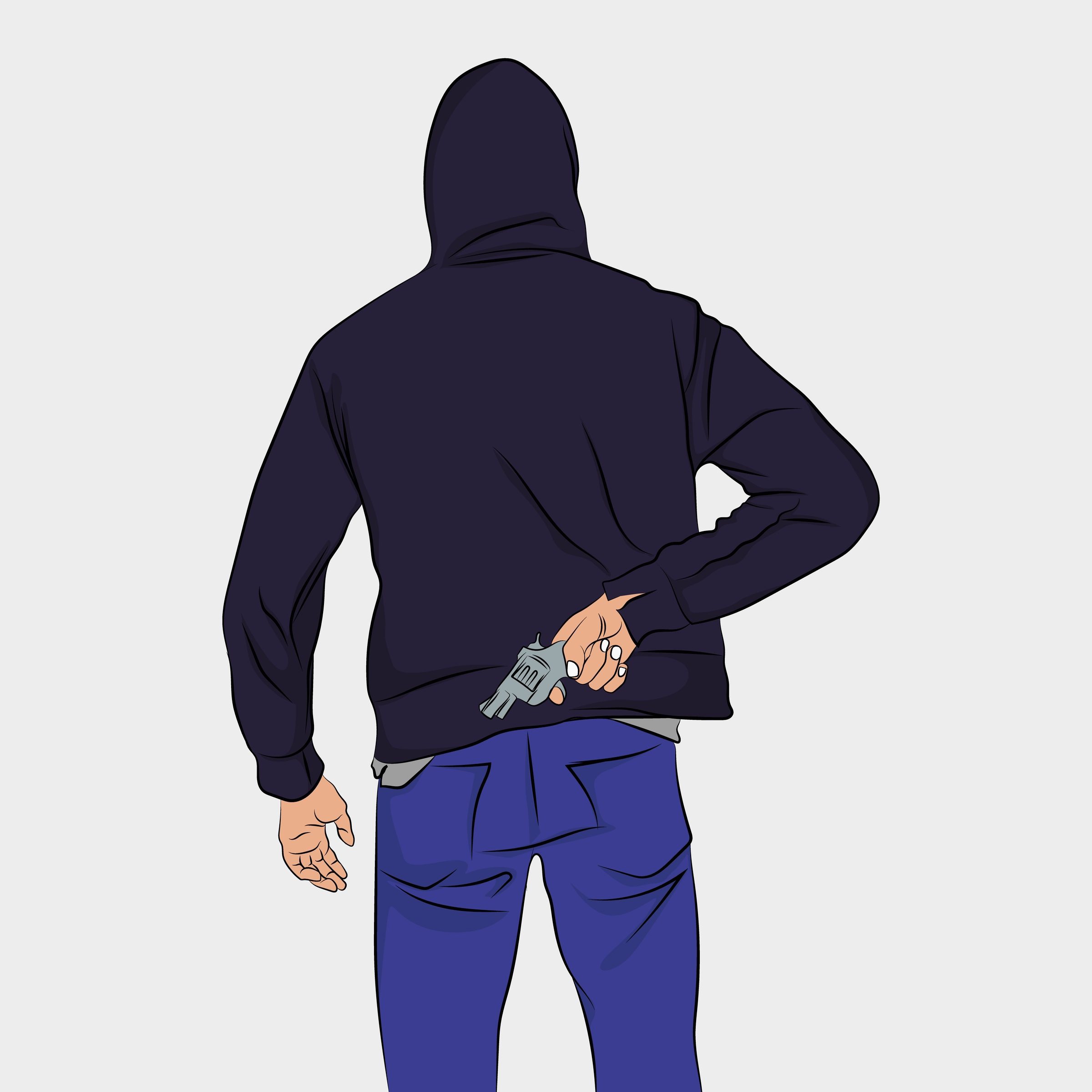
- A sudden elbow flare
- Tight elbow pinning against the torso
- A backward elbow drive
- A quick elbow twitch followed by hand movement
Any sharp elbow movement while the hand remains hidden is a major warning sign. This often appears one second before the weapon is visible.
2. The Hand Indexes the Weapon Location
Attackers frequently touch the weapon area before drawing. This unconscious behavior is known as indexing.
Common examples:
- Thumb hooking under a shirt
- Fingers tapping a pocket
- A hand hovering near the hip
- A disappearing hand behind the thigh
- Repeated waistband checks
These movements are not nervous habits. They are weapon confirmation behaviors.
3. The Hips and Shoulders Don’t Match the Walk
A normal walk is symmetrical. A criminal preparing for violence disrupts that symmetry.
Watch for:
- Bladed hips with the weapon side back
- A slight shoulder drop on the weapon side
- Torso rotation to hide the weapon
- Reduced arm swing on one side
- A stiff, uneven gait caused by a concealed weapon
Any mismatch between the hips, shoulders, and gait deserves immediate attention.
Before the Ambush: The Subtle Movements That Reveal Criminal Intent
Attackers choose the moment of maximum advantage. They strike when you are distracted, boxed in, or unable to move freely.
The Apex of the Attack

The apex is the moment when an offender gains maximum advantage and you have the least ability to respond. Several conditions tend to line up at once:
- Attention drifts toward a task or distraction
- Hands become occupied, reducing your ability to react
- Mobility drops because of your position or environment
- Escape routes narrow, limiting your options
- Focus tightens on a single action, such as unlocking a door or loading items
This is the point where most ambushes occur.
Threat Recognition:
The Micro-Movements Every
Concealed Carrier Must Learn

Here are the most reliable biomechanical pre-attack cues that an attack is seconds away:
- Weight shifts forward as the body loads for movement
- A sudden pause to time the strike
- Chin tucks or shoulders dip in preparation
- Eyes lock onto you with predatory focus
- Arm swing decreases on the weapon side
- Clothing adjustments clear access to the weapon
These cues appear consistently across violent offenders.
How Criminals Move: The Gait, Angles, and Body Shifts That Predict an Attack
Humilitas First emphasizes gait analysis as a pre-attack indicator because it reveals intent long before the weapon appears.
The Closing Phase
As the offender approaches the apex, their gait changes:
- Steps become more direct
- Speed increases slightly
- Arm swing decreases
- Weapon-side rigidity increases
- Eye contact intensifies
This is the final approach. When gait changes combine with elbow movement, hand indexing, or hip/shoulder shifts, the attack is imminent.
The Ambush Blueprint:
How Attackers Position
Their Bodies Before They Strike
Positioning is a major part of the offender’s strategy. Criminals use angles, concealment, and social norms to close distance without raising alarms.
Watch for:
- Approaches from your blind side
- Movement toward your weapon side
- Circling to cut off escape routes
- Use of vehicles, pillars, or displays as concealment
- Friendly ruses designed to close distance
These tactics appear in real ambushes far more often than dramatic Hollywood attacks.
Self-Defense Tactics and Concealed Carry Integration
Biomechanics matter, but they must connect to your defensive strategy.
Distance Management: Your First Tactical Advantage

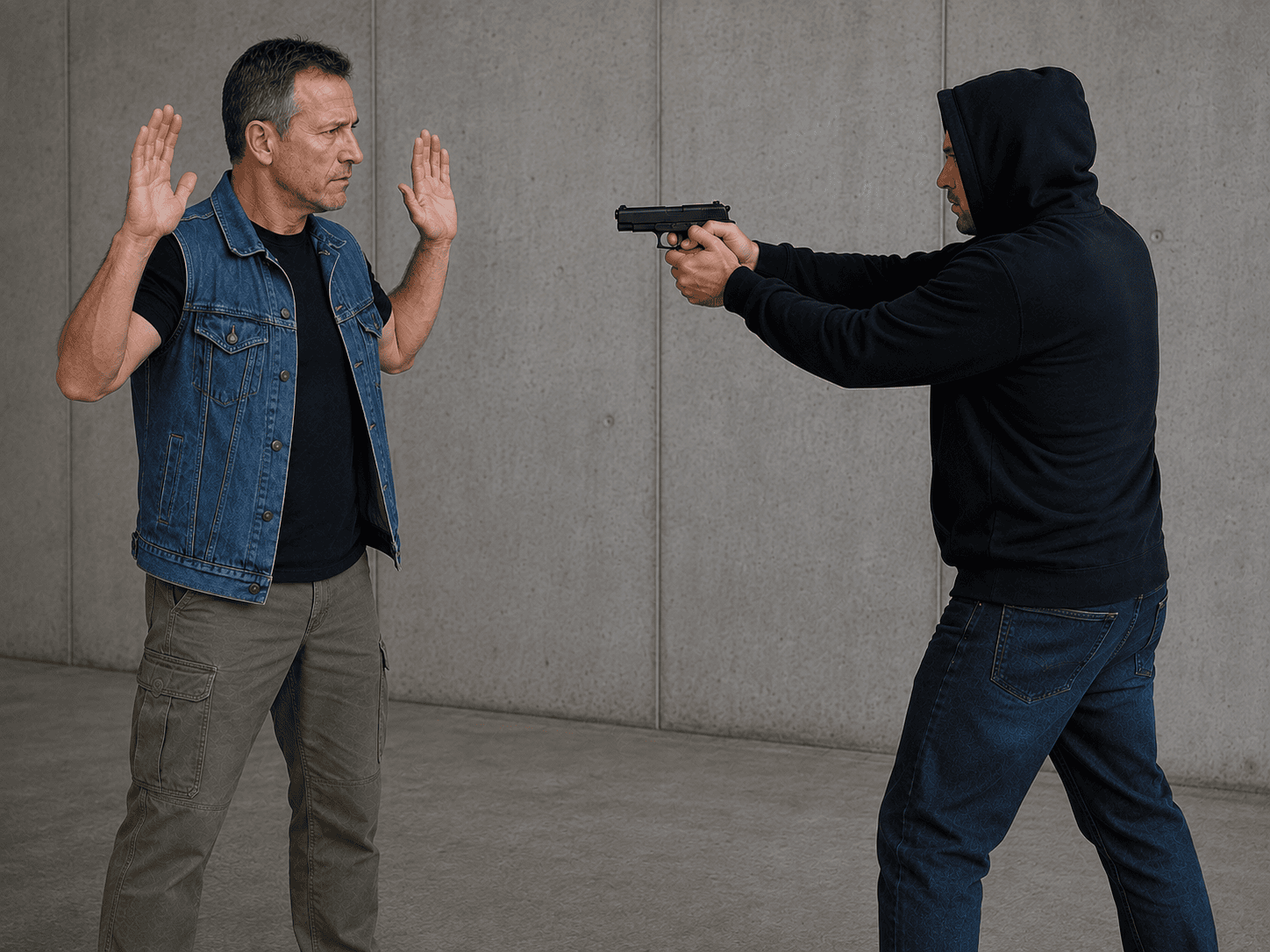
Creating space gives you time to think and act. When someone approaches too quickly or too closely that is a pre-attack cue:
- Step laterally
- Angle off the line of attack
- Use a firm command such as “Stop right there.”
- Keep your hands visible and ready
Distance buys time. Time creates options.
Scenario Training:
Awareness Must Trigger Action
Most concealed carriers practice drawing. Very few practice recognizing the attacker’s draw cues.
Scenario training should include:
- Unknown contacts
- Deceptive approaches
- Apex timing
- Elbow/hip/shoulder cues
- Movement before drawing
This type of training is especially valuable for older adults.
Legal Awareness:
Indicators Help You
Articulate Imminent Danger
Florida law requires you to clearly explain the circumstances that led you to believe you were in imminent danger. Pre-attack indicators give you the language you need to justify your decisions. They help you describe:
- What threat you recognized based on the offender’s behavior
- How you created distance to prevent escalation
- Which verbal commands you used to stop the approach
- When you drew your firearm because the danger became unavoidable
Conclusion: The Body Tells the Truth Before the Attack Begins
Situational awareness is not about paranoia. It’s about understanding the body language of violence. When you learn to recognize:
- Elbow cues
- Hip and shoulder angles
- Gait changes
- Weapon indexing
- Apex timing
- Closing-phase movement
…you gain the ability to stop an attack before it starts.
The safest fight is the one you never have to fight. And the best way to avoid that fight is simple:
See the attack before it happens.
Free Download: Pre-Attack Indicator Checklist

About the Author:
Alan B. Densky is the Founder & Lead Instructor at CCW Training Academy in Summerfield, FL. A retired deputy sheriff, professional hypnotherapist, and scenario‑based tactical coach, Alan specializes in helping active adults 45+ build real‑world defensive confidence through practical, senior‑friendly firearms training.
Learn more about Alan B. Densky |
Read Student Reviews |
Get Trained, Get Confidence
Free Personal Safety Seminar
for Churches and Civic Groups
We offer free, in person safety seminars for churches, civic groups, and community organizations. Each session focuses on situational awareness, pre attack indicators, and practical steps to recognize and avoid danger before it escalates.
What Your Group Will Learn
- How criminals select targets
- Early warning signs of potential threats
- How to recognize pre attack indicators
- Simple, practical ways to avoid dangerous situations
- What to do when something does not feel right
Who This Is For
- Churches and faith based organizations
- Civic and community groups
- HOA and neighborhood associations
- Senior groups and social clubs
No cost. No obligation. Scheduling is simple, and each seminar is tailored to your group.
Request a Seminar for Your Group:
Contact us with your group name, location, and preferred dates to get started.