

The Verdict Is In. The Bills Are Still Real.
What real cases taught a firearms instructor about the legal and financial aftermath of defensive gun use and the importance of self-defense insurance.
As a former deputy sheriff and NRA Certified firearms instructor, I specialize in scenario-based self-defense shooting. Much of my teaching covers the seconds before and during a violent encounter.
That focus eventually raised a question I could not ignore: What happens after a self-defense shooting?
I didn’t always carry self-defense insurance. Now I’m protected by Firearms Legal Protection. Before discussing the subject with students, I wanted more than marketing claims. I started with my own carrier’s FAQ. Firearms Legal Protection warns that a defender may be arrested, lose possession of the firearm, and face the judicial process. [1] That sent me looking for real cases.
What Happens After a Self-Defense Shooting?
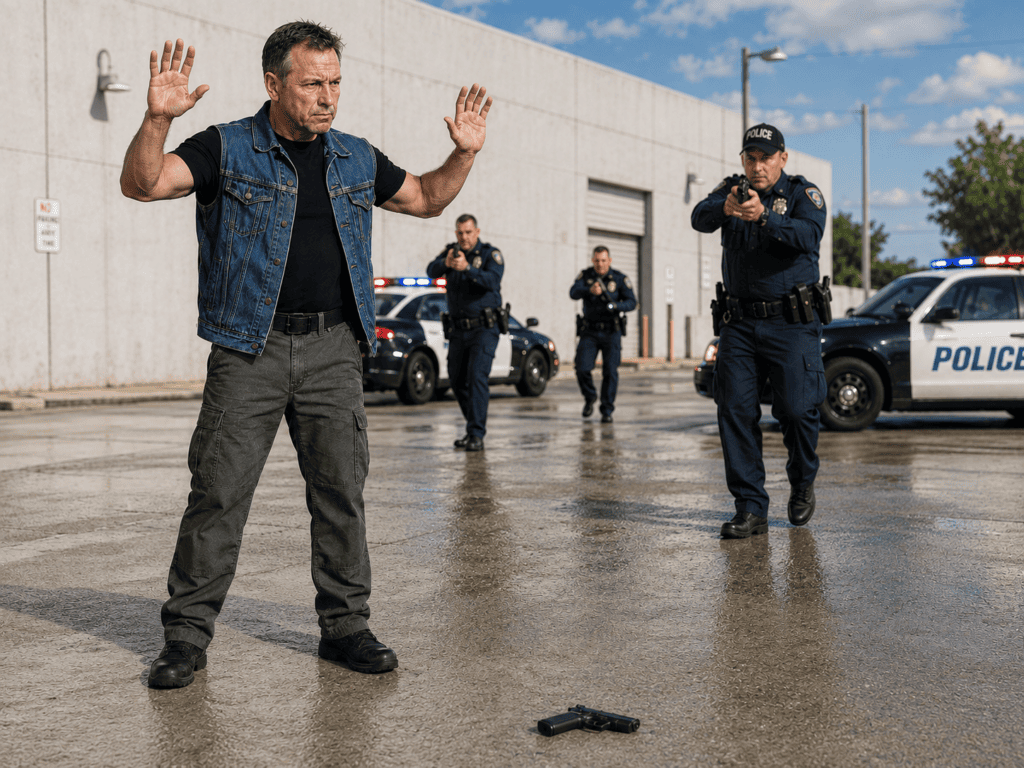 The phrase “good guy with a gun” can make the event sound finished when the threat ends. The physical danger may be over, but the legal process can just be starting. Police may investigate the shooting, prosecutors may review it, and a defender needs legal counsel immediately.
A lawful self-defense claim does not automatically prevent arrest or prosecution. Nor does an eventual acquittal erase the months or years that came before it. A serious case may involve bail, investigators, expert witnesses, court appearances, and a trial. The financial cost can grow while the defender also deals with lost work and family pressure.
I wanted to know what those consequences looked like in real life. The cases below are not identical, and their reported costs use different accounting methods. Still, they show why the aftermath deserves a place in responsible firearms training.
Jacouri Burns: 493 Days Before the Verdict
 Jacouri Burns was a 25-year-old college student, concealed carrier, and firearms instructor. A confrontation outside Lexington’s City Center ended with Burns firing his handgun. Lonnie Oxendine died, and another man was wounded. Burns said he feared he was about to be shot.
Prosecutors charged Burns with murder and second-degree assault. His initial bail was $1 million. According to his legal-protection provider, the amount never dropped below $400,000. Burns stayed in jail while the case moved forward. [2, 3]
The prosecution eventually offered a plea that could have led to his release. Burns refused because the agreement required him to accept a felony conviction. He waited for trial instead.
After 493 days in custody, Burns finally faced a jury. The jurors deliberated for about two hours and acquitted him of both charges. Independent reporting from the Lexington Herald-Leader confirms the self-defense claim and the not-guilty verdict. [2]
Burns had legal protection. His provider reports that about $250,000 in legal fees were covered. [3] The case lasted far longer than the shooting itself. Even after an acquittal, Burns could never recover the 493 days he spent waiting for that result.
Billy Cowart: A Few Seconds, Then Years of Consequences
Billy Cowart had worked at a Ford assembly plant for decades. He was also a military veteran and licensed concealed carrier. A confrontation in a union parking lot ended with Cowart shooting two men in the legs. Cowart said he acted in self-defense. Surveillance video later showed another man approaching him and striking him hard enough to make him stagger backward. Cowart faced multiple felony charges, including attempted murder. [4, 6]
His legal-protection provider describes the critical part of the encounter as lasting about 4.3 seconds. The consequences lasted much longer. Cowart lost his job, spent about a year and a half on house arrest, and depleted his savings while the case continued. [5, 6]
A judge eventually found that Cowart had acted in self-defense and cleared him on all counts. Cowart then fought a separate battle to regain his job. An arbitrator later ordered Ford to reinstate him with back pay and no loss of seniority. [4, 5]
His provider reports that about $175,000 in legal fees were covered. [6] That figure does not measure the personal cost of lost time, damaged reputation, or the stress placed on his family.
Stephen Maddox: More Than $300,000 to Defend a Murder Charge
 Stephen Maddox was attacked repeatedly by a larger man at a motorcycle event. He broke contact after earlier assaults, but the attacker confronted him again. During the final struggle, Maddox fired at close range. The attacker died, and prosecutors charged Maddox with murder.
The case required much more than a lawyer standing beside him in court. Investigators reviewed surveillance video and located witnesses. Forensic work also became important when the defense reconstructed the timing and distance of the encounter. [7, 8]
Maddox’s legal-protection provider says it funded his defense for about two years. The case ended after a two-week murder trial. Jurors acquitted Maddox after roughly two hours of deliberation. [7]
The provider reports spending more than $300,000 in attorney fees and other defense costs. [7] That distinction matters. A serious self-defense case can create expenses beyond the lawyer’s hourly bill.
Anyone searching for a lawyer for a self-defense shooting should understand that point. A strong defense may also require investigators, forensic specialists, medical experts, video analysis, and extensive preparation.
Harold Fish: When the Defense Bill Reaches the Family
Harold Fish was a 57-year-old retired teacher hiking in Arizona. Two unleashed dogs charged him on a trail. Fish fired a warning shot into the ground, and the dogs scattered. He said their owner, Grant Kuenzli, then charged while threatening to kill him.
Fish fired three shots. Testimony later described the entire incident as lasting no more than about ten seconds. [9] Prosecutors charged Fish with second-degree murder. A jury convicted him in 2006, and he received a ten-year prison sentence. An appellate court later reversed the conviction. Prosecutors eventually dismissed the case rather than retry him, and the National Registry of Exonerations lists him as exonerated.
The financial damage was severe. Fish estimated that his defense cost about $500,000. He and his wife took a second mortgage on their home. His father also mortgaged his home, while siblings, the NRA, and private donors contributed money. [10]
The reporting I found does not identify a legal-protection provider paying Fish’s defense. Instead, it describes a family assembling the money from homes, relatives, and supporters. That difference is one reason his case stayed with me.
How Much Does a Self-Defense Lawyer Cost?
People search for questions such as “How much does a self-defense lawyer cost?” and “How much does a self-defense attorney cost?” There is no single answer. Jurisdiction, charges, experts, evidence, trial length, and other factors can change the bill dramatically.
The published figures below are not perfectly comparable. Some sources report attorney fees, while others include broader defense costs. Even with that limitation, the numbers are hard to ignore.
| Case | Outcome | Reported Defense Figure |
|---|---|---|
| Jacouri Burns | Acquitted | About $250,000 in legal fees covered |
| Billy Cowart | Cleared on all counts | About $175,000 in legal fees covered |
| Stephen Maddox | Acquitted of murder | More than $300,000 in attorney fees and defense costs |
| Harold Fish | Conviction reversed and prosecution dismissed | About $500,000 estimated defense cost |
Those figures answer another common question: How much does a self-defense case cost? It can cost enough to threaten a family’s savings, home equity, and financial future. An acquittal does not send the money back.
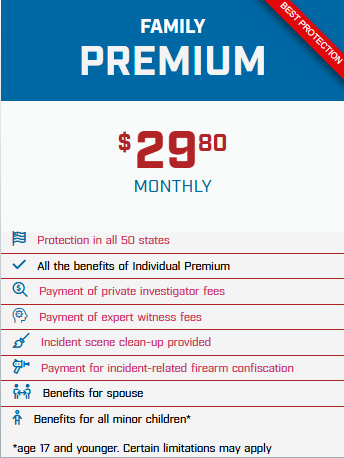
Compare Firearms Legal Protection Plans
Tap any plan below to see Florida pricing and membership details. I may earn a commission if you join through one of these links.


What to Do After a Self-Defense Shooting
 Another frequent search is “what to do after a self-defense shooting.” That subject deserves its own article because state laws and case facts vary. I do not want to turn this article into legal instructions.
My lesson is about preparation rather than a script. The time to think about the legal aftermath is before a defensive incident occurs. Waiting until an arrest, interview, or emergency call creates decisions under the worst possible conditions.
Responsible self-defense training should address more than marksmanship. Students should understand that the aftermath may involve law enforcement, lawyers, evidence, and substantial expense. Preparing for that possibility is part of preparing for armed self-defense.
Why Self-Defense Shooting Statistics Do Not Tell the Whole Story
There are continuing arguments about self-defense shooting statistics and defensive gun use statistics. Those numbers matter when discussing public policy. They did not answer the question that interested me most as an instructor.
I wanted to know what could happen to one student after one defensive shooting. That person could lose a job while waiting for trial. A family might face a six-figure legal bill. An acquitted defender could spend more than a year in custody before hearing the verdict.
The cases above show that all of those outcomes are possible. They also show that “not guilty” does not mean “nothing happened.” The process itself can consume time, money, and freedom.
That perspective changed how I discuss preparedness. Winning the physical encounter is essential, but it is only one part of surviving the event.
Why I Changed the Legal Protection I Carry
I did not start this research because I was deciding whether to carry self-defense legal protection. I had already paid for it for years. My research changed something else. It changed which company I wanted behind me if I ever needed that help.
After reviewing these cases and reconsidering my own priorities, I switched to Firearms Legal Protection. I am not going to compare policies, prices, limits, or fine print here. The companies can explain their own products, and readers can decide what matters to them.
If you want to see the program I chose, you can review it and make your own decision. My purpose is not to sell a particular plan inside this article. It is to explain why I believe an armed citizen should plan for the legal and financial aftermath.
The Question I Now Ask My Students
 When I teach self-defense shooting, I still focus heavily on the first fight. Students must recognize danger, make sound decisions, and perform under pressure. Those skills can determine whether they survive the encounter.
I now add another question to that preparation: What happens if you survive the shooting and the legal fight begins? A defender can act in good faith and still face arrest, prosecution, lost income, and enormous legal expenses. Some people have legal protection that absorbs major defense costs. Others may have to rely on savings, property, family, and outside donations.
If you carry a firearm to protect your life, I believe you should also plan for what may follow. The first fight can end in seconds. The second one can last for years.
Author’s note: I am an NRA Certified firearms instructor and a Firearms Legal Protection member and affiliate.
This article is educational and is not legal advice. Laws, facts, and legal-protection products vary. Readers should conduct their own due diligence.
About the Author

Sources and Attribution
Sources accessed September 11, 2026. Provider-reported payment figures are identified as such in the article.
- Firearms Legal Protection — Frequently Asked Questions
- Taylor Six, Lexington Herald-Leader — Jury finds man not guilty in downtown Lexington murder trial
- U.S. Concealed Carry Association — 493 Days: Jacouri Burns’s Self-Defense Story
- CBS Chicago — Former Ford Employee Acted In Self-Defense When Shooting Coworkers
- CBS Chicago — Ford Employee Fired For Self-Defense Shooting Rehired, Gets Back Pay
- U.S. Concealed Carry Association — Guilty Until Proven Innocent: Billy Cowart’s Self-Defense Story
- CCW Safe — Real Experience, Real World
- CCW Safe — Budgeting for Your Freedom
- National Registry of Exonerations — Harold Fish
- Ray Stern, Phoenix New Times — Shoot to Kill