Many Armed Citizens Feel Confident Because . . . .

they’ve spent years shooting. Real-world violence, however, exposes gaps that range time can’t fix. These seven mistakes are the armed citizen mistakes that most people never notice until the moment everything goes wrong.
The encouraging part is this: every one of these errors is preventable. Once these concepts become familiar, carrying becomes safer, clearer, and far less stressful.
Armed Citizen Mistakes #1 —
Carrying Without a Plan
Most people carry a gun with the same mindset they use when driving a car: “If something happens, I’ll react.” Violence rarely gives that luxury. Criminals choose the place, the time, the angle, and the victim. When they act with intention and the defender responds with improvisation, the encounter begins at a disadvantage.
Why “I’ll Figure It Out
If It Happens” Is Deadly
Stress doesn’t make the brain more creative — it makes it more basic. Freezing, hesitation, and reverting to the most familiar action are common. If the only practice involves standing still on a range and shooting at a paper target, that is exactly what the body will attempt during a real attack.
What a Real Plan Looks Like
A practical defensive plan is simple and repeatable:
- Clear understanding of where the firearm is carried and how it will be accessed
- A predetermined response for rapid, aggressive approaches
- A movement strategy when accompanied by family members
- Short, practiced verbal commands for de-escalation
- Firm boundaries for situations where drawing is not appropriate
Preparation is not paranoia — it is responsible carry. For a related breakdown of planning and legal pitfalls, see Florida Car Open Carry Law Has 3 Traps.
Armed Citizen Mistakes #2 —
Poor Situational Awareness
Many people assume they’re aware. Awareness, however, isn’t a personality trait — it’s a skill. And like any skill, it fades without deliberate practice.
The Myth of “I’m Always Aware”
Looking around is not the same as noticing. Familiar environments — grocery stores, parking lots, gas stations — create complacency. The brain slips into autopilot, and that is exactly when criminals take advantage.
The Simple Habits That Prevent Ambushes
Improving awareness doesn’t require specialized training. A few consistent habits make a dramatic difference:
- A quick scan of a parking lot before entering it
- Parking away from large vehicles that block visibility
- Walking with the head up and eyes active
- Tracking anyone within a 10-foot radius
- Maintaining space when strangers attempt to close distance
These habits prevent most violent encounters before they begin.
Armed Citizen Mistakes #3 —
Overconfidence in Shooting Skills
Strong range performance does not guarantee strong real-world performance. The range is controlled, predictable, and safe — the opposite of an actual attack.
Range Confidence vs. Real-World Performance
On the range:
- The start of the “threat” is known
- The target location is fixed
- There is no movement that occurs
- No return fire exists
- No surprise or injury is possible
Real attacks remove every one of those advantages.
The Skills That Actually Matter
Life-saving skills extend far beyond marksmanship:
- A clean, consistent fast draw stroke
- Movement during the draw
- Effective verbal commands
- Shooting from compromised positions
- Decision-making under pressure
A gunfight is a problem-solving event, not a shooting contest. Events like the CCW Challenge help develop these real-world skills.
Armed Citizen Mistakes #4 —
Failing to Recognize Pre-Attack Indicators
Violence doesn’t begin with the attack. It begins with the behaviors that lead up to an attack.
Violence Has a “Warm-Up Phase”
Criminals leak intent through:
- Body language shifts
- Eye movement patterns
- Posture changes
- Repeated target glances
- Grooming gestures
- Sudden silence
- Closing distance
These cues appear seconds — sometimes minutes — before the attack.
The Cost of Missing Early Warning Signs
Missing these cues results in the loss of:
- Time
- Distance
- Options
Recognizing pre-attack indicators provides the ability to act before the attack begins. For specific examples, see Pre-Attack Indicators.
Armed Citizen Mistakes #5 —
Carrying in a Way That’s Impossible to Access
Comfort often drives carry choices, but comfort does not equal access. A firearm that cannot be reached quickly is not a defensive tool — it is an accessory.
The “Comfort Over Access” Trap
Common examples include:
- Purse carry
- Deep concealment holsters
- Off-body carry in bags
- Pocket carry with keys or phones
- Small-of-back holsters
These methods feel comfortable… until the moment the firearm is needed.
The 3-Second Rule
If the firearm cannot be accessed in three seconds or less, it is being transported — not carried.
This rule matters even more for older adults, who may have reduced mobility or slower reaction times. For additional safety guidance, see concealed carry class.
Armed Citizen Mistakes #6 —
Not Understanding the Legal Aftermath
Many armed citizens believe that being “in the right” guarantees legal protection. The legal system does not work that way.
The Legal Fight Is Often Harder Than the Physical One
After a defensive shooting, the defender may face:
- Criminal investigation
- Civil lawsuits
- Financial strain
- Emotional stress
- Media attention
- Months or years of uncertainty
Even a justified shooting can lead to life-changing consequences like a $100,000 legal bill.
What Responsible Armed Citizens Must Know
A law degree isn’t required, but certain concepts must be understood:
- The legal meaning of “reasonable fear”
- The definition of an “imminent threat”
- What qualifies as a “proportional response”
- Statements that help or harm during police interaction
Understanding these concepts is part of responsible carry. For additional context, review Florida Concealed Carry Law 2025.
Armed Citizen Mistakes #7 —
Never Training for Stress
The body changes under adrenaline. Experiencing those changes for the first time during a real attack is a dangerous disadvantage.
The Body Changes Under Adrenaline
Under stress, people experience:
- Shaking
- Tunnel vision
- Auditory exclusion
- Difficulty speaking
- Difficulty thinking
- Loss of fine motor skills
These reactions are normal — but they must be trained for.
How to Inoculate Yourself Against Stress
Realistic training builds resilience:
- Scenario-based drills
- Movement during the draw
- Verbal commands
- Decision-making exercises
- Time pressure
- Simple stress inoculation
Events like the CCW Challenge provide controlled stress in a safe environment.
How to Fix All Seven Mistakes (Summary)
Here’s the simple checklist:
- A clear defensive plan
- Consistent awareness habits
- Training focused on access and draw speed, not just accuracy
- Recognition of pre-attack indicators
- A carry method that allows rapid access
- Understanding of the legal aftermath
- Scenario-based training under realistic stress
These aren’t advanced skills. They’re everyday habits that anyone — at any age — can learn.
Final Thoughts
Readiness isn’t about being tactical. It’s about being prepared, thoughtful, responsible, and well trained.
Speed helps but isn’t mandatory. Strength helps but isn’t mandatory. Youth helps but isn’t required.
Understanding the mistakes that get people hurt — and building the habits that prevent them — is what matters.
Related Articles and Resources
- Pre-Attack Indicators: The Early Warning Signs of Violence
- The CCW Challenge: Real-World Skills for Armed Citizens
- Free Safety Checklists and Training Resources
Questions & Answers
Q: Do I need years of training to avoid these seven mistakes?
A: No. Most of these errors are corrected with simple awareness and small habit changes. Improvement begins immediately, even for new carriers.
Q: I’m older and not very fast. Is it still worth carrying?
A: Yes. Defensive firearms benefit people of all ages. A realistic carry method, a basic plan, and an understanding of pre-attack indicators and the law matter far more than speed.
Q: How often should I train under stress?
A: As often as reasonably possible. Structured classes a few times a year, combined with local events like the CCW Challenge or Steel Competition, provide safe exposure to time pressure and decision-making.
Q: Is it enough to just read about these mistakes?
A: Reading is the first step. Applying the information — adjusting carry methods, practicing the draw, improving awareness, and seeking realistic training — is what creates real capability.
Q: Where should I start if I feel overwhelmed?
A: Begin with one improvement: awareness habits or a better carry method. Add a second improvement later, such as learning pre-attack indicators or attending a structured training event. Small steps compound quickly.
About the Author
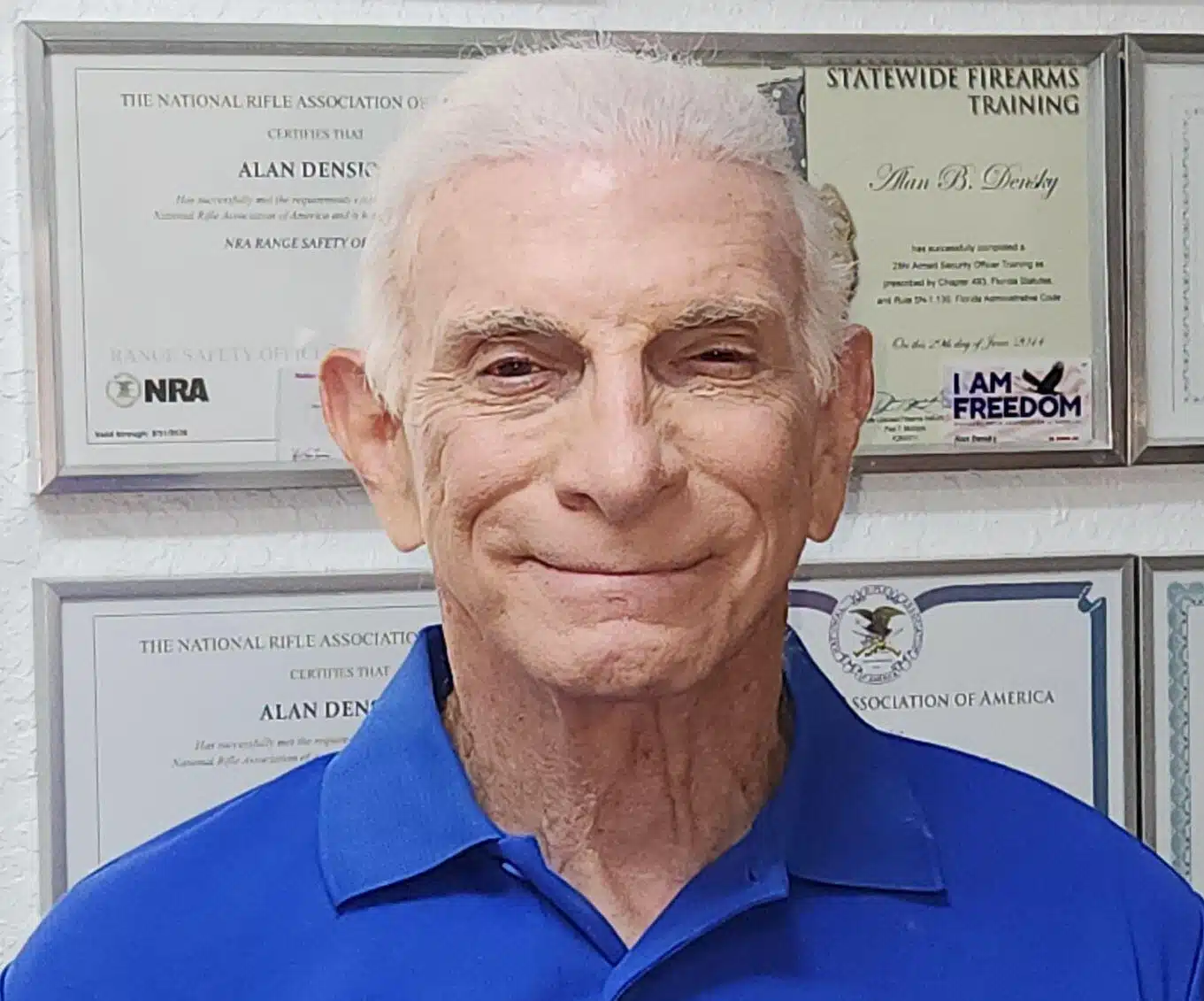
Alan B. Densky is the founder and lead instructor at CCW Training Academy. He designs real-world defensive pistol training for responsible adults, with a special focus on beginners through older adults, and everyone in between. He teaches those who want practical, confidence-building skills instead of hype. He teaches advanced shooters to be experts.
Alan also runs a CCW Challenge, where shooters of all experience levels can safely test their skills under time and mild stress. His mission is simple: help ordinary people become safer, more capable armed citizens.