When people talk about personal safety tips, they usually focus on what you should do:
Walk with confidence, lock your doors, stay aware, and avoid dark places. Those ideas are helpful, but they miss the most important part of the story. Your safety does not depend only on what you do. It also depends on how a criminal thinks.
Criminals do not choose victims at random. What they use is patterns, habits, and mental shortcuts. They scan people and places to look for certain behaviors. Sometimes they test reactions. In other words, they use a kind of fast, rough criminal psychology. Once you understand that, your personal safety tips become much more powerful and much more realistic.
In this article, you will see how criminals choose their victims in Florida. You will also learn how to use that knowledge to avoid being selected in the first place. These ideas are based on real offender behavior, not theory. They are simple, practical, and designed for ordinary people who want to stay safe in the real world.
Criminals Look For Predictability,
Not Just Weakness
Many people believe that criminals always look for the weakest person in the area. That sounds logical, but it is not the full truth. In reality, criminals look for the most predictable person. They want someone who will behave in a way they can control quickly and quietly.
Predictable people move through the world on autopilot. When you see them, they are usually walking with their heads down. They stare at their phones. And, they rush from the store to the car without looking around. Usually, they follow social scripts without thinking. Generally they do what is expected, even when something feels wrong.
From the attacker’s point of view, this is ideal. A predictable person is more likely to:
Freeze, comply, avoid eye contact, and follow instructions. That means less risk, less noise, and less chance of resistance.
One of the most important personal safety tips is this: do not be predictable. You do not need to act fearful, simply act aware. Lift your head. Look around. Change direction if something feels off. Make brief eye contact with people who are watching you. These small actions send a clear message: “I am paying attention.”
Criminals Use Fast Filters To Select Victims
Criminals do not have time to study every person in detail. Instead, they use fast mental filters. These filters help them decide who looks easy to control and who looks like a problem. This process happens quickly and often without conscious thought.
Common victim selection filters include:
Awareness level: Is the person scanning or staring at a phone?
Body language: Does the person look confident or timid?
Walking pace: Is the person rushed and distracted?
Hands: Are the hands full of bags or items?
Isolation: Is the person alone in a quiet area?
Hesitation: Does the person seem unsure or lost?
These filters all point to one key question in the attacker’s mind: “Can I control this person quickly?” If the answer seems to be yes, the risk feels low. When the answer seems to be no, the attacker often moves on.
A simple personal safety tip follows from this: Walk with purpose. Keep at least one hand free when possible. Look like you know where you are going, even if you are still deciding.
You do not need to look aggressive. But you do need to look like someone who will not be easy to control.
Criminals Often Test You Before They Attack
Many attacks do not start with a sudden grab or a shouted demand. Instead, they begin with a small test. The attacker wants to see how you respond. This test can look friendly,
harmless, or even polite. That is what makes it so effective.
Common tests include:
“Do you have the time?”
“Got a light?”
“Can you help me with something?”
“Do you have a dollar?”
“Hey, come here for a second.”
On the surface, these questions seem normal. However, they can also be used to check your boundaries. If you step closer, if you ignore your instincts, or if you let the person move into your personal space, you may confirm that you are easy to approach and easy to control.
A practical personal safety tip is to answer from a distance. You can respond without stepping closer. Just say “Sorry, I can’t help you,” while still moving. Simply keep a car, a shopping cart, or a bench between you and the other person. You are not being rude. You’re protecting your space and your options.
Transitional Spaces Create
Opportunity For Attackers
Most people feel safe inside familiar places. They relax in their homes, in stores, and in offices. The danger often appears in the spaces between those places. These are called transitional spaces, and criminals know how to use them.
Transitional spaces include:
Parking lots
Sidewalks between buildings
Gas stations
Stairwells and hallways
Entrances and exits
In these areas, your attention is often split. You might be thinking about your next stop, digging for keys, carrying bags, or unlocking your car. Your focus narrows, and your awareness drops. That is exactly what an attacker wants.
A simple personal safety tip is to pause before you move through a transitional space. Take a breath. Look around. Scan the area before you step out of the store or before you walk away from your car. When you reach your vehicle, look into the back seat and around the area before you unlock the door. These small pauses give you time to notice anything that does not feel right.
Control Is The Attacker’s Real Goal
When you think about crime, you might picture money, phones, or cars as the main goal. In reality, the attacker’s first goal is control. If they can control you, they can take whatever they want. If they cannot control you, the risk becomes much higher.
Attackers try to gain control by:
Closing distance quickly
Using surprise
Giving sharp commands
Using threats or weapons
Forcing you into a smaller space
They want your attention locked on them, and want you to freeze. They want you to obey without thinking. The faster they gain control, the safer they feel.
You can disrupt this process. One powerful personal safety tip is to move off the line of attack. Instead of stepping straight back, step to the side.
You can also drop an object, such as keys or a bag, to create a brief distraction. Or, use your voice to interrupt the attacker’s rhythm by asking a bizzare question or shouting a short command of your own. These actions force the attacker to adjust, and that adjustment costs them time and control.
Criminals Avoid People
Who Look Like A Problem
Criminals do not want a fair fight. They do not want attention. Criminals do not want to get hurt or caught. They want a fast, low-risk crime. That means they avoid people who look like they might cause trouble.
People who look like a problem are not always big, strong, or young. Instead, they share certain behaviors. They:
Make brief eye contact.
Usually adjust their path when something feels wrong.
Keep their hands free when possible.
Use barriers, like cars or carts, to control space.
Do not let strangers move too close too fast.
These behaviors send a clear message: “I see you, I’m paying attention, and I will not be easy.” For many criminals, that is enough to make them look elsewhere.
One of the most effective personal safety tips is to become that kind of person. You do not need to act aggressive. Act aware, deliberate, and unwilling to ignore your instincts.
Instincts Are Your Early Warning System
Your brain is always scanning your environment, even when you are not aware of it. It notices posture, tone of voice, movement, and small changes in behavior. When something does not fit, you often feel it before you can explain it. That feeling is not magic. It is your early warning system.
Many people ignore that feeling because they do not want to seem rude, worried, or dramatic. They talk themselves out of it. Because of that, they stay in a situation that feels wrong because they do not want to make a scene. Unfortunately, criminals count on that hesitation.
A vital personal safety tip is to trust your instincts. If something feels off, act. Change direction; cross the street. You can go back into the store. Or, get into your car, lock the doors, and leave. You do not owe anyone an explanation for keeping yourself safe.
Conclusion: Personal Safety Starts With Understanding How Criminals Think
Personal safety tips are much more effective when they are based on how criminals actually think and behave. Criminals look for predictability. They use fast filters to select victims. Criminals test boundaries and exploit transitional spaces. Above all, they want control.
When you understand these patterns, you can change the way you move through the world. You can break predictability and walk with purpose. Always protect your space. Make sure that you recognize tests and refuse to play along. Trust your instincts and act on them.
You do not need to live in fear. Confident people only need to live with awareness. The more you understand about how criminals choose their victims, the more power you have to make sure they do not choose you.
The Adventure Is About To Begin
Now that you understand how criminals think and how they choose their victims, the next question is simple: what do you do when the moment turns real? Awareness helps you avoid trouble, but it cannot stop an ambush once it begins.
When a criminal closes the distance and tries to take control, you need skills you can rely on under pressure — not theory, not guesswork, and not range habits that fall apart in real violence.
If you’re ready to turn this knowledge into practical, real‑world capability, the Tactical Pistol Course is where that transformation begins.
If you have little or no experience with firearms, perhaps a Concealed Carry Course, or Private Pistol lessons are a better place to begin your journey.
About the Author:
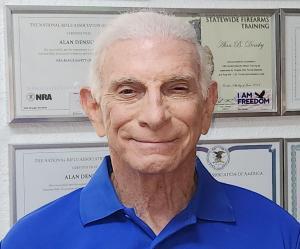
Alan B. Densky is the Founder & Lead Instructor at CCW Training Academy in Summerfield, FL. A former deputy sheriff, professional hypnotherapist, and scenario-based tactical instructor, Alan includes teaching firearms safety and self-defense laws in every course. He enjoys helping active adults 45+ build real-world defensive confidence through practical, competent firearms training.
Learn more about Alan B. Densky |
Read Student Reviews |
Get Trained, Get Real Confidence


 When people talk about personal safety tips, they usually focus on what you should do:
Walk with confidence, lock your doors, stay aware, and avoid dark places. Those ideas are helpful, but they miss the most important part of the story. Your safety does not depend only on what you do. It also depends on how a criminal thinks.
Criminals do not choose victims at random. What they use is patterns, habits, and mental shortcuts. They scan people and places to look for certain behaviors. Sometimes they test reactions. In other words, they use a kind of fast, rough criminal psychology. Once you understand that, your personal safety tips become much more powerful and much more realistic.
In this article, you will see how criminals choose their victims in Florida. You will also learn how to use that knowledge to avoid being selected in the first place. These ideas are based on real offender behavior, not theory. They are simple, practical, and designed for ordinary people who want to stay safe in the real world.
When people talk about personal safety tips, they usually focus on what you should do:
Walk with confidence, lock your doors, stay aware, and avoid dark places. Those ideas are helpful, but they miss the most important part of the story. Your safety does not depend only on what you do. It also depends on how a criminal thinks.
Criminals do not choose victims at random. What they use is patterns, habits, and mental shortcuts. They scan people and places to look for certain behaviors. Sometimes they test reactions. In other words, they use a kind of fast, rough criminal psychology. Once you understand that, your personal safety tips become much more powerful and much more realistic.
In this article, you will see how criminals choose their victims in Florida. You will also learn how to use that knowledge to avoid being selected in the first place. These ideas are based on real offender behavior, not theory. They are simple, practical, and designed for ordinary people who want to stay safe in the real world.