

See Your Training Options
A routine stop at a gas station, walking to a car, or answering a knock at the door can shift in seconds. These situations begin as normal moments. However, they often turn serious without warning. Most people assume it will never happen to them because it always happens to someone else. This is known as normalcy bias.
Normalcy bias convinces people that the future will look like the past. If nothing bad has happened yet, they expect that pattern to continue. As a result, they delay preparing for situations that demand immediate action.
I’ll get to it later, when life slows down.
Later, when there’s more time.
It will be a lot more convenient later.
I’ll never get robbed anyway.
That pattern feels logical. However, repeated delay creates behavior. Over time, behavior becomes habit. In fact, people begin to program their own inaction. Once that pattern takes hold, it becomes difficult to break.
Why People Delay Starting Firearms Training in Marion County
Most people do not refuse firearms training. Instead, they postpone it. That distinction matters because postponement feels harmless. In reality, it creates a consistent pattern of avoidance.
The mind seeks efficiency. When something feels optional, it gets pushed aside. When that happens repeatedly, the unconscious mind accepts delay as the default response. Many people call this the subconscious mind. Dr. Milton Erickson referred to it as the unconscious mind, and that is the term used here.
This part of the mind does not evaluate decisions logically. It follows patterns. If the pattern becomes “not now,” then “not now” repeats automatically. As a result, people do not consciously decide to avoid training. They simply continue a pattern they have already established.
Breaking that pattern requires a deliberate interruption. That interruption begins with awareness and leads to a decision.
Desire, Decision, and Learning in Firearms Training
After working with people for decades in behavior change and performance training, one pattern remains consistent. Real change follows three steps: Desire, Decision, and Learning.
Desire starts the process. A person must believe that improving their skills will protect something important. That could be their own safety or the safety of their family. Without that belief, motivation remains weak.
Decision is the turning point. Many people stay stuck here. They think about training and talk about it, but they never commit. Without a decision, nothing changes. Thinking does not create results. Action does.
Learning follows the decision. This is where most people overestimate difficulty. Structured training simplifies the process. Instead of guessing, students follow a proven progression.
- There is a desire to be prepared
- A decision is made to start
- You learn step-by-step
Most people already have desire. However, they delay the decision. That delay keeps them from ever reaching the learning phase.
Reality vs Expectation in Firearms Training
Expectations about self-defense often come from limited experience. Many people believe they will react quickly and think clearly under pressure. They assume range experience prepares them for real situations.
Reality is different. Stress changes how the body and mind function. Heart rate increases, fine motor skills degrade, and decision-making becomes reactive. Situations unfold quickly, and there is little time to think.
Because of this, expectation and reality rarely match. Training exists to close that gap. It prepares individuals to function under pressure instead of relying on hope.
Without training, people depend on assumptions. With training, they rely on practiced responses.
Why Owning a Gun Is Not Enough for Self-Defense
Owning a firearm does not equal preparedness. It creates the potential for protection, but potential is not the same as ability.
Many people feel confident after purchasing a gun. That confidence often comes from the belief that they have solved the problem. In reality, they have only acquired a tool.
If someone has a commuting problem, buying an airplane does not solve it. They must learn to fly. The same principle applies to firearms. Without training, the tool remains underutilized.
This gap between ownership and skill creates a false sense of security. That false confidence leads to hesitation and poor decisions under stress.
 How Firearms Training Builds Skill Over Time
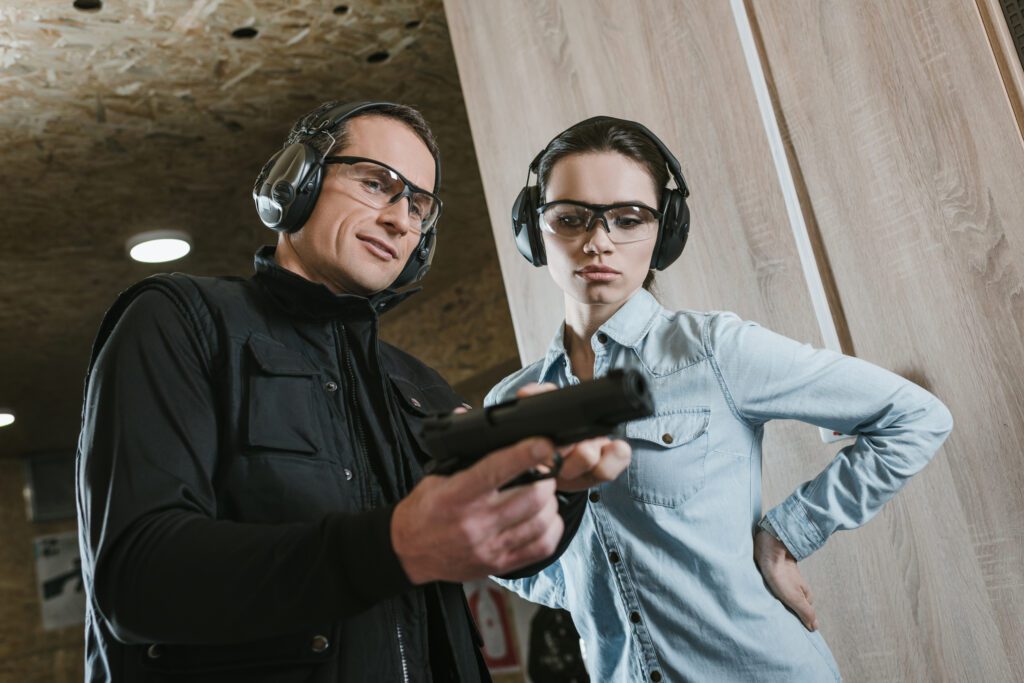 How Firearms Training Builds Skill Over Time
Skill develops through structure and repetition. Random practice does not produce consistent results. Effective training follows a progression that builds competence step by step.
Students begin with foundational skills. They then reinforce those skills through controlled repetition. Finally, they apply what they have learned in live-fire environments.
Without structure, people practice incorrectly. As a result, they reinforce bad habits instead of building effective skills. Repetition strengthens whatever behavior is performed, whether correct or incorrect.
Proper training ensures that repetition works in the student’s favor. It builds reliable performance instead of unpredictable results.
Tactics and Decision-Making
in Firearms Training
Technical shooting ability is only part of self-defense. Tactics play a critical role in real-world situations. Awareness, positioning, and timing often determine the outcome.
In many cases, creating a brief distraction or changing position provides the opportunity needed to respond. These elements require training and practice. They do not develop automatically.
Understanding how criminals think and knowing superior tactics allows individuals to think ahead, instead of reacting late. This shift improves both safety and effectiveness.
Why Delaying Firearms Training in Marion County Has Consequences
Delaying training does not maintain the status quo. It creates a growing gap between confidence and ability. Over time, that gap becomes more significant.
People continue to believe they are prepared. However, they have not tested their skills under realistic conditions. This mismatch leads to poor outcomes when situations demand immediate action.
Each delay reinforces the same internal pattern. Eventually, delay becomes the default response. At that point, starting requires a conscious decision to break the pattern.
Common Excuses That Delay Firearms Training in Marion County
Most people do not avoid firearms training because they lack interest. They avoid it because they justify delay. These justifications feel reasonable in the moment. Over time, they create long-term inaction.
One of the most common excuses is time. People believe they need large blocks of time to begin. In reality, structured training breaks the process into manageable steps. Starting does not require a major life change. It requires a decision.
Another common excuse is cost. People compare training to other expenses and postpone it. However, they continue spending money on non-essential items without hesitation. The issue is not cost alone. It is perceived priority.
Some believe they already know enough. They have shot at a range or handled firearms for years. That experience creates confidence. However, confidence without structure often leads to gaps in skill and decision-making.
Others believe nothing will happen to them. This belief ties directly to normalcy bias. If nothing has happened before, they assume nothing will happen in the future. That assumption removes urgency.
Each excuse reinforces the same pattern. Delay feels justified, so it continues. Over time, the pattern becomes automatic. Breaking it requires recognizing the pattern and choosing to act despite it.
Once a person takes that step, the excuses lose their influence. Action replaces hesitation, and progress begins immediately.
The Insurance Mindset Applied to Firearms Training
Most people understand the concept of insurance. They protect their homes, vehicles, and health. They do not expect problems, but they prepare for them anyway.
Firearms training follows the same principle. It is not based on fear. It is based on responsibility. Preparation ensures that if something happens, the individual has the ability to respond effectively.
This mindset shifts the focus from avoidance to readiness. It places value on preparation rather than reaction.
A Better Question About Starting Firearms Training
Many people ask when they will have time to start. That question leads to continued delay. A better question creates urgency and clarity.
How much longer am I willing to go without knowing for sure that I am prepared?
This question forces a decision. It shifts focus from convenience to responsibility. Once that shift occurs, action becomes more likely.
What Happens When You Start Firearms Training in Marion County
Starting firearms training changes how a person thinks about safety. Uncertainty begins to fade as structure replaces guesswork. Instead of wondering what to do, students begin to understand how situations unfold.
Early training focuses on simple, clear steps. Students learn safe handling, proper mechanics, and basic decision-making. These fundamentals create a foundation that supports everything that follows.
As training continues, confidence begins to build. This confidence does not come from assumption. It comes from repetition and understanding. Each session reinforces correct behavior and improves consistency.
Students also develop awareness. They begin to notice their surroundings differently. Situations that once felt routine now receive more attention. This awareness often prevents problems before they develop.
Over time, hesitation decreases. Decision-making becomes more efficient. Students learn when to act and when not to act. This clarity reduces the likelihood of poor choices under stress.
Most importantly, training replaces false confidence with earned confidence. Instead of hoping they are prepared, students know where they stand. That knowledge creates a level of certainty that cannot be gained any other way.
Starting may feel like a small step. However, it produces a measurable shift in skill, awareness, and mindset. That shift is what separates preparation from assumption.
Start Firearms Training in Marion County the Right Way
Waiting feels like the safe choice, but it does not solve the problem or remove uncertainty.
Uncertainty only goes away when you understand what to do and how to do it.
That is what comes from deciding to act and getting the right pistol instruction.
With clear, step-by-step training, beginners move from hesitation to confidence. What once felt unfamiliar becomes simple, controlled, and manageable.
About Your Instructor
 Instructor
Choosing the right pistol training is not just about the method. It also depends on the instructor guiding the process.
Training is led by Alan B. Densky, a former deputy sheriff and professional firearms instructor. He specializes in working with beginners, older adults, and students who prefer a structured, calm learning environment.
Each lesson focuses on safety, clarity, and steady progression. Students build confidence at a comfortable pace while developing skills that carry into real-world situations.
To learn more, visit the Instructor Bio Page.