- Marion, Sumpter, Lake Counties
- alan@ccwinstructor.com
- Text (352) 459-2471
- CWL & Scenario Based Tactical Self-Defense Pistol Training

When a violent criminal forces you to defend your life, the shooting itself is only the beginning. The moment the gunfire stops, a second fight begins. I’m talking about the legal fight. What happens after you pull the trigger is often harder, longer, and more dangerous to your freedom than the physical attack you just survived.

Attorney Andrew Branca, author of The Law Of Self-Defense Principles, is the leading authority on how armed citizens win (or lose) the legal battle after a defensive shooting. I teach his framework in every class because it is the clearest, most accurate roadmap for staying out of prison after you pull the trigger.
This article explains what really happens after a defensive shooting. In other words, what happens after you pull the trigger, what the law requires, and how to avoid the mistakes that ruin otherwise justified cases.
The police cannot be everywhere at once, and police response time can be excessive. Regardless of whether there is a defensive shooting in your house, or on the street, learning this information is critical!
To legally justify deadly force, your actions must satisfy five elements:
If even one of these elements is missing, your self-defense claim collapses.
You will also want to read my article: Florida Concealed Carry Law.
You must be the non-aggressor. If you provoke, escalate, or initiate the confrontation, you lose the legal protection of self-defense.
Examples include chasing someone after a verbal insult; approaching someone aggressively to “teach them a lesson;” or continuing a confrontation after the other person tries to disengage.
If you’ve had our Tactical Pistol II training, you will have had some stress inoculation and be in a better position to judge if the situation is imminent. If it is imminent, you’ll also know numerous tactics to flip the encounter in your favor.
Self-defense is justified only when the threat is happening right now. The danger must be instant, unavoidable, and capable of causing death or great bodily harm.
A person walking away is not an imminent threat. Someone yelling threats from a distance without a weapon is not an imminent deadly threat. However, a person charging you with a knife absolutely is.
Deadly force is justified only to stop death, serious bodily harm, or a forcible felony (in Florida). You cannot use a gun to stop a slap or a shove.
Proportionality is influenced by: age; mobility; physical disparity; multiple attackers; weapons; and prior threats. Courts evaluate these factors carefully, which is why Branca’s case analyses are so valuable.
Your belief must be both subjectively and objectively reasonable. You must honestly believe you were in danger, and a normal, prudent person must agree with your perception.
For example, a man reaching into his coat after threatening you in a dark alley may justify a reasonable fear. Shooting someone who merely startles you in a parking lot does not.
Florida is a Stand Your Ground state, which means you have no legal duty to retreat if you are in a place you have a right to be. Even so, prosecutors still argue avoidance to influence juries.
If they can claim you could have walked away, they may portray you as escalating rather than defending. Avoidance is not legally required in Florida, but it remains strategically smart whenever possible.
Most self-defense classes leave out this critical information.
Here is what happens after you pull the trigger. After a defensive shooting, your body may experience auditory exclusion, tunnel vision, tremors, memory distortion, and emotional shock. You might not remember how many shots you fired or what the attacker said. This is normal, and prosecutors know it.
Your post-incident behavior matters as much as the shooting itself. If you’ve had tactical pistol training, you will have had some stress inoculation and be in a better position to handle the aftermath of a shooting.
Your 911 call will be played in court. Say only the essentials:
“There’s been a self-defense shooting. Send police and medical. I am the victim. I am wearing (description). The attacker is (location).”
Then stop talking. Do not explain what happened, justify your actions, guess details, apologize, or say anything emotional. People have gone to prison because of inaccurate or emotional 911 statements. Our Advanced Concealed Carry class covers this information in detail.
Expect officers to disarm you, handcuff you, separate you from witnesses, secure the scene, and treat you as a suspect. This is normal and exactly what happens after you pull the trigger.
Your script is simple:
“Officer, I will cooperate fully after I speak with my attorney. I want to invoke my right to counsel.”
Then stop talking. Even innocent people talk themselves into trouble.
Police will photograph the scene, collect your firearm, interview witnesses, review surveillance, document injuries, and evaluate statements. You may be detained, transported, questioned, released, or arrested.
Outcomes depend on the clarity of the scene, witness statements, your behavior, and the prosecutor’s policies. This is why Branca teaches that you must win the legal fight as cleanly as you won the physical fight.
Even a justified shooting can cause sleep disruption, anxiety, second-guessing, social pressure, and relationship strain. These reactions are normal. You are not weak for feeling them. You are human.
Training for what happens after you pull the trigger must include mental, legal, and emotional preparation — not just marksmanship.
In my Advanced Concealed Carry training class, we go far beyond shooting mechanics. We train decision-making under stress, pre-attack indicators, situational awareness, de-escalation, legal boundaries, post-incident behavior, and how to avoid the mistakes that destroy self-defense claims.
A gunfight lasts seconds. The legal fight can last years. Training is what keeps you free.
Will I be arrested after a defensive shooting?
Possibly. It depends on the circumstances and the clarity of the evidence.
Should I talk to police at the scene?
Only to identify yourself, request medical help, and invoke your right to counsel.
How long does a self-defense investigation take?
Anywhere from hours to months.
What if the attacker survives?
Expect charges, lawsuits, and a more complicated investigation.
Do I need a lawyer even if it was justified?
Yes. Always.
Surviving the attack is only half the battle. Surviving the legal aftermath requires knowledge, preparation, and training. If you carry a gun for self-defense, you owe it to yourself to understand what happens after you pull the trigger — and how to protect your freedom.
This article is for general educational purposes only and does not constitute legal advice. Self-defense laws vary by state, and every situation is unique. Always consult a qualified attorney after any defensive incident.
Alan B. Densky is the Founder &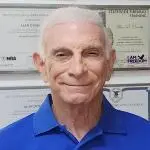 Lead Instructor at CCW Training Academy in Summerfield, FL. A former deputy sheriff, professional hypnotherapist, and scenario-based tactical instructor, Alan includes teaching firearms safety and self-defense laws in every course. He enjoys helping active adults 45+ build real-world defensive confidence through practical, competent firearms training.
Learn More About Alan B. Densky |
Read Student Reviews |
Get Trained, Get Real Confidence