
Competition Vs Self-Defense Training: Why They Are Not The Same
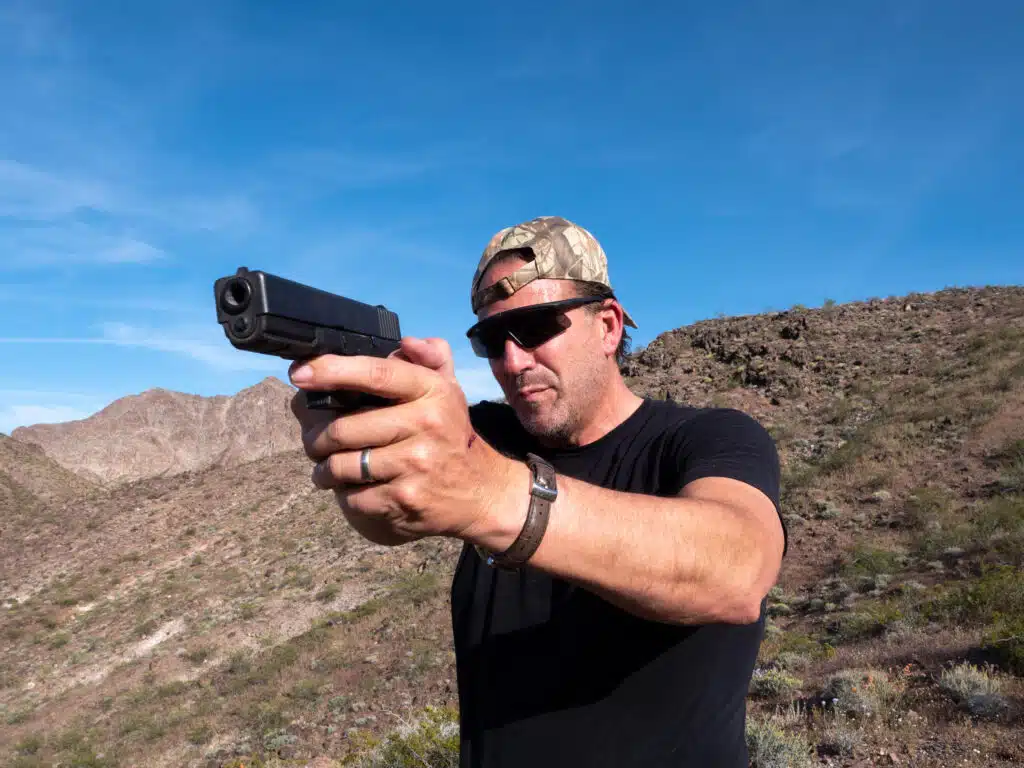
Have you ever wondered about the difference between competition vs self-defense training?
At first glance, the two may look similar. Both involve a firearm. Both require safety, accuracy, speed, and gun handling.
That surface similarity can mislead people.
Competition shooting tests performance under match conditions. Self-defense firearms training prepares the armed citizen for lawful survival during a violent encounter. Those are very different goals.
A competition shooter may become very skilled with a firearm. Many competitive shooters handle guns extremely well. Their practice can improve speed, accuracy, movement, transitions, and confidence under pressure.
However, winning a match does not automatically prepare a person for a criminal attack. Match pressure and life-or-death pressure do not create the same problem.
Likewise, a self-defense student should not ignore skill-building drills. Hard skills matter. The question is not whether competition has value. The question is whether competition training and self-defense training solve the same problem.
They do not.
Competition Training
Competition training revolves around a defined game. That game may involve IDPA, USPSA, IPSC, steel shooting, or another organized shooting sport.
Each sport uses rules. Those rules control equipment, scoring, target engagement, movement, reloads, procedures, penalties, and safety requirements.
In IDPA, for example, a shooter must understand the rule book and apply those rules during the match. The competitor thinks about the stage, target order, cover requirements, scoring, and penalties.
That is not a criticism. It is simply the nature of competition.
Competition training sharpens important hard skills. It can improve gun handling, accuracy, speed, movement, target transitions, reloads, and performance under a timer.
Those benefits have real value. A person who competes often learns how to run the gun more efficiently than someone who never trains under pressure.
Still, competition pressure differs from criminal-attack pressure. A timer does not equal a weapon in your face. A penalty does not equal a prison sentence. Losing points does not equal losing your life.
During a match, the shooter knows a shooting problem will occur. The shooter knows the targets are not real attackers. The shooter also knows the stage operates under the control of safety officers.
In a real self-defense encounter, the armed citizen may know none of that.
Self-Defense Training
Self-defense firearms training has a different purpose. It does not exist to win a match. It exists to help the armed citizen survive and stay within the law.
The student must learn more than shooting mechanics. A defensive shooter must understand threat recognition, avoidance, de-escalation, safe gun handling, lawful use of force, and what happens after a defensive firearm incident.
The gun only solves one part of the problem.
Real self-defense training asks difficult questions. Can you recognize danger early? Can you avoid the confrontation? Can you move? Can you access your firearm safely? Can you make a lawful decision under stress? Can you stop when the threat stops?
Competition does not usually train those decisions.
In defensive training, the shooter often works from concealment. That makes the draw stroke more complicated than drawing from an open competition holster.
The shooter may need to clear a cover garment. He may also need to draw while seated, while moving, near family members, or near bystanders.
Those conditions change the problem. Standing at a start position and waiting for a buzzer does not recreate the confusion of a real attack.
Competition Vs Self-Defense Training And The Shot Process
Even though competition and self-defense have different goals, the shooting fundamentals still matter.
For defensive pistol training, the fundamentals should follow the natural order the shooter uses them:
Stance; draw stroke; grip; sight alignment; sight picture; trigger control; follow-through and recovery.
That order matters. It is not a random checklist.
The shooter needs a stable base. Next, he must access the firearm. After that, he builds the grip, aligns the sights, places the sights on the intended target area, presses the trigger without disturbing the sights, and recovers for the next decision.
Competition training can strengthen many of those mechanics. Self-defense training must connect those mechanics to real-world judgment, legal limits, and the ability to stop when the threat stops.
The Conscious Mind Under Stress
Under stress, deliberate thinking slows down. That is why training matters.
An untrained person may freeze, panic, hesitate, overreact, or make a poor decision. Any of those mistakes can create serious consequences during a violent encounter.
Self-defense training attempts to build reliable responses through repeated, structured practice. The goal is not mindless reaction. The goal is correct action that the student has practiced often enough to perform under pressure.
Automatic skill and reckless action are not the same thing.
A trained defensive shooter should not draw a gun just because he feels angry, scared, insulted, crowded, or uncomfortable. Fear alone does not always justify force.
Facts matter. The law matters. Timing matters. The seriousness of the threat matters.
That is why self-defense training must include judgment, not just shooting.
Scenario-Based Training
Another major difference in competition vs self-defense training involves scenarios.
Competition stages test shooting performance inside a rule structure. Defensive scenarios test recognition, judgment, movement, communication, and lawful response.
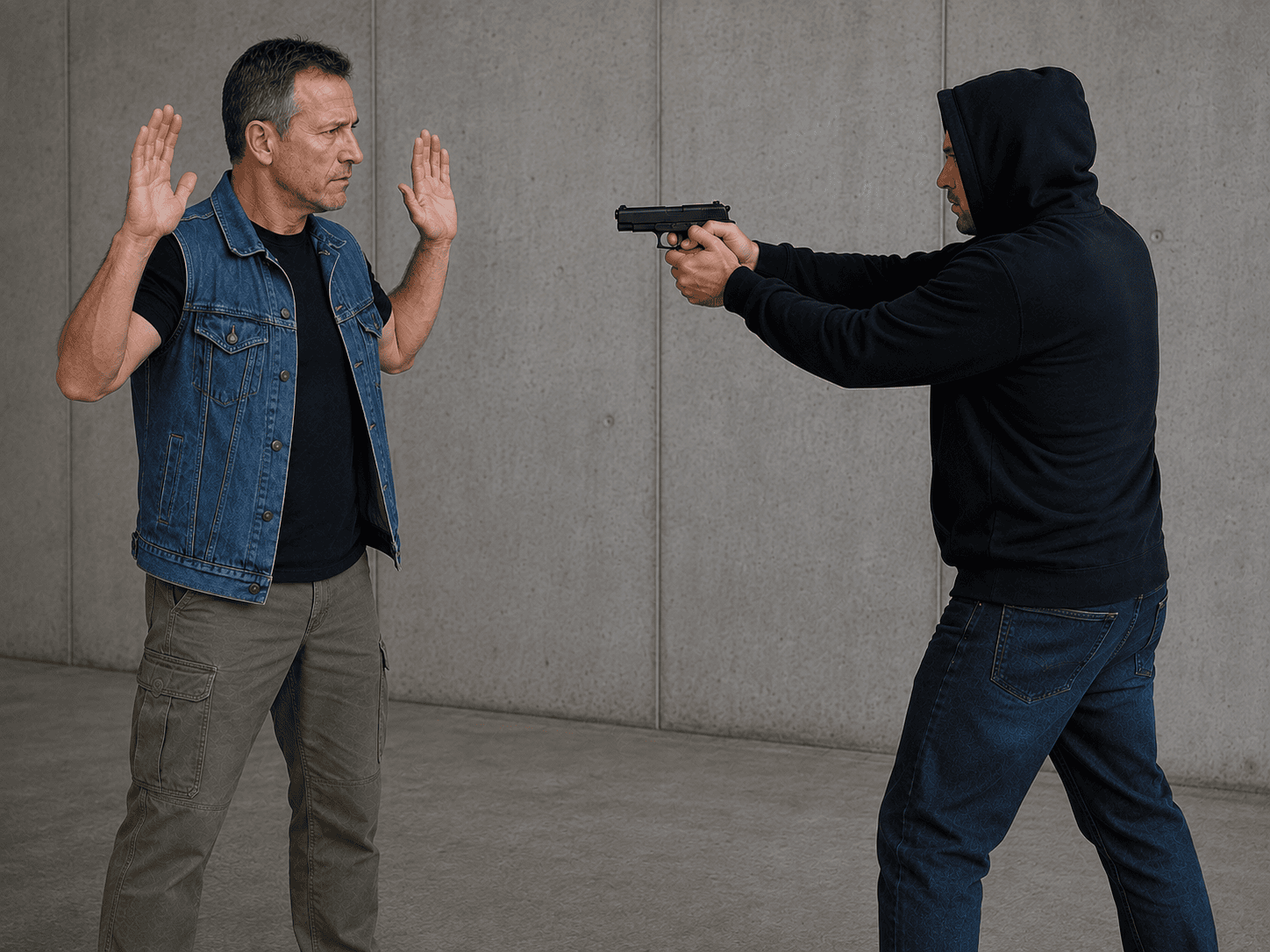
A defensive scenario might involve returning to your vehicle in a parking lot. Another scenario might involve someone approaching aggressively near an ATM. A third might involve an angry person pounding on your driver-side window during a road-rage encounter.
The point is not to turn every problem into a shooting problem.
Instead, scenario-based training teaches how quickly a situation can change. It also helps the student understand that drawing a gun is not always the correct answer.
Sometimes the better answer is to leave. At other times, the better response may involve creating distance, issuing a verbal command, calling law enforcement, moving family members, or avoiding the confrontation entirely.
Paper targets alone cannot teach that kind of judgment.
Drills Vs Scenarios
Drills have value. They help build specific skills through repetition.
A drill might work on draw speed, accuracy, reloads, movement, or target transitions. Those skills matter because a defensive shooter who cannot safely run the gun under pressure has a serious problem.
However, drills are not scenarios.
A drill usually tells the shooter exactly what to do. A scenario forces the shooter to interpret what is happening.
That difference is critical.
During a drill, the shooter may know every target must be shot. In a real defensive situation, the first question is whether the gun should come out at all.
That is why good self-defense training includes both skill development and decision-making. Hard skills matter, but judgment controls when those skills may lawfully come into play.
Legal Consequences Are Different
In competition, rules control the match. Break a rule and you may receive a penalty, lose points, or get disqualified.
That can feel disappointing, but you still go home.
In self-defense, the rules are laws. Break those laws and the consequences can change your life forever.
You may survive the attack and still face arrest, prosecution, civil litigation, bankruptcy, or prison. That is why defensive firearms training must include the legal side of force.
A responsible armed citizen must understand that deadly force requires more than fear. The facts must support the decision.
In many self-defense discussions, instructors refer to factors such as ability, opportunity, intent, and preclusion. Those concepts help students think through whether a threat is immediate, serious, and unavoidable.
This article is not legal advice. It is a reminder that defensive gun use involves far more than marksmanship.
The law matters before the gun comes out. It matters while the gun is out. Most importantly, it still matters after the threat stops.
Why Competition Skills Do Not Automatically Transfer
Some people assume a good competition shooter will automatically perform well in self-defense. That may happen, but it should not be assumed.
Competition can build speed and accuracy. It can also build confidence under public performance pressure.
Those are valuable qualities.
At the same time, competition can create habits that may not fit real-world defense.
For example, a competitor often trains to solve a stage as fast as possible. The shooter already knows every target belongs to the event. The scoring system rewards speed, efficiency, and accuracy.
A defensive shooter cannot assume every person nearby is a threat. He must consider bystanders, angles, background, movement, verbal commands, family members, escape routes, and whether the law allows force.
That changes the question completely.
The competitor asks, “How do I shoot this stage faster?”
The defensive shooter must ask, “What is happening, what does the law allow, and what is the safest responsible action?”
Why Self-Defense Students Still Need Skill
None of this means competition skills are useless. They are not.
A person who studies legal theory but never develops shooting ability remains unprepared. Responsible defensive firearms training requires judgment and skill.
The shooter must handle the gun safely. He must draw safely. He must hit accurately enough to stop a threat while reducing danger to innocent people.
That requires practice.
The difference lies in the direction of the training. Competition training points toward winning a match. Self-defense training points toward lawful survival.
Good defensive training develops safe gun handling, sound fundamentals, realistic decision-making, and an understanding of what happens after the shooting stops.
Competition Vs Self-Defense Training Requires Different Goals
This is the most important point: competition vs self-defense training starts with different goals.
A competitor wants to solve a stage quickly and accurately while following the rules of the sport. That goal makes sense inside a match.
An armed citizen wants to avoid trouble when possible, recognize unavoidable danger, act lawfully, and survive. That goal makes sense in real life.
Because the goals differ, the training must differ.
Competition may help a defensive shooter improve certain hard skills. Self-defense training must then place those skills inside a larger framework that includes awareness, avoidance, tactics, legal decision-making, and post-incident behavior.
Without that larger framework, the shooter may possess speed without judgment. That is dangerous.
Self-Taught Competitors And Self-Taught Defenders
Self-taught competitors often face a disadvantage. Professionally trained competitors usually develop better technique, better practice habits, better movement, and better stage planning.
The same idea applies even more strongly to self-defense.
A self-taught armed citizen may not know what he does not know. He may misunderstand the law. He may overestimate his ability. Worse, he may assume that owning a firearm equals preparation.
Owning a gun is not training.
Watching videos does not replace coaching. Reading articles does not replace correction. Repeating the wrong movement only makes the wrong movement more automatic.
Professional instruction helps identify mistakes early. It gives the student structure, correction, accountability, and a safer path forward.
Which Type Of Training Should You Choose?
If your goal is competition, seek competition training. Learn the rules. Study stage planning. Understand scoring. Work with someone who knows the sport.
When your goal is personal protection, seek self-defense firearms training. Learn safety, law, judgment, concealed carry skills, defensive fundamentals, and scenario-based decision-making.
You can do both, but you should know which goal you are training for.
A competition match is not a gunfight. A gunfight is not a match. Confusing the two can produce poor decisions.
The skilled armed citizen should be able to shoot, think, move, decide, and stop when the threat stops.
Competition Vs Self-Defense Training: Final Thoughts
The difference between competition vs self-defense training comes down to purpose.
Competition training uses rules, scoring, stages, penalties, and measurable performance. It can improve shooting skill and gun handling. It can also be enjoyable, challenging, and valuable.
Self-defense training focuses on survival, lawful decision-making, threat recognition, and responsible action under stress. It must include shooting skill, but it cannot stop there.
In competition, a mistake may cost you the match.
In self-defense, a mistake may cost you your freedom, your future, or your life.
That is why serious armed citizens need training that goes beyond marksmanship. They need training that helps them recognize danger, make lawful decisions, and use force only when necessary.
There are no second-place winners in a real gunfight. There are also no trophies for avoiding prison after a bad decision.
Train seriously. Train responsibly. Train for the problem you may actually face.
Contact Us
and take control of your future and your family’s wellbeing now.

About the Author:
Alan B. Densky is the Founder and Lead Instructor at CCW Training Academy in Summerfield, FL. A former deputy sheriff, professional hypnotherapist, and scenario-based tactical instructor, Alan includes firearms safety and self-defense law discussion in every course. He helps active adults 45+ build real-world defensive confidence through practical, responsible firearms training.
Learn more about Alan B. Densky |
Read Student Reviews |
Get Trained, Get Real Confidence