
Most shooters depend on range time alone to improve because it feels like the most direct path to getting better. You fire live rounds and see immediate results on target. However, this approach has clear limits.
Live fire is expensive, time-consuming, and difficult to repeat frequently. As a result, many shooters simply do not train as often as they should.
Skill development depends on repetition using proper technique. Without consistent repetition, progress slows or even stops. Over time, fundamentals must be practiced correctly and repeatedly to become reliable under pressure.
The range confirms skill. It does not always build skill efficiently. That is an important difference.
Dry fire training is one of the most valuable methods for developing shooting skill. It lets you practice important movements without live ammunition. That means more repetition, less cost, and less distraction.
A proper dry-fire routine can improve trigger control, grip pressure, sight alignment, presentation, follow-through, and draw stroke. These are the same fundamentals that determine live-fire performance.
Dryfire practice also helps you notice problems before they become habits. If the sights move during the trigger press, there is a reason. If the draw stroke is inconsistent, it can be corrected. When practice is structured, the student improves faster.
The weakness of ordinary dry fire is feedback. Many shooters practice at home, but they do not know exactly where the shot would have gone. Our system solves that problem by making dry-fire training more measurable and more realistic.
This is not ordinary dry fire. It is enhanced dry-fire training using recoil-enabled pistols and a computerized target system.
The system displays where shots impacted the target. It can also help measure draw-to-first-shot time and split times between shots. That gives the instructor and student useful information that ordinary dryfire practice cannot provide.
Because the training happens safely inside the home, students can focus on learning instead of reacting to the range environment. That makes each correction easier to understand and apply.
This type of pistol simulator training builds a strong foundation. Later, when the student goes to the live-fire range, the fundamentals are already more consistent.
In-home pistol training addresses the limits of range-only instruction directly. Because training happens in a controlled environment, you can practice more effectively without the cost and restrictions of the range.
The environment itself becomes an advantage. Ranges introduce noise, movement, and time pressure, which can reduce focus and limit how much instruction can be absorbed.
At home, those distractions are removed. As a result, concentration improves, and each repetition becomes more productive during in-home pistol training sessions.
This is why many people looking for a virtual firearms training simulator, virtual shooting range, or indoor simulated shooting range may actually need structured instruction more than another range trip.
Another key benefit of in-home pistol training is the quality of feedback. Small details become easier to see and correct, including grip issues, trigger control problems, unnecessary movement, and inconsistent draw mechanics.
Because mistakes are identified early, bad habits are far less likely to develop. Instead, you build correct technique from the beginning, which can significantly accelerate progress.
Dry fire training plays a major role in this process. It allows you to practice without live ammunition while still receiving meaningful information about your performance. Therefore, you can complete more high-quality repetitions in less time.
The result is not just more practice. It is better practice.
Top shooters rely on dry fire regularly. Many use it daily to maintain and improve their skills. They understand that repetition builds consistency over time.
At the same time, this type of training does not replace live fire. Instead, live fire confirms performance and shows whether your skills hold up when a shot is actually fired.
When combined, both methods work together effectively. You build skills through in-home firearms training and then validate them at the range. Consequently, every live-fire session becomes more focused and productive.
That is the goal. The indoor training builds skill. The range confirms it.
Instead of guessing, you arrive at the range prepared. You know what to expect and what to work on, which leads to faster and more consistent improvement.
Structured training is essential. Without it, practice becomes random and results become inconsistent. With structure, however, a clear progression builds reliable ability over time.
You begin with fundamentals, then improve efficiency, and eventually add pressure and decision-making. Each stage builds on the last, creating a logical path forward.
As a result, confidence is earned through performance. It develops through consistent, correct repetition until the skill becomes second nature.

No pressure. See if this is a good fit for you.
Improving defensive shooting skills requires consistent practice over time. While many shooters rely on occasional range visits, this approach often limits progress.
Skills develop faster when practice becomes part of a regular routine. Short, focused sessions at home often produce better results than long, infrequent range trips.
Consistency allows the body to build reliable movement patterns. Those movement patterns are essential when performing under stress.
This is one reason dry fire training is so valuable. It allows you to practice the parts of shooting that must become smooth, repeatable, and dependable.
Fundamentals form the base of all shooting performance. The fundamentals are: Stance; draw stroke; grip; sight alignment; sight picture; trigger control; follow-through and recovery must remain consistent. Without these, advanced techniques will not hold up.
Strong fundamentals create stability and control. As a result, shooters perform the same way each time they press the trigger, which leads directly to accuracy and confidence.
Many shooting problems begin before the shot breaks. The grip may shift. The trigger press may disturb the sights. The shooter may tighten the whole hand at the wrong moment.
These problems are easier to identify during structured in-home firearms training. A controlled environment gives the instructor time to observe, correct, and confirm improvement.
One of the biggest challenges shooters face is access to training and instruction. Travel time, cost, scheduling, ammunition expense, and range availability all create obstacles that reduce how often people practice.
In-home pistol training removes many of these barriers. Because training is more convenient, consistency improves naturally.
Students who search for an indoor shooting range near me, virtual shooting range near me, or firearms training simulator near me are often looking for the same thing. They want a practical way to train more often and improve faster.
This training meets that need by bringing the instruction to the student. You do not need perfect range conditions to improve your fundamentals.
New shooters often need a calm, patient learning environment. A busy range can be intimidating. Noise, recoil, other shooters, and time pressure can make it harder to absorb instruction.
Simulator-style training reduces those barriers. The student can learn gun handling, safety, stance, grip, sight alignment, and trigger control in a quieter environment before adding live fire.
This does not make live fire unnecessary. It makes live fire more productive.
When a student already understands the fundamentals, the live-fire range session can focus on confirmation and refinement instead of confusion and overload.
Experienced shooters can benefit from this training as well. In many cases, they already know how to shoot, but they need better consistency, faster presentation, cleaner movement, or better defensive application.
Gun simulator training allows those skills to be isolated and improved. Draw stroke, target transitions, ready positions, follow-through, and trigger control can all be practiced with immediate feedback.
Because the computerized target system shows performance results, training becomes more measurable. That is especially useful for students who want to track improvement over time.
Experienced shooters also benefit from structured dry-fire practice. Even small improvements in movement, timing, and efficiency can make a noticeable difference at the range.
Training without structure often leads to slow or uneven progress. In many cases, shooters repeat the same mistakes without realizing it.
A structured plan provides clear direction. Each session focuses on a specific objective, allowing progress to be measured and adjusted as needed.
This creates steady improvement instead of random results. Fundamentals come first. Efficiency comes next. Pressure and decision-making are added after the foundation is stronger.
That progression matters. Defensive shooting is not just target shooting. It requires safe gun handling, judgment, control, and the ability to perform under stress.
Confidence is built through repeated success. When skills are practiced correctly, they become more reliable. That reliability carries over into live-fire training and real-world preparation.
The goal is not just to practice. The goal is to perform.
Training prepares you to act effectively when it matters most. It also helps you understand your current limits, which is an important part of responsible defensive preparation.
Shooting is engaging, exciting, and rewarding. As your skill improves, performance becomes more consistent, and the experience becomes even more enjoyable.
Dry fire builds the foundation. Enhanced dry-fire training improves feedback. Live fire confirms the results.
Each method has a purpose. Dryfire develops repetition. Simulator-style training makes the repetition more measurable. Range training verifies performance with live ammunition.
When these methods are combined, students make better use of every training session. They waste less time guessing and spend more time improving.
That is why in-home pistol training is such a powerful first step. It helps students build the fundamentals needed for safe, accurate, and confident shooting.
No pressure. See if this is a good fit for you.
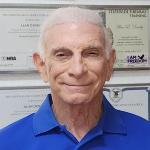
Choosing the right pistol training is not just about the method. It is also about the instructor guiding you through the process.
Training is led by Alan B. Densky, a former deputy sheriff and professional firearms instructor. He specializes in working with beginners, older adults, and students who want a calm, structured approach to learning.
Alan is an NRA Certified Pistol Instructor, NRA Certified CCW Instructor, NRA Certified Home Firearms Safety Instructor, and NRA Range Safety Officer. Training is provided through CCW Training Academy, a BBB Accredited Business.
His instruction focuses on safety, clarity, and steady progression, so each student builds confidence at a comfortable pace.
Rather than rushing the process, each lesson is designed to help you fully understand and apply what you are learning. As a result, students develop strong fundamentals that carry forward into live-fire training and real-world situations.
To learn more about his background, experience, and credentials, visit the Instructor Bio Page.
This in-home firearms training course is not an NRA course. It is private instruction designed around the student, the student’s goals, and the skills needed for safer, more confident gun handling.
Students who want an official NRA course can ask about available NRA training options. Students who want practical in-home pistol training, enhanced dry fire, and simulator-style instruction can begin here.