


Florida’s rules on open carry changed after a 2025 court decision. Here’s what the ruling means, where restrictions still apply, and how open carry differs from concealed carry.
Generally, yes. Following McDaniels v. State, an eligible adult who lawfully possesses a firearm may openly carry it in public where the law allows. Restrictions on who may possess a firearm, where firearms are prohibited, and how a person may display a firearm still apply. Florida Attorney General guidance.
On September 10, 2025, Florida’s First District Court of Appeal ruled in McDaniels v. State that Florida’s general ban on openly carrying firearms violated the Second Amendment. Florida’s Attorney General then advised police and prosecutors statewide on how the ruling applies. Read the court opinion and the Attorney General’s guidance.
The Florida Senate’s published text still shows the old rule. Section 790.053(1) generally made it unlawful to carry a firearm openly on or about your person. It also distinguished briefly revealing a lawfully concealed firearm from intentionally displaying it in an angry or threatening manner. The First District held that the general ban on openly carrying firearms violated the Second Amendment. The Attorney General then advised law enforcement and prosecutors against arresting or prosecuting otherwise law-abiding people merely because their firearm was visible. The restriction on improper exhibition comes from a separate statute. Florida Statutes § 790.053 and the McDaniels decision.
A Florida concealed weapon or firearm license is not required for ordinary lawful open carry covered by the ruling. Section 790.06 is the state’s licensing law. It authorizes the Florida Department of Agriculture and Consumer Services to issue concealed weapon or firearm licenses to eligible applicants and sets out the license requirements and duration. Whether a Florida license is recognized on a trip depends on the laws of the states you enter. Florida Attorney General guidance and Florida’s licensing statute.
Open carry means a firearm is visible to others. Concealed carry means it is hidden from ordinary sight. Section 790.01 addresses concealed carry and provides two routes: holding a Florida license or meeting the specified eligibility criteria for carrying concealed without one. Section 790.013 separately requires a person carrying concealed without a license to carry valid identification and show it when a law enforcement officer demands it. It also applies the same location restrictions listed in section 790.06(12) to that person. The McDaniels decision and Florida Statutes § 790.01 and Florida Statutes § 790.013.
The ruling left location restrictions in place. Section 790.06(12)(a) lists places where a Florida concealed carry license does not authorize open handgun carry or concealed carry. Examples include courthouses, law enforcement stations, jails, polling places, elementary and secondary school facilities, and meetings of local governing bodies, such as a city council or school board. The statute also lists the parts of licensed establishments primarily devoted to serving alcohol for consumption on the premises. In a restaurant, that wording is about the function of the particular area, so check the venue’s own policy as well. Airport terminals and places where federal law prohibits firearms are also addressed in the statute. Florida Attorney General guidance and Florida Statutes § 790.06(12)(a).
Yes. The Attorney General’s guidance explains that a private business can require a person carrying a firearm to leave. Section 810.08 covers willfully entering or remaining in a structure or vehicle without authorization. It also covers refusing to leave after the owner, lessee, or an authorized person tells you to go. If the person is armed when committing that trespass, subsection (2)(c) classifies the offense as a third-degree felony. In practical terms, if an authorized employee asks you to leave a store because you are carrying, leave promptly. Florida’s trespass statute and Florida Attorney General guidance.
Florida’s law enforcement training guidance says open carry by an otherwise eligible adult aged 18 through 20 cannot be treated as unlawful solely because of age. The 2026 Eubanks v. State decision addressed a separate question. The Fourth District held that Florida’s age-21 criterion could not disqualify otherwise eligible 18- to 20-year-olds from carrying concealed. Possession and location restrictions still apply, and firearm purchases are governed by separate rules. Florida Criminal Justice Standards and Training Commission curriculum alerts 2026-04 and 2026-05 and the Eubanks decision.
Yes. Section 790.10 addresses how a firearm is shown when other people are present. It makes it a first-degree misdemeanor to exhibit a firearm in a rude, careless, angry, or threatening manner outside necessary self-defense. A visible firearm being carried peacefully and a firearm deliberately displayed during an argument raise different legal questions. The McDaniels ruling dealt with the general carry ban, and the Attorney General specifically said the improper-exhibition statute remains enforceable. Florida Statutes § 790.10 and Florida Attorney General guidance.
Legal sources reviewed November 22, 2026. This article provides general information. For advice about a specific situation, consult a Florida attorney.
You can open carry if you want to, but you’re putting yourself in jeopardy if you do. That’s my personal opinion as an instructor. In everyday public settings, a visible firearm can attract unwanted attention, alarm people around you, and increase the risk of theft.
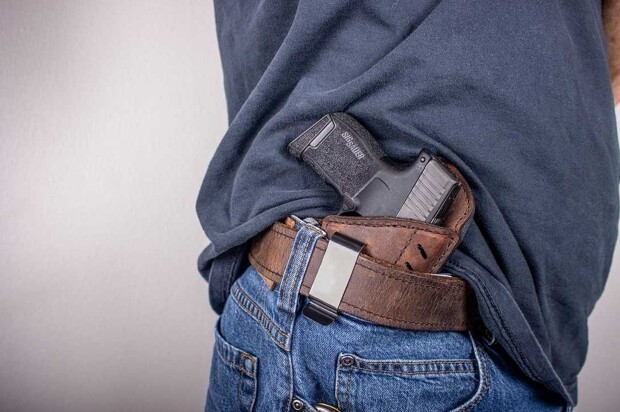
⚠️ Cons and Risks to Consider
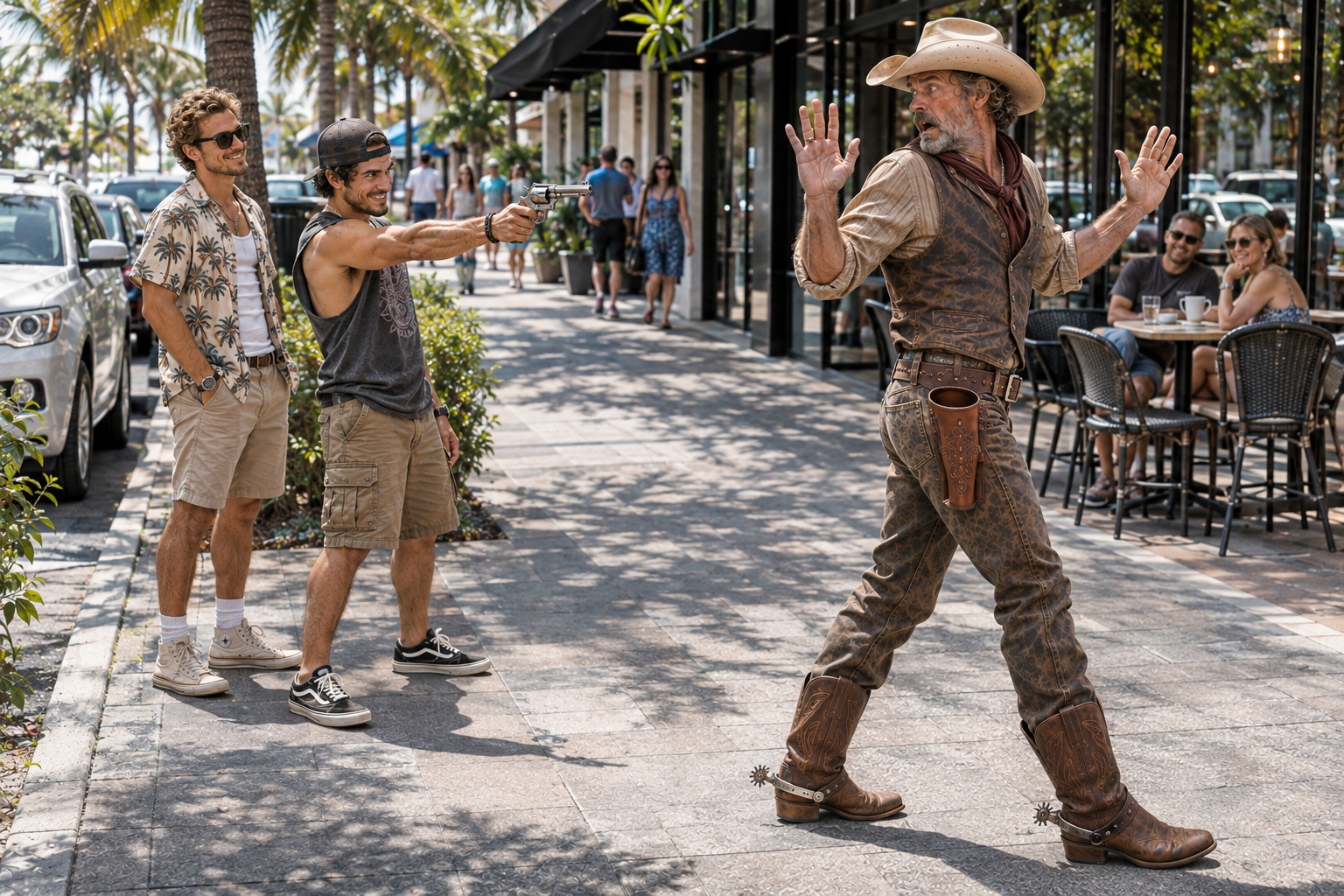
Here are images showing the risks of open carry when retention and awareness are lacking:


Colion Noir discusses a fatal shooting involving a man whose openly carried firearm was taken from him.
 Watch Colion Noir’s analysis on YouTube
If you choose to open carry:
Open carry is now legal—but that doesn’t mean it’s always wise. For older people and CCW holders, the best defense is training, awareness, and gear that protects you from being disarmed.
If you choose to open carry, you are going to want to get some training to keep you safe.
About the Author:
Alan B. Densky is the Founder & Lead Instructor at CCW Training Academy in Summerfield, FL. A former deputy sheriff, professional hypnotherapist, and scenario-based tactical instructor, Alan includes teaching firearms safety and self-defense laws in every course. He enjoys helping active adults 45+ build real-world defensive confidence through practical, competent firearms training.
Learn more about Alan B. Densky |
Read Student Reviews |
Get Trained, Get Real Confidence