- Marion, Sumpter, Lake Counties
- alan@ccwinstructor.com
- Text (352) 459-2471
- CWL & Scenario Based Tactical Self-Defense Pistol Training

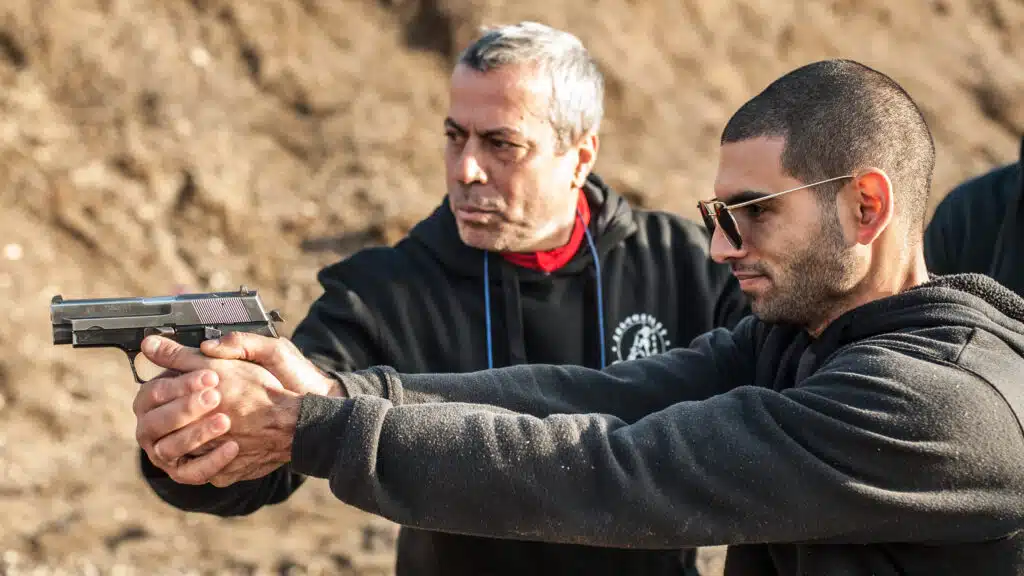 Choosing the Right
On the surface, both options may look similar: you learn safe gun‑handling, build your shooting fundamentals, and correct the bad habits that most self‑taught shooters never realize they have.
But the way you get there — and how comfortable you feel during the process — can be very different depending on which path you choose.
This page is designed to walk you through those differences in plain language, so you can choose the option that fits your personality, your comfort level, and your goals.
| In‑Home Pistol Training | Live‑Fire Range Pistol Training |
|---|---|
| Private, one‑on‑one instruction in your home | Public range setting with other shooters present |
| Customized pace based on your comfort level | Fixed pace based on the range environment |
| Maximum comfort and privacy | Real‑world recoil, noise, and live‑fire conditions |
| Ideal for older adults, beginners, and anxious shooters | Ideal for students who want immediate live‑fire feedback |
| Higher cost due to private instruction | Lower cost due to shared range time |
| No travel required — training comes to you | Requires travel to the range |
|
Select To Learn More And See Scheduling & Prices In‑Home Training |
Click To Learn More And See Scheduling & Prices Private Live‑Fire |
|
Tap To Learn More And See Scheduling & Prices Group Live‑Fire Training |
|
|
Tap To Learn More Women‑Only Beginner Pistol Class |
|
A Clear, Comfortable Path to Safe, Confident, Accurate Shooting.
Choosing the right pistol‑training path shapes your entire learning experience. Many new shooters look at the price of a group class and assume it offers the best value. A lower price does seem appealing. Longer classes sound more productive. And a group environment appears efficient.
Those assumptions often lead to slower progress.
One hour of private instruction can deliver the same improvement most students gain from four hours in a group class. The instructor’s attention focused on you accelerates learning. Immediate correction prevents bad habits from forming. A calm environment builds confidence faster. Personal instruction removes pressure, noise, and distractions.
Group classes still are a great value, but they are not the fastest or most comfortable way to learn. Understanding the differences between training methods will help you choose the path that fits your goals, personality, and comfort level.
Three distinct training options are available: private in‑home instruction, private live‑fire instruction, and group live‑fire classes. Each method offers unique advantages. Each method supports a different type of learner. All three lead to safe, confident, accurate pistol shooting.
The sections below explain how these training paths work, why they feel different, and how to choose the right pistol training that fits you best.
Most people think pistol training is simply “indoor vs outdoor.” The real difference comes from the delivery method, not the location. Training privately in your home feels very different from training privately at the range. Group classes create a third experience entirely.
Here are the three paths:
Each method supports a different learning style. Each method offers a different pace. Each method creates a different level of comfort.
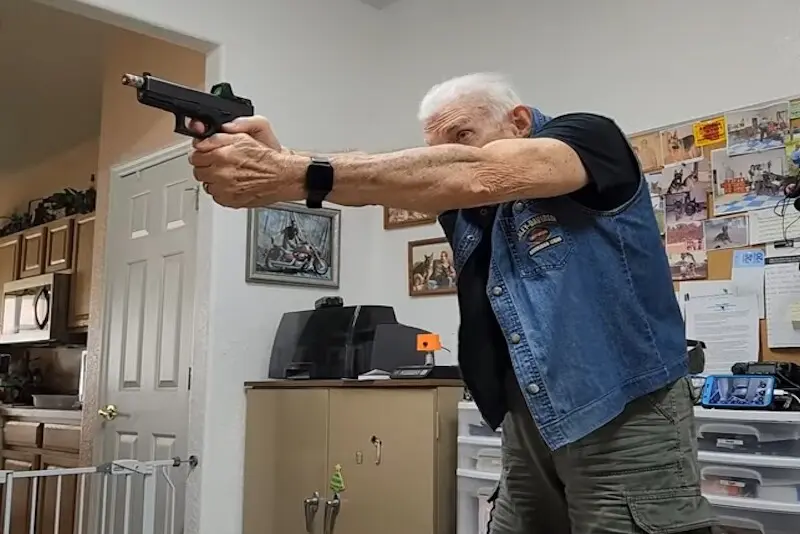
Private in‑home training provides the calmest, most controlled learning environment possible. A quiet setting keeps your mind clear. A steady pace prevents frustration. Focused instruction eliminates wasted time. Nothing interrupts your progress. There is nothing to distract you. No one will pressure you.
This method of pistol training works exceptionally well for beginners, older adults, anxious shooters, and anyone who wants a structured, confidence‑building introduction to firearms.
In-home training is very valuable. Using our CoolFire Trainer equipped, recoil-enabled Glock pistols gives you a live-ammo feeling when you squeeze off your shots. And using our Mantis Laser Academy computerized target system lets you instantly know exactly where your shots landed.
A comfortable environment plays a major role in how quickly people learn. Your quiet room helps you absorb information without feeling rushed. A familiar space reduces anxiety. Your private setting removes the fear of being judged. These factors matter more than most students realize. A relaxed mind learns faster. Living in a calm body improves performance. A steady pace builds confidence one step at a time.
Comfort also supports memory. Because a peaceful environment helps you retain information. A predictable setting reduces cognitive load. And a private space allows you to focus on technique instead of distractions. These advantages compound over time, creating a strong foundation for everything that follows.
Private in‑home training also prepares you for live‑fire training later. Stepping onto the range becomes easier when you already understand the fundamentals. Confidence replaces confusion. Calm replaces anxiety. Familiarity replaces hesitation.
This method creates a solid base for your entire training journey.
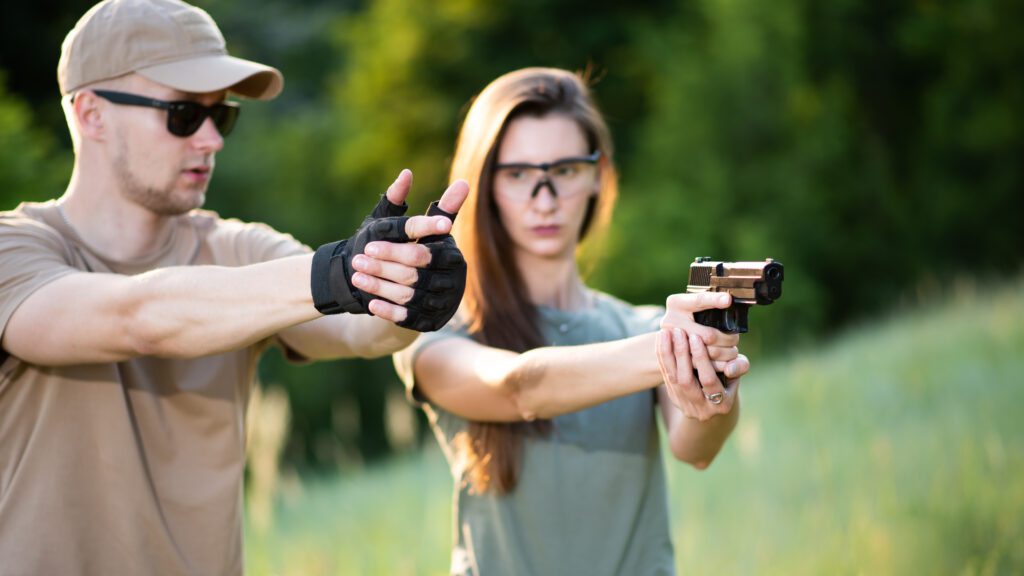
Private live‑fire training delivers the same one‑on‑one attention as in‑home training, but with the added benefit of harder recoil and real noise. This method bridges the gap between controlled indoor practice and real‑world shooting conditions.
Here’s how private live‑fire instruction strengthens your skills:
A steady pace keeps you relaxed. And a focused environment prevents sensory overload. These factors matter for new shooters, especially those who feel anxious around noise or recoil.
Real‑world conditions introduce new variables. Recoil affects your grip. Noise affects your focus. Movement affects your balance. A private session allows you to adjust to these factors without pressure. An experienced, calm instructor helps you stay grounded. And a controlled pace keeps you comfortable.
Private live‑fire training also prepares you for Tactical Pistol I, the entry way to real self-defense training. Movement, angles, and decision‑making become easier when your fundamentals feel solid. A strong foundation supports advanced skills. And a confident mindset improves performance. Your steady progression prevents you from feeling overwhelmd.
This method offers realism without chaos.
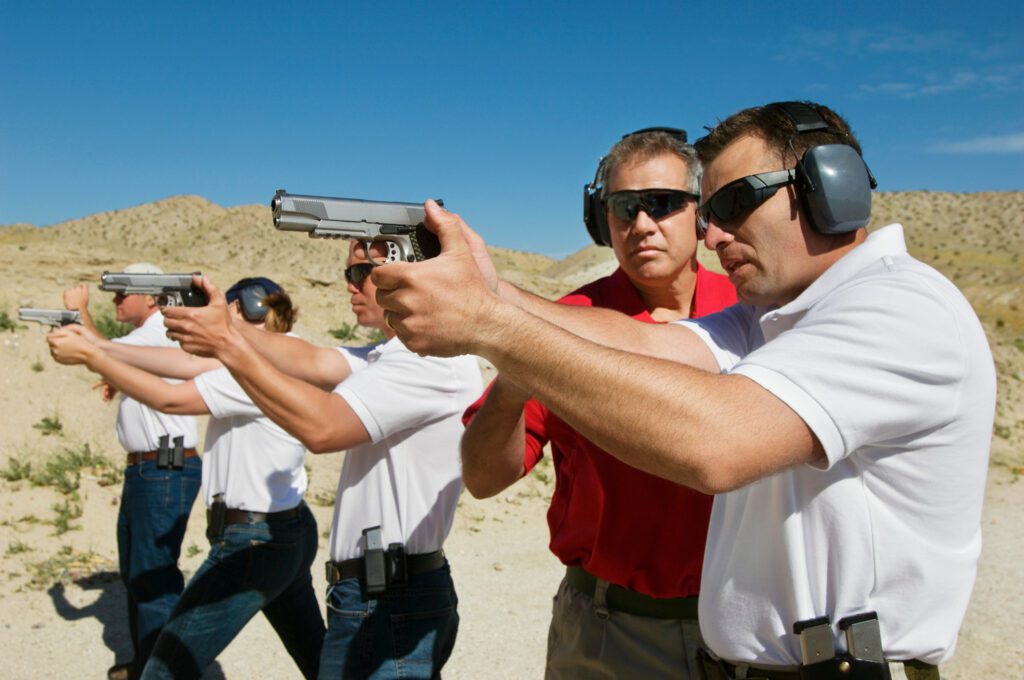
Group classes offer a different experience. A structured format guides you through each step. A social environment creates a sense of community. A lower price makes training more accessible. These classes are limited to ten students, which keeps the environment safe and manageable.
Group classes work well for students who enjoy learning with others. Some people appreciate a predictable pace. Others like the energy of a group. Many enjoy the repetition that reinforces fundamentals.
A group setting introduces a different type of learning dynamic. Watching others can help you understand concepts. Listening to questions from classmates can clarify ideas. Observing different techniques can broaden your perspective. These benefits make group classes valuable for many students.
A social environment also reduces tension. Friendly classmates create a sense of belonging. Shared experiences build confidence. A positive atmosphere encourages participation. These elements help students feel more comfortable, especially during longer sessions.
Group classes move slower than private training. The instructor divides attention among all students. You spend time watching others shoot. You wait for your turn. You repeat drills without immediate correction. Progress happens, but it happens at the group’s pace.
Group training has a lot of value, but it is not the fastest path to expertise and confidence.
Private instruction eliminates the biggest limitation of group classes: divided attention. A group environment forces the instructor to watch multiple students at once. That means you spend time waiting, watching, and repeating drills without immediate correction.
Private training changes the entire experience.
Here’s what happens when the instructor focuses only on you:
A focused environment accelerates learning. A private session eliminates distractions. A steady pace keeps you engaged. These factors combine to create rapid improvement. A single hour becomes highly productive. A short session delivers meaningful progress. A private lesson builds momentum quickly.
This is why one hour of private instruction equals four hours of group training. The difference comes from focus, not time.
Many people choose group training because it looks cheaper. A lower price always seems appealing. And a longer class sounds productive. A group environment appears efficient.
The reality often surprises students.
A four‑hour group class may cost less, but it delivers only one hour of actual learning. The rest of the time is spent waiting, watching, or repeating drills without direct supervision.
Private training eliminates that waste.
Here’s how personal instruction delivers better value:
A private lesson prevents frustration. And a focused environment reduces confusion. A calm pace supports confidence. These advantages matter for new shooters, especially those who want steady progress without stress.
Choosing based on price alone often leads to slower progress, more frustration, and more time spent fixing habits that never should have formed.
Private training prevents those problems before they start.
Safety forms the foundation of every training session. Instruction begins with safety. Drills reinforce safety. The session ends only when the firearm is secured.
Safety is not a single lesson. It is a habit. It must be practiced until it becomes automatic. This is especially important for new shooters and for adults who plan to carry daily.
As you progress, the safety instruction becomes more detailed and more situational. You learn how to think safely, not just act safely. And you learn how to evaluate your surroundings. Another thing you learn is how to avoid negligent discharges. You’ll learn how to maintain control of your firearm under stress.
Safety remains the thread that runs through every class, every drill, and every level of training.
Beginners need simple, clear rules. Intermediate students need more context. Advanced students need deeper understanding.
Your legal education grows with your skill level. We don’t rush anything. Nothing is overwhelming or skipped.
This gradual approach ensures you understand what you need to know when you are ready to understand it.
Tactical Pistol I assumes you already have:
This program builds those skills step by step. A strong foundation makes advanced training easier. And a calm learning environment prevents frustration. We stay at a steady pace to keep you focused. A clear progression prepares you for movement, angles, and early scenario‑based decision‑making.
Arriving at Tactical Pistol I with solid fundamentals ensures you feel ready, not overwhelmed.
Private in‑home training delivers the fastest progress. Private live‑fire training provides realism without pressure. Group classes offer structure and value.
All three paths lead to the same destination: safe, confident, accurate pistol shooting.
Your comfort level determines the route. And your goals determine the pace. Alan B. Densky, your instructor, ensures you get there safely.