
A Calm, Structured Way
To Learn Live‑Fire Skills
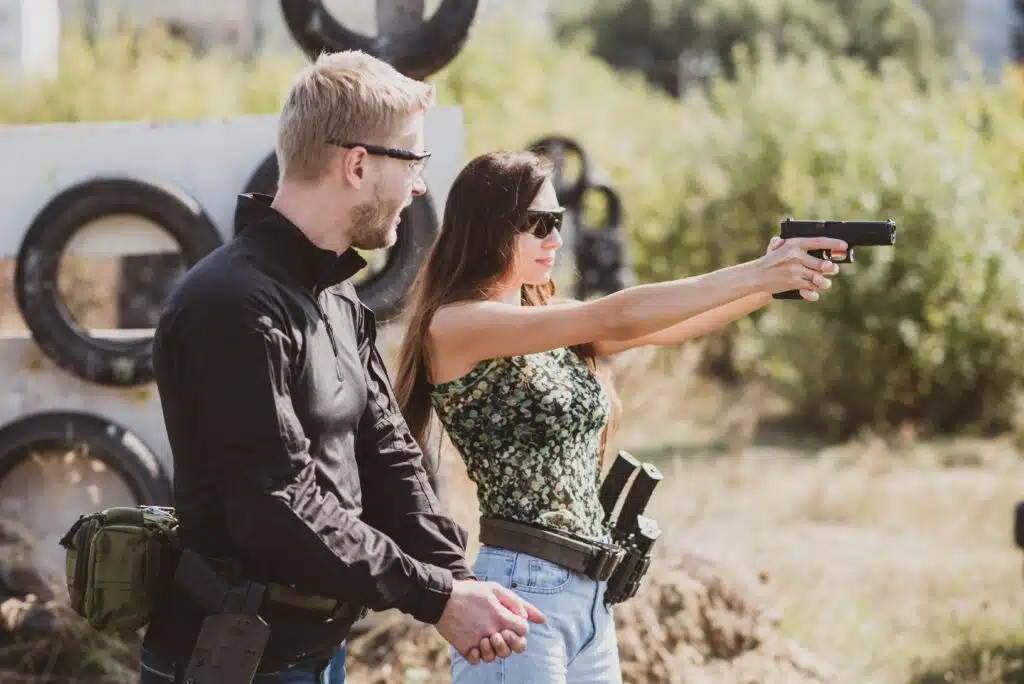
Private live‑fire pistol training gives you focused, one‑on‑one instruction at the range. You learn the fundamentals with real recoil, real noise, and real‑world conditions. The pace is calm and predictable. You get immediate correction on every shot.
Your confidence grows through repetition and clear guidance.
Many people want to learn to shoot, but feel uncomfortable in group classes. They may feel rushed or feel like they are being watched. Or maybe they feel pressure to keep up. Private instruction removes that pressure. You learn at your own pace.
You’ll benefit from the personal attention, and enjoy simple, clear instruction. There will be time to practice each skill until it feels natural.
Private live-fire pistol training is ideal for people of all ages and experience levels. It works especially well for beginners, older folks, and anyone who wants private instruction without the stress of a group environment.
Who This Is For?
Private live‑fire training is designed for people who want a calm, structured, and supportive learning experience. It works especially well for:
Beginners who want a gentle introduction
Many new shooters want to learn safely but feel overwhelmed by noise, recoil, and range activity. Private instruction removes those barriers and you train at a comfortable pace.
Older Shooters Who Want
Clear, Patient Instruction
Calm pacing. No pressure. No rushing. You learn comfortably and safely. There is time to absorb each step before moving on.
People Who Prefer Privacy
Some people do not want to learn in front of strangers.
Private live-fire pistol training gives you a judgment‑free environment where you can ask questions freely and practice without feeling watched or rushed.
People Who Want to Improve Accuracy
Your instructor gives you immediate correction on every shot. You’ll learn how to tighten your groups. And you’ll learn how to stay consistent. We will teach you how to evaluate your own shots.
People Who Want To Overcome
Flinching Or Anticipation
These issues are common, normal and fixable. Private coaching helps you correct them quickly with calm, steady guidance.
People Preparing For
Future Advanced Training
This live-fire pistol training session builds the foundation for group classes, defensive skills training, permit classes, and continued practice at the range. If you want a calm, structured, and supportive way to learn live‑fire skills, this training is for you.
What To Expect At The Range
Knowing what to expect reduces stress and helps you learn faster. This section is especially helpful for older students and beginners.
A Calm, Predictable Pace
You will not be rushed or pushed. Instead, you will learn one step at a time. The pace is steady and comfortable.
A Simple, Clear Introduction To The Range
You will learn: Where to stand; how to stand; and how to handle the pistol safely. Also: How to load and unload; how to follow range commands; and how to stay relaxed around noise and recoil. Everything is explained in plain language. Nothing is assumed.
Starting With A Low‑Recoil Firearm
Most people begin with a .22 LR pistol. It is quiet and offers very little recoil. Therefore, it helps you stay relaxed and focused on fundamentals.
Moving To 9mm When Ready
You only move up to a 9 mm pistol with more power and recoil when you feel comfortable. There is no pressure or rush. You stay in control of your learning pace.
Immediate Feedback On Every Shot
You will know why a shot went left, why a shot went low,
why a group opened up, and how to correct it. This is where private instruction shines. You get clear, simple guidance after every shot.
A Supportive, Judgment‑Free Environment
Are you expected to know anything? Absolutely not! You are not expected to be perfect. Students attend live-fire pistol training to learn, and the pace is designed for their comfort.
A Deeper Look At The Curriculum
The curriculum is structured to help you learn safely, comfortably, and efficiently. Each step builds on the last.
Safe Handling And Range Procedures
Students learn how to handle the pistol safely at all times.
You will learn how to load and unload. The curriculum covers how to maintain muzzle discipline and follow range commands. These habits become automatic and give you confidence and safety.
Grip And Recoil Control
A proper grip helps you manage recoil. In this class you’ll learn the correct balance for holding the pistol firmly to reduce or eliminate muzzle flip. We will teach you how to keep your sights aligned. The correct grip makes everything easier.
Stance And Balance
The correct stance helps you stay steady and balanced. You’ll learn how to position your feet to keep your weight balanced. The correct stance will help you to stay comfortable. A good stance supports accuracy and reduces fatigue.
Sight Alignment And Sight Picture
In this live-fire pistol training class, you’ll learn how to align the sights. And based on the type of sights on your pistol, you’ll learn how to focus on the target for optics, or the front sight for iron sights. You learn how to keep your sight picture steady. This is one of the most important fundamentals.
Trigger Control Under Recoil
Trigger control is the key to accuracy. The trigger steers the gun. Too much trigger finger, and you pull the gun towards your strong side. Too little trigger finger, and you push the gun towards your weak side. Pressing the trigger smoothly helps to avoid jerking the gun.
Follow‑Through And Shot Recovery
Your instructor will teach you how to quickly get your sights back on target after each shot. You’ll learn how to stay relaxed and how to prepare for the next shot. Follow‑through helps you stay consistent.
Caliber Progression
We start most students with a .22 LR and move to 9mm when they are ready. This helps them to stay relaxed and confident. A .22 pistol that has almost no recoil will stop you from feeling overwhelmed.
Evaluating Your Own Shots
We will teach you how to read your target and understand your groups. When you learn that, you’ll know how to correct small issues. This skill helps you practice safely and effectively on your own.
Why Live‑Fire Training Matters
Live‑fire pistol training teaches you how to manage the real forces involved in shooting. You feel the recoil and hear the noise. You learn how to stay steady and how to recover your sight picture quickly. How to place accurate shots under real conditions is part of the curriculum.
These are skills that are extremely important when firing live ammunition. Dry‑fire and in‑home training build the foundation, but live‑fire training completes the picture.
It teaches you how your body reacts to recoil and how to stay relaxed. In the end, you will learn how to maintain consistency when the pistol moves.
Private instruction makes the process easier. You get clear direction with steady pacing. Shot placement gives you immediate feedback. Private training is always faster because you are not guessing, your instructor is focused only on you.
Common Mistakes New Shooters Make
Many new shooters struggle with the same issues. Because you have the total attention of the instructor, private instruction helps you fix them quickly.
Flinching
Flinching is common. It happens when you anticipate recoil. Your subconscious mind begins to anticipate the recoil, and it reacts to it before it even happens. If you’ve ever had a doctor test your reflexes by tapping your knees with a small rubber hammer, then you know what a flinch is. Your knee jumps after the hammer taps it. Flinching from the recoil of a pistol is a reflex reaction. But when you flinch, you push the gun off target. Your instructor will teach you how to stay relaxed and let the pistol move naturally, without anticipating it.
Jerking the Trigger
Jerking the trigger causes shots to go low left for a right handed shooter. And right for a left handed shooter. You’ll learn how to press smoothly and consistently without jerking it.
Losing The Front Sight Or The Red Dot
Many new shooters focus on the target. If you are using iron sights, you learn how to focus on the front sight and not the target, and keep the gun steady. When your gun has a red dot optic, you’ll learn how to focus on the target, and allow the red dot to super impose itself in front of your eyes.
Inconsistent Grip
A consistent grip helps you stay accurate. At live-fire pistol training, you learn how to maintain it through every shot.
Rushing Shots
Rushing leads to mistakes. You learn how to slow down and stay consistent.
How This Differs From Group Classes
Private live‑fire training is very different from a group class.
Both formats have value, but they serve different personalities and different learning styles.
A group class moves at a set pace. It follows a schedule. It must keep many people on track at the same time.
Private training is the opposite. It adapts to you. It slows down when you need more time. And it speeds up when you are ready. It gives you the space to learn without pressure.
You Get One‑On‑One Attention
the Entire Time
In a group class, the instructor divides attention among several students. You may get only a few seconds of coaching at a time.
Private training is different. Every shot you take is observed.
All corrections are immediate. Each of your questions is answered as soon as you ask it. You never have to wait for help or guess. The entire session is focused on you.
You Learn At Your Own Pace,
Not The Group’s Pace
Group classes move quickly because they must stay on schedule. If you need more time on a skill, the class cannot stop.
In private training, the pace adjusts to your comfort level.
If you need more time on grip, stance, or trigger control, you get it. When you want to repeat a drill, you can. If you want to slow down, you can. You stay in control of the learning process.
You Get Immediate Correction
On Every Shot
In a group class, the instructor cannot watch every student at every moment. Mistakes can go unnoticed. In private live-fire pistol training, nothing is missed. You get feedback after every shot. So you learn what happened, and why it happened. Then you learn how to correct it. This is one of the biggest advantages of private instruction. You improve faster because you never repeat errors.
You Get A Calm Learning Environment
Group classes can feel busy. There is movement and noise. Other students are watching. Some people feel pressure to perform in a group environment. Many feel rushed or anxious.
Private training removes all of that. You get your own lane. and a predictable pace. It’s a much calmer environment where you can focus on fundamentals without distractions.
You Get A Personalized Curriculum
Group classes follow a fixed outline. They must cover the same material for everyone. Private training adapts to your needs. If you need more help with recoil control, you get it.
When you need more help with sight alignment, you get it.
If you want to focus on accuracy, you can. When you want to work on confidence, you can. The session is built around your goals, not a preset schedule.
You Get More Repetitions
And More Improvement
In a group class, time is divided among all students. However, in private training, every minute is yours. You shoot more, practice more, and get more coaching. So, you make more improvement. One hour of private instruction is often equal to several hours of group instruction.
You Get A Judgment‑Free Environment
Some people feel uncomfortable learning in front of others, because they are afraid of being ridiculed. They may feel self‑conscious or feel pressure to perform. However, private live-fire pistol training classes remove those possibilities.
You Get A Smoother Path To Success
Private training builds a stronger foundation. If you join a group class at a later date, you already know the fundamentals. Like: Handling recoil; how to load and unload;
you know how to follow range commands.
You’ll enter the class with confidence instead of anxiety. This makes the group experience more enjoyable and more productive.
How Caliber Progression Works
Caliber progression helps you learn comfortably. You start with .22 LR. It is quiet. The recoil is soft. So it helps you stay relaxed.
When you are ready, you move to 9mm. You only move up when you feel comfortable and confident. This step‑by‑step approach helps you stay consistent and confident.
How to Practice After Your Session
Practice helps you keep your skills sharp. You do not need to spend hours at the range to improve. Short, focused dry-fire sessions at home are enough. You can practice your life-fire a few times per month.
Dry‑Fire Practice At Home
Regular daily practice of your fundamentals is the only way a shooter can improve: Stance, grip, sight alignment, sight picture, trigger control and follow through with an unloaded firearm or a training tool. This helps you maintain good habits between range visits.
Laser Training Tools
Laser tools like the CoolFire Trainer and the Mantis Laser Academy can show you how steady you are and how your trigger press affects the muzzle. They are a very useful way to track your accuracy and consistency. And besides, they are a lot of fun and help you to look forward to daily dry-fire training.
Short, Focused Sessions
Ten to fifteen minutes a day is enough to reinforce what you learned. Daily consistency matters more than long sessions.
Return To The Range When Ready
You can schedule follow‑up live-fire pistol training sessions to continue improving. Each visit builds on the last.
Frequently Asked Questions
Do I need my own firearm?
No. Loaner firearms are available if needed.
Do I need experience?
No. This training is designed for beginners and experienced shooters.
Is the range loud?
Yes, but you will have proper hearing protection and a calm introduction so you can adjust comfortably. If you don’t have eye and ear protection, your instructor will loan you some.
Will I be rushed?
No. The pace is slow, steady, and yours to create.
What caliber will I shoot?
Most people start with .22 LR and move to 9mm when they feel ready.
Is this a defensive class?
No. This is fundamentals‑focused live‑fire training.
Is this a permit class?
No. This is skills training only.
Can I bring someone with me?
This session is one‑on‑one, but you may ask about having an observer present.
What if I am nervous?
That is normal. The pace is calm and supportive, and many students start out nervous.
What if I have limited strength or mobility?
The live-fire pistol training class adapts to your needs. You will not be asked to do anything that is unsafe or uncomfortable for you.
What if I have never touched a firearm?
That is perfectly fine. Many students start with zero experience. The session is designed for true beginners, but since the training is morphed to the student, more advanced shooters can definatly benefit.
A Better Way to Learn Live‑Fire Skills
Private live‑fire pistol training gives you a calm, structured, and effective way to learn. You get clear instruction and immediate feedback.
Real recoil and real‑world experience is a part of this training. So, you will learn safely and confidently at a pace that works for you.
This is one of the most efficient ways to build live‑fire fundamentals and prepare for future training, group classes, or continued practice on your own.