
The Difference Between Training For Self-Defense & Training For Competition
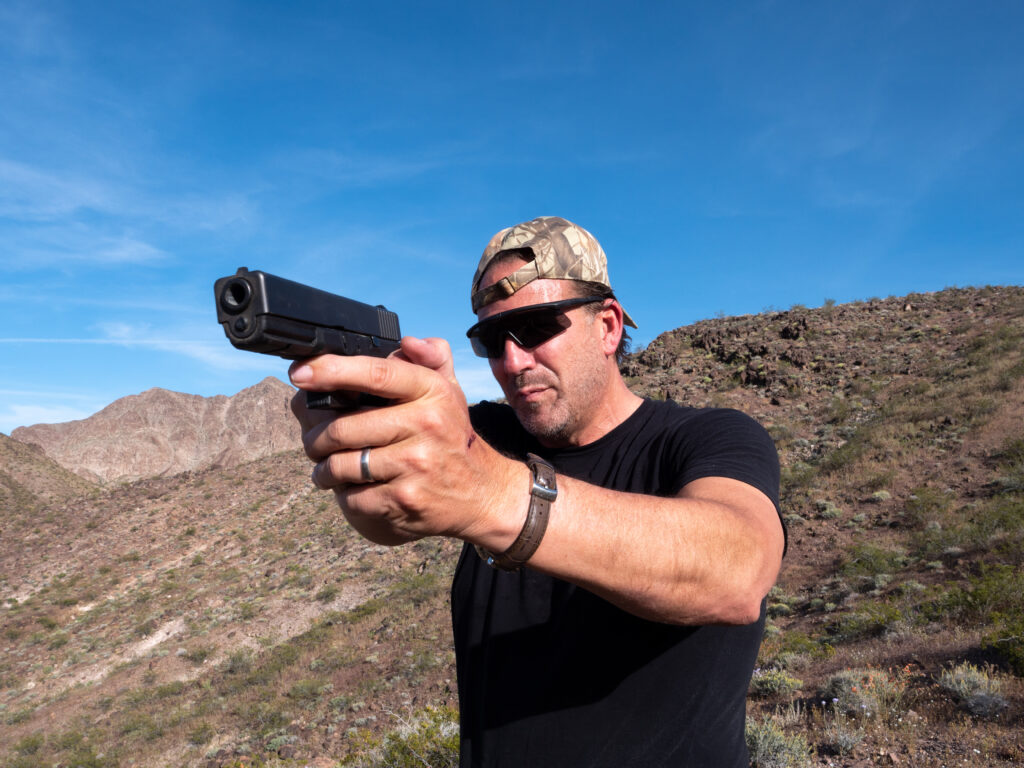
Have you ever wondered about the differences between competition vs self-defense training?
Competition Training
In competition training, specifically in IDPA, you have to carry a 32-page rule book around in your conscious mind. When you rely on the conscious mind, things slow down to a crawl. If you mess up, you lose the competition. Training for competition relies on shooting drills, that are meant to sharpen your hard skills.
In Self-Defense Training
In self-defense firearms training, we focus on building unconscious reactions by rote, with extreme speed, acceptable accuracy, and superior tactics. It is totally different from IPSIC and IDPA competition. As previously stated, these rely on a lot of conscious thought.
Self-defense training requires that the shooter conceal his weapon, which makes for a more difficult fast draw stroke. Whereas in competition shooting, it is often done from open carry, with no cover garment. This is much faster and much easier.
The Subconscious Mind
Your subconscious mind operates at a significantly faster rate than your conscious mind. Your conscious mind processes information at roughly 10-40 bits per second. However, your subconscious mind can handle millions of bits per second. This is according to research from Quora and Forbes. This allows your subconscious to process vast amounts of sensory information and make rapid, automatic responses. But your conscious mind focuses on slower, deliberate thought and analysis. In a gunfight, this will get you killed!
Scenario Based Training
Another fact about the difference between competition Vs. self-defense training: True self-defense training is based on scenarios that are likely to happen. For example: You are returning to your car in the parking lot of a 7/11. As you do, three thugs with drawn guns confront you. Or, you’re stopped at a light in heavy traffic, and some unstable person with a weapon of some kind is banging on your driver’s window. And this person is cursing at you in a road-rage fit.
In self-defense you have to keep your conscious mind out of it. You have to react from a subconscious level of mind by rote. React by rote means, you don’t have to take time to consciously think things over. This is because you’ve already practiced this scenario multiple times. So, your subconscious mind takes control of your body and makes you react as you did in training.
In addition, because of your training, as your subconscious is making you react, it is basing your automatic reactions on the four legal elements that are required for you to claim self-defense. Unlike competition, if you mess up, you don’t just lose the contest, you end up getting shot, dead, or in prison.
To Sum Up
To sum up the difference between competition Vs. self-defense training: Shooting in competition relies on obeying dozens of rules that clutter up a slow processing conscious mind. The conscious mind can process about 10 – 40 bits of information per second. Consider it a Radioshack computer with a 187K floppy disk, from 1980.
Self-defense relies on automatic reactions based in habit patterns that have been burned into the subconscious mind. The subconscious is able to process millions of bits of information each second. It is like a super computer. Supercomputers can handle an enormous amount of data, measured in exaflops, which represents a quintillion (10^18) calculations per second
Competition training is based on shooting drills. Drills are patterns of action repeated over, and over, and over again, where (in this author’s opinion) the only goal seems to be able to shoot a pattern of targets as fast as possible, without breaking any rules.
Self-defense training is based on scenarios, not drills. Shooters imagine a specific situation they have been given, in their mind’s eye, before they shoot the scenario. Otherwise, it all becomes just a drill, and people don’t program their automatic reactions into a possible scenario, or situation that they could find themselves in.
Competition is based on following rules. Generally, the lowest score wins. If you break a rule, you are penalized, and points are added to your score. If you lose in a competition, you don’t get a trophy, but you do go home in one piece afterwards. You’ll probably stop at a restaurant and order a good meal.
Self-Taught Competitors
Self-taught competitors are at a disadvantage. Professionally trained competitors have a big advantage over them, and generally win contests far more often. So they have a good reason to get professional training. While the training has value, it doesn’t necessarily prepare the shooter for a real life or death gunfight!
In self-defense, the rules are called laws. If you break one of these rules, even if you win the gunfight, you may end up spending the rest of your life in prison. Unlike in competition, there are no second-place winners in a gunfight! So, there is no replacement for professional training, which is meant to prepare the shooter for a real life or death gunfight.
Contact Us And Take Control Of Your Future And Your Family’s Wellbeing Now!