
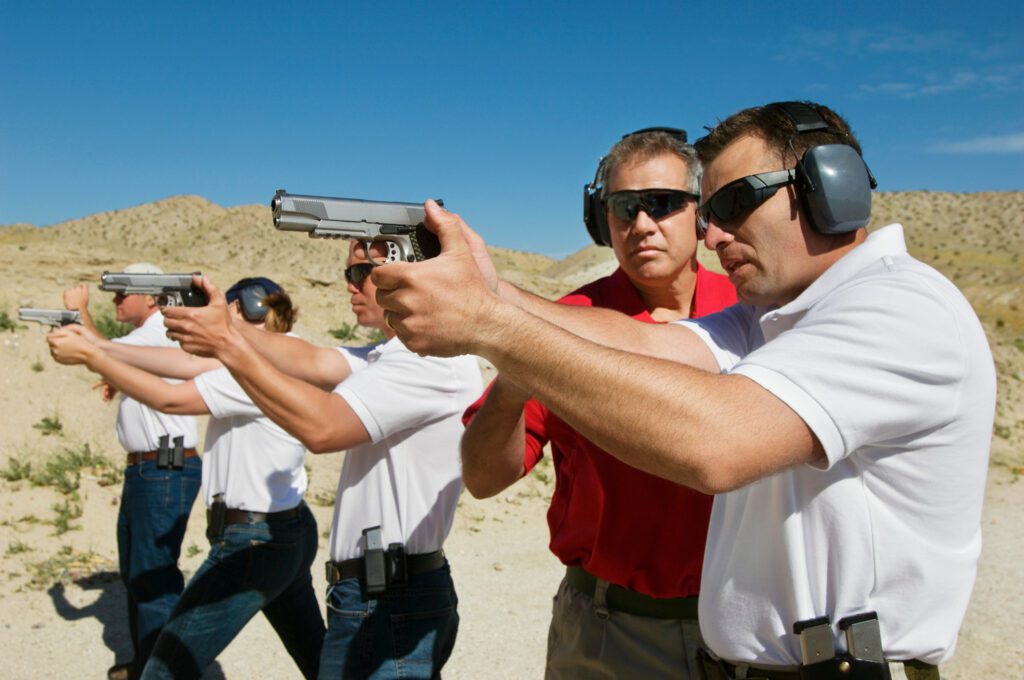
A Comfortable Way To Learn
Live‑Fire Skills With Others
Group live‑fire pistol training gives you a calm, structured way to learn the fundamentals with real recoil and real‑world conditions. Now you learn alongside others who are at the same experience level. As a result, the class feels supportive and predictable. Because of this, you build confidence through repetition, guidance, and shared progress.
Many people want to learn to shoot but feel unsure about taking a class alone. Even so, a group class provides reassurance. You see others learning the same skills.
After that, you realize you are not the only beginner. The group moves together. Everyone improves at a steady pace.
Who This Class Is For
This group class is designed for people who want a calm, supportive, and structured introduction to live‑fire shooting. It works especially well for:
Beginners Who Want
A Gentle Introduction
Many new shooters feel more comfortable learning with others at the same level. Because of this, a group live-fire pistol training class provides reassurance and shared progress.
Older Shooters Who Want
Clear, Patient Instruction
Short sentences. Calm pacing. Clear explanations. You learn comfortably and safely with others who appreciate the same pace.
People Who Want A Cost‑Effective Option
Group training provides high‑quality instruction at a lower cost than private sessions. As a result, it is an excellent choice for budget‑conscious students.
People Who Want A Supportive Environment
You learn with others who are also new. Because everyone is learning together, the atmosphere stays positive, fun, exciting and encouraging.
People Preparing For Future Training
This class builds the foundation for private training, defensive skills training, permit classes, and continued practice at the range.
What To Expect In A Group Class
Knowing what to expect helps you feel comfortable before you arrive. Because of this, the class is designed to be calm, predictable, and beginner‑friendly.
A Steady, Comfortable Pace
The class moves at a pace designed for beginners and older shooters. Now you can learn without feeling rushed. After that, each step builds naturally on the one before it.
A Clear Introduction To The Range
You learn where to stand, how to handle the pistol safely, how to load and unload, how to follow range commands, and how to stay relaxed around noise and recoil.
Learning With Others At Your Level
Everyone in the class is learning the same skills. Because of this, you never feel behind. The group moves together, step by step.
Starting With A Low‑Recoil Firearm
Most students begin with a .22 LR pistol. It is quiet. It is soft.
It helps you stay relaxed and focused on fundamentals.
Moving To 9mm When The Group Is Ready
The class transitions to 9mm only when everyone is comfortable. No one is pressured to move ahead before they are ready.
Clear Demonstrations And Guided Practice
Each skill is demonstrated first. Next, the group practices together. After that, you receive simple, steady corrections.
A Supportive, Judgment‑Free Environment
Everyone is learning. People are improving. Others are supportive. You will not feel judged or compared.
A Deeper Look At The Curriculum
The curriculum is structured to help you learn safely, comfortably, and efficiently. Each step builds on the last. Because of this, you develop strong fundamentals.
Safe Handling And Range Procedures
You learn how to handle the pistol safely at all times.
Next, you learn how to load and unload. After that, you learn how to maintain muzzle discipline. These habits become automatic.
Grip And Recoil Control
A proper grip helps you manage recoil. You learn how to hold the pistol firmly without tension. As a result, your sights stay aligned more easily.
Stance And Balance
A stable stance helps you stay steady. You learn how to position your feet to keep your weight balanced. This reduces fatigue and increases accuracy.
Sight Alignment And Sight Picture
Your instructor will teach you how to align the sights. You’ll learn how to focus on the front sight if you are using iron sights. Keeping your sight picture steady is important.
Trigger Control Under Recoil
Trigger control is the key to accuracy. You learn how to press the trigger smoothly. Because of this, your shots become more consistent.
Follow‑Through And Shot Recovery
You learn how to recover your sights after each shot.
Next, you learn how to stay relaxed. After that, you prepare for the next shot.
Evaluating Your Own Shots
You learn how to read your target and how to understand your groups. Your instructor will teach you how to correct small issues. This helps you practice safely on your own.
Why Group Live‑Fire
Pistol Training Matters
Live‑fire training teaches you how to manage the real forces involved in shooting. You feel the recoil and hear the noise. The instructor will teach you how to stay steady.
Dry‑fire and in‑home training build the foundation. Even so, live‑fire training completes the picture. It teaches you how your body reacts to recoil. It teaches you how to stay relaxed.
Common Mistakes New Shooters Make
Many new shooters struggle with the same issues. Group instruction helps you recognize and correct them quickly.
Flinching
Flinching is common. It happens when you anticipate recoil.
You learn how to stay relaxed and let the pistol move naturally.
Jerking The Trigger
Jerking the trigger causes shots to go low or left for righties and low right for left-handed shooters. You learn how to press smoothly and consistently to stay on target.
Tension In The Hands Or Arms
Tension makes recoil feel worse. You learn how to stay relaxed and steady.
Losing The Front Sight
Many new shooters look at the target. You learn how to focus on the front sight.
Inconsistent Grip
A consistent grip helps you stay accurate. You learn how to maintain it.
Rushing Shots
Rushing leads to mistakes. You learn how to slow down and stay consistent.
How Group Training Differs
From Private Training
Group training and private training both have great value. Even so, they serve different needs. Group training provides shared learning, shared progress, and a supportive environment.
A Shared Learning Experience
In a group class, you learn with others who are at the same level. You see their progress. They see yours. This creates a comfortable atmosphere.
A Steady, Predictable Pace
The class moves together. No one is left behind. No one is pushed ahead. The pace is designed for comfort and clarity.
Clear Demonstrations For Everyone
Each skill is demonstrated first. Next, the group practices together. After that, you receive simple, steady corrections.
A Cost‑Effective Way To Learn
Group training provides high‑quality instruction at a lower cost than private sessions.
A Supportive Environment For Beginners
Many students feel more comfortable learning with others.
You realize you are not the only beginner. You learn together.
How Caliber Progression Works
Caliber progression helps the entire group learn comfortably.
You start with .22 LR. It is quiet. It is soft. It helps everyone stay relaxed. When the group is ready, you transition to 9mm.
How To Practice After The Class
Practice helps you keep your skills sharp. You do not need long sessions. Short, focused practice is enough.
Dry‑Fire Practice At Home
You can practice grip, stance, and trigger control at home with an unloaded firearm or a training tool.
Laser Training Tools
Laser tools help you track your accuracy and consistency.
Short, Focused Sessions
Ten minutes a day is enough to reinforce what you learned.
Return To The Range When Ready
You can schedule follow‑up classes or private sessions to continue improving.
Frequently Asked Questions
Do I Need My Own Firearm?
No. Loaner firearms are available.
Do I Need Experience?
No. This class is designed for beginners through older students.
Is The Range Loud?
Yes, but you will have proper hearing protection and a calm introduction so you can adjust comfortably.
Will I Be Rushed?
No. The pace is steady and predictable.
What Caliber Will I Shoot?
Most students start with .22 LR and move to 9mm when the group is ready.
Is This A Defensive Class?
No. This is fundamentals‑focused live‑fire training.
Is This A Permit Class?
No. This is skills training only.
What If I Am Nervous?
That is normal. Many students feel nervous at first.
The class is calm, supportive, and beginner‑friendly.
What If I Have Limited Strength Or Mobility?
The class adapts to your needs. You will not be asked to do anything that is unsafe or uncomfortable.
What If I Have Never Touched A Firearm?
That is perfectly fine. Many students start with zero experience.